Cocoyoc
"Cocoyoc manages the neat trick of being both an extraordinary piece of Mexican history and a place where you can order a drink beside a five-century-old aqueduct."
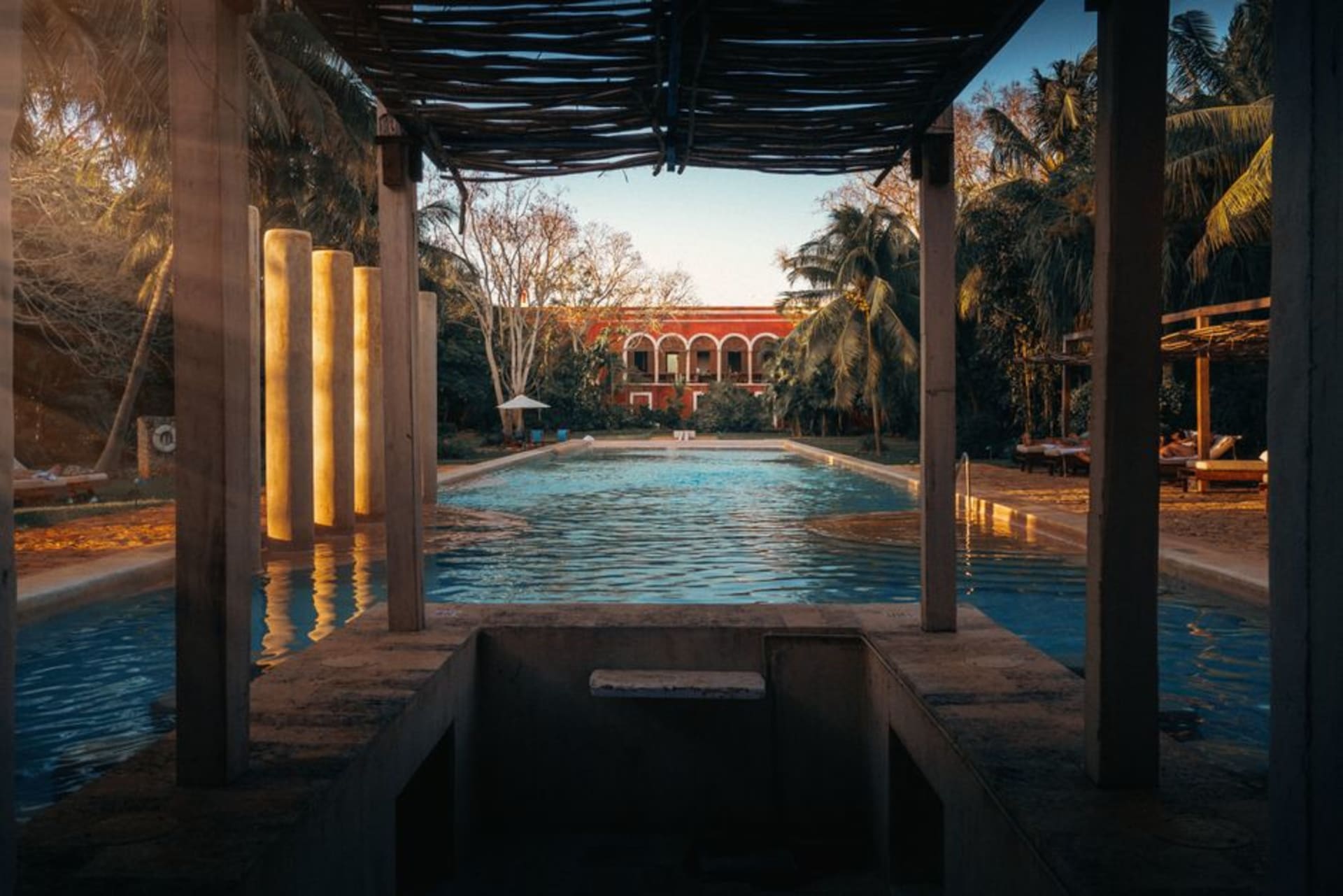
I drove into Cocoyoc on a Tuesday in February, which turned out to be the correct decision. The guard at the hacienda gate waved me through without ceremony — day visitors are welcome, though the weekend wedding traffic makes this a different proposition entirely. I parked under a ceiba tree and spent a moment trying to orient myself: the building ahead was old in a way that most Mexican colonial buildings are not, the stone walls two meters thick, an aqueduct running the entire length of the property like a Roman ruin that someone had decided, sensibly, to keep.
The Hacienda That Refused to Fall Apart
The Ex-Hacienda de Cocoyoc was processing sugar cane in the 1500s, and the infrastructure built for that operation — the aqueduct, the mill house, the long stone corridors — proved, over five centuries, to be nearly indestructible. This is either good fortune or good stone; probably both. What Cortés-era engineers built to move water across a valley still moves water today, now past swimming pools instead of cane fields.
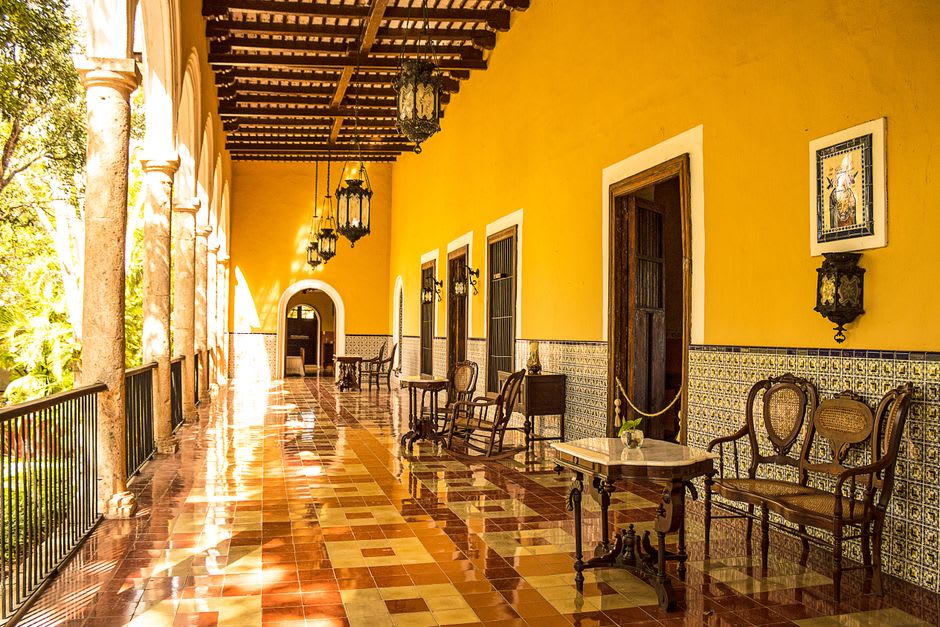
The arches are the defining image: a procession of stone curves, each one framing a slice of tropical garden, the whole structure reflected in still pool water on windless mornings. The rooms occupy what were once processing facilities — the trapiche, the grinding house, the storage halls — and the conversions are honest about what they were. The walls are four feet thick. The ceilings, where they survive, are timber and stone. The place was not prettified into a Colonial Fantasy; it was simply made habitable, and the original architecture was persuasive enough to carry everything else. Walking through it on a quiet weekday afternoon, you get a clear sense of how a working sugar estate was organized — the logic of the layout, the movement of water and labor — without anyone explaining it to you.
An Afternoon at the Pool, Which Is to Say: at the Aqueduct
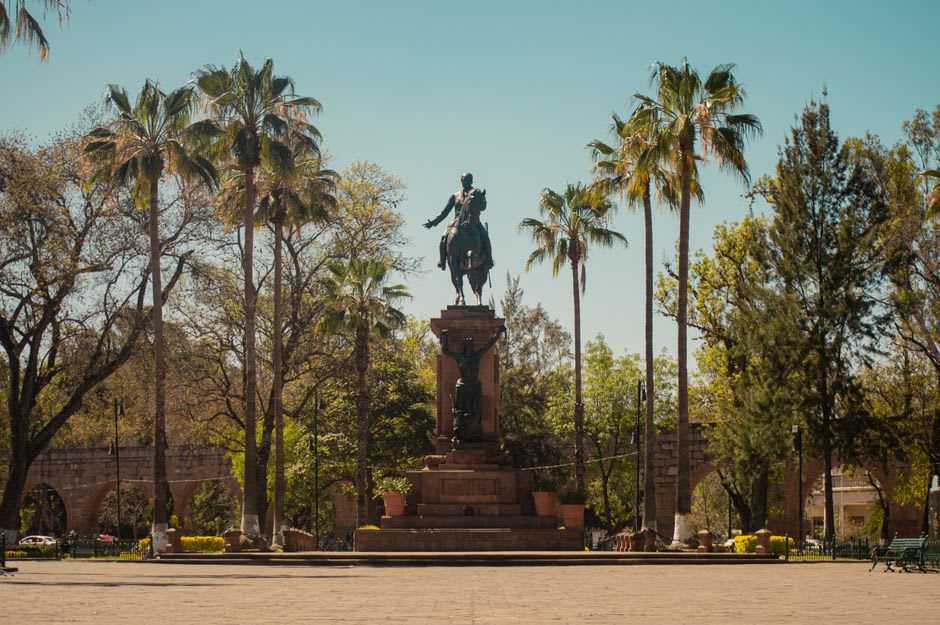
The most disorienting thing about Cocoyoc is how casually the sixteenth century has been folded into an ordinary holiday afternoon. I ordered a michelada at the bar near the main pool — Modelo, lime, Clamato, served in a glass rimmed with chili salt — and carried it to a table set directly under the aqueduct arches. The water in the pool was clear and cold. Children were splashing at the shallow end. A couple in their fifties was doing laps. An egret stood on the far edge of the garden with the focused patience of a bird that has been here longer than the hotel.
For lunch, the restaurant inside the main hacienda building serves straightforward Mexican food done without pretension: pozole rojo, enchiladas verdes, arroz con leche. Nothing that would get reviewed in Roma Norte, everything you actually want after a morning of wandering stone corridors. My table was beneath a vault that probably stored molasses in 1620. I did not feel the need to think about this too hard.
When to Come, and What to Expect
The one firm piece of advice I would offer: come on a weekday. Cocoyoc has become a popular venue for Morelos weddings and quinceañeras, and on Saturdays the grounds can feel less like a historic hacienda and more like an event space with very attractive ruins in the background. Tuesday through Thursday, you may have the main pool largely to yourself. The day-visitor fee is modest and the staff is relaxed about how long you stay.
The town of Cocoyoc itself — beyond the hacienda walls — is small and unremarkable, a cluster of tiendas and taco stands along the main road to Cuautla. The hacienda is the reason to come. That is not a criticism; some places are allowed to have one reason, and this one is sufficient.
Getting There
Cocoyoc sits about 30 kilometers east of Cuernavaca and roughly 90 kilometers south of Mexico City. From Cuernavaca the drive takes around 35 minutes via the road through Yautepec. From Mexico City, budget 90 minutes to two hours depending on traffic — the libre through Cuautla is slower but more interesting than the cuota. There is no practical public transit option; a car or a hired driver from Cuernavaca is the sensible approach.