
Tlalpujahua
"The ornaments are made year-round in workshops where three generations share the same table, and the town itself glitters like one of them."
I got to Tlalpujahua on a Tuesday morning in early November, when mist was still caught in the pine forest above the centro and the streets smelled like woodsmoke and lacquer in equal measure. I had come expecting Christmas, which is exactly what you expect from a town whose name has become synonymous with glass ornaments. What I hadn’t expected was the altitude, or the cold, or the fact that a man named Ernesto would invite me into his workshop within twenty minutes of my arrival, hand me a warm atole, and explain — without any particular pride, just as information — that his daughter could blow a bulb thinner than he could.
The Workshops That Never Stop for December
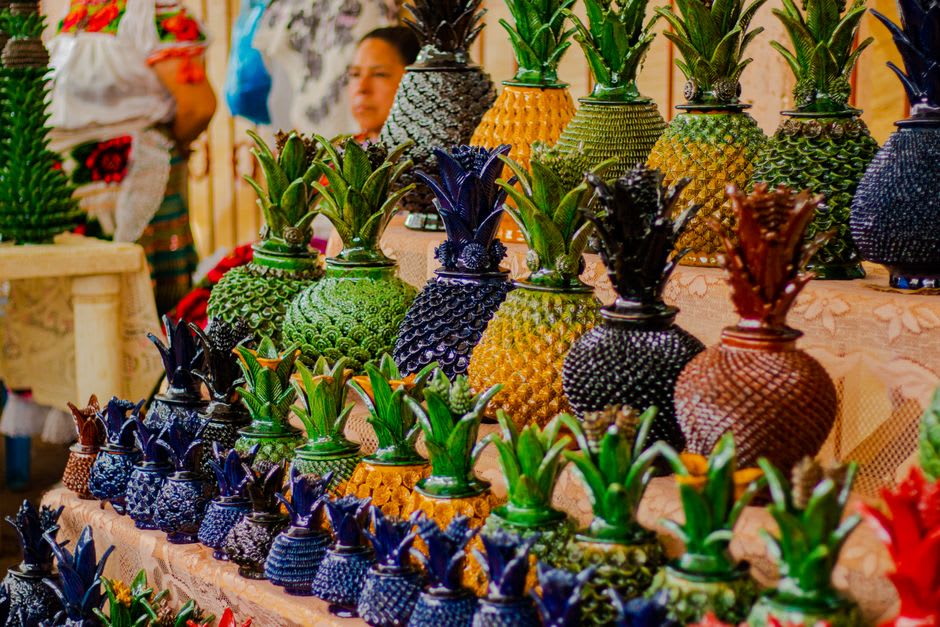
The thing nobody tells you about Tlalpujahua’s esferas is that December has nothing to do with it. These workshops — most of them family operations running out of houses with folding tables set up in the courtyard — produce ornaments twelve months a year because the orders never stop coming. I watched Ernesto’s granddaughter, maybe nine years old, carefully dipping a blown-glass bulb into a bath of lacquer while her grandmother applied glitter with the practiced gesture of someone who has done this thirty thousand times. The bulbs range from thumbnail to grapefruit: plain, or hand-painted with churches, pine trees, señoritas in Michoacán dress. You can buy them at the Mercado de Artesanías near the plaza for less than you’d believe, or directly from the workshops if you’re willing to knock on a courtyard door. Most of them are open to it.
Silver, Water, and What the Mountain Kept
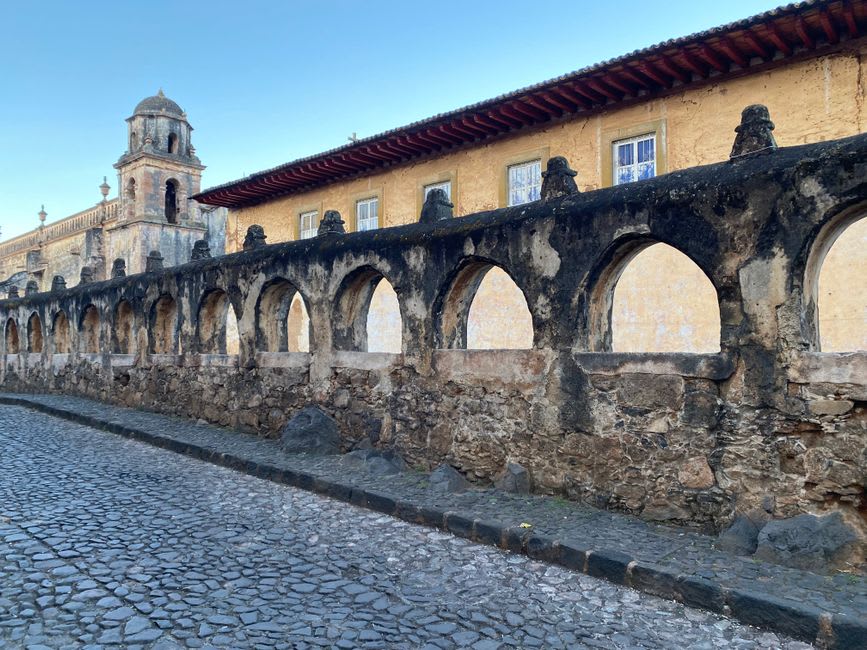
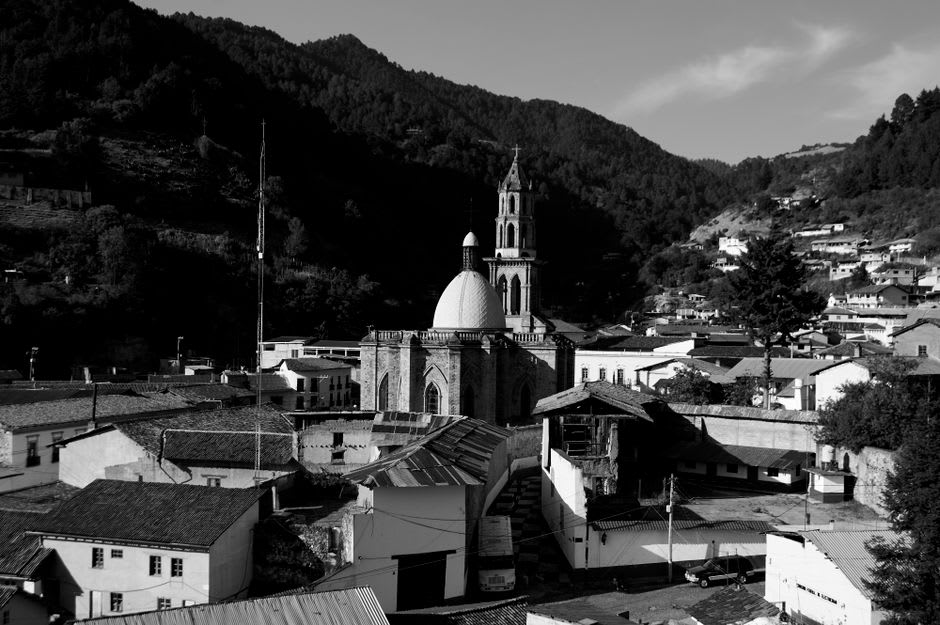
The reason Tlalpujahua exists at all is silver. The Mina Dos Estrellas — Two Stars Mine — was one of the most productive in colonial Michoacán, and the town grew around it with the particular confidence of places that assume the boom is permanent. It wasn’t, and in 1937 the mine flooded catastrophically, leaving a lagoon where the main shaft had been. That lagoon is still there, glinting cold below the old processing towers, and the whole complex is now a museum worth a slow morning: rusted machinery, photographs of miners who look directly at the camera, plaques that give you tonnage figures without quite preparing you for what tonnage means in human terms. The centro, a short walk uphill, looks like the silver money was spent carefully. The Parroquia de Santiago Apóstol anchors the plaza, and the cobblestone streets running off it are steep enough to remind you of the elevation and beautiful enough that you don’t mind.
Carnitas at Altitude
Michoacán carnitas are the answer to most cold-morning questions, and Tlalpujahua doesn’t disappoint. The best I found were at a stall on Calle Juárez — the woman running it serves them on blue plastic plates with handmade tortillas from a basket and a salsa verde that makes your ears ring in a pleasant way. There are also uchepos if you arrive early enough: the fresh corn tamales particular to Michoacán, wrapped in husks, faintly sweet. Café de olla appears at 7am from a coffee stand on the north side of the plaza. I’d recommend arriving hungry and on foot, because the town fills with day-trippers from Toluca by 11am on weekends and the good stalls sell out faster than you’d expect.
Getting There
Tlalpujahua is roughly three hours from Morelia by bus, changing in Maravatío, or a similar drive from Mexico City via Toluca — the Estado de México border is fifteen minutes away. October through April is the most comfortable season. November through January means sharing the town with ornament buyers and the Festival de la Esfera crowd; book accommodation well ahead for December weekends, when the town fills completely.