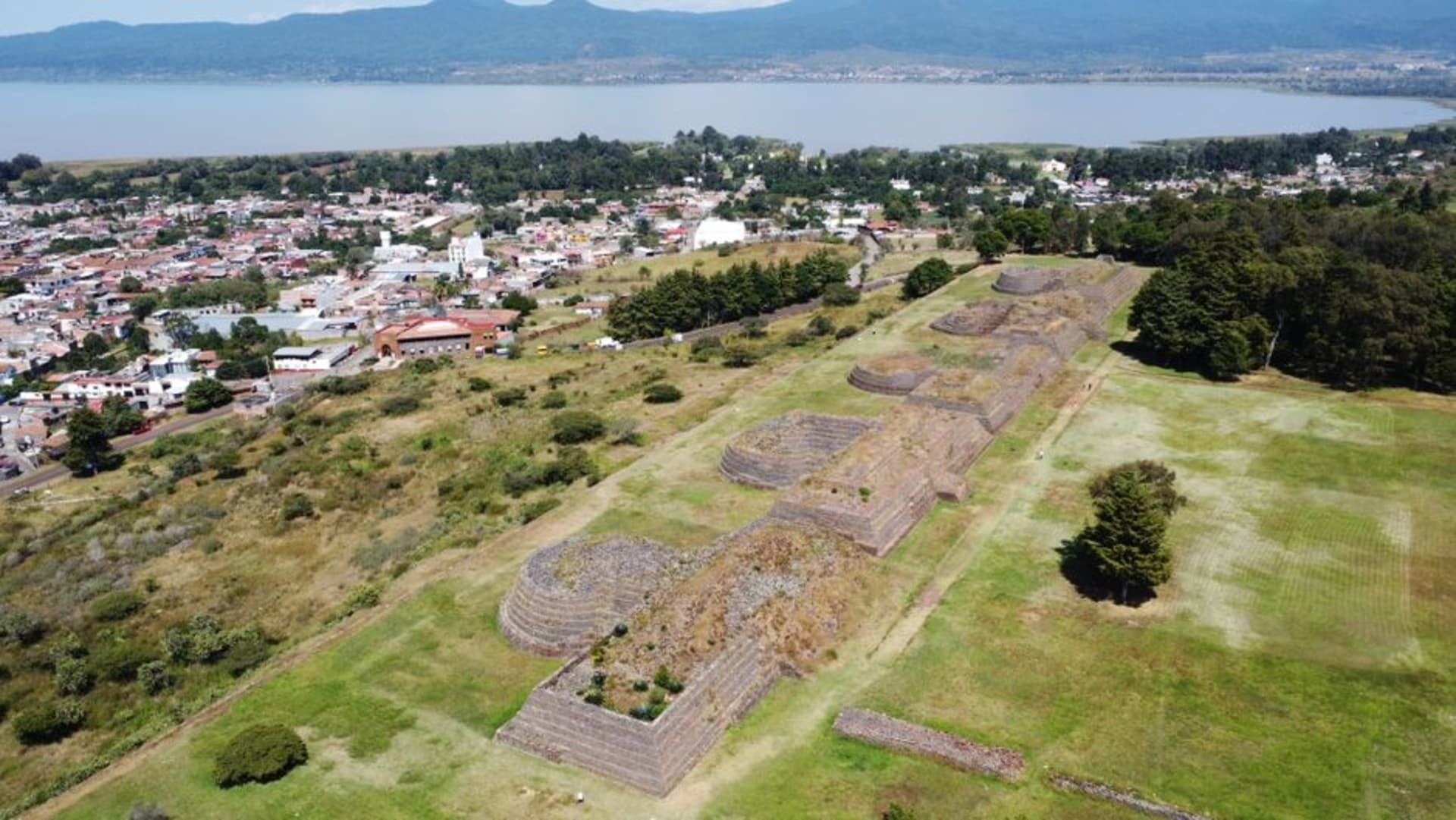
Tingambato
"Tingambato is the Pátzcuaro region site that most people miss — and every archaeologically-minded traveler quietly thanks them for it."
The colectivo from Pátzcuaro toward Uruapan drops you at a roadside sign that most passengers glance past. I nearly glanced past it myself. But some instinct — or perhaps the fact that I had already done Pátzcuaro’s lakefront twice — made me ask the driver to stop. Twelve kilometers from the water, in a clearing where the pines are tall enough to give everything a cathedral quality, I found a pre-Hispanic site I hadn’t expected to like quite so much. There were three other visitors that morning. One was a dog that appeared to live there.
A Pyramid in the Pines
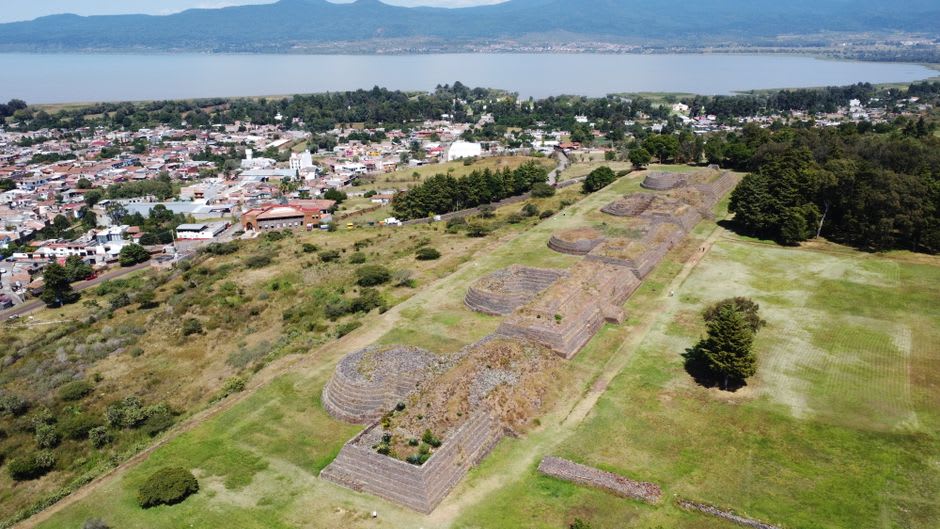
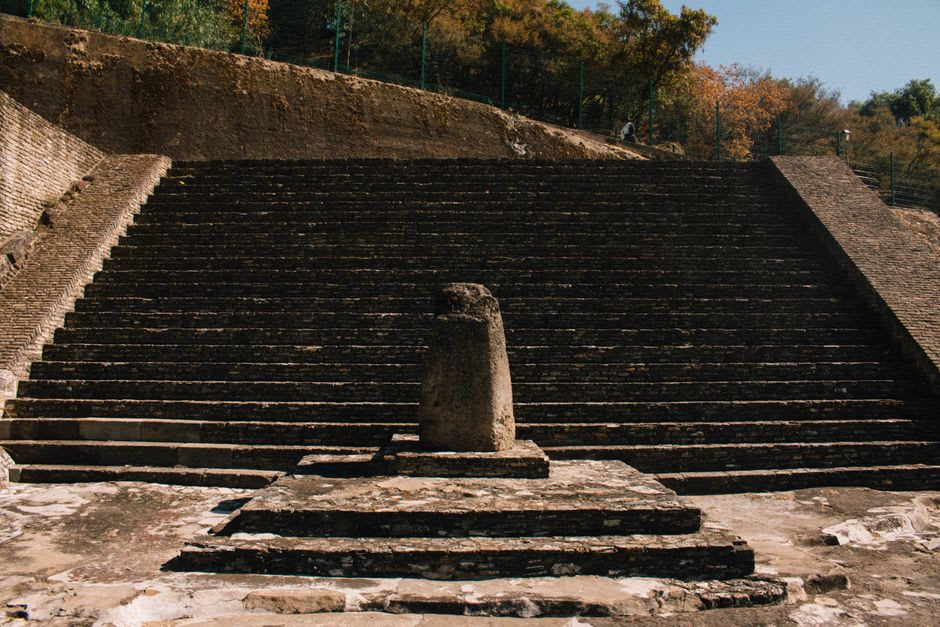
Tingambato’s main structure is a stepped pyramid — modest in scale compared to Teotihuacán, which is precisely the point. Nobody here is trying to overwhelm you. The pyramid rises in clean terraces above a flat ceremonial platform, and the stone, a dark volcanic basalt, absorbs the pine light in a way that makes the whole thing look older than its official dates suggest. The site flourished roughly between 450 and 900 AD, pre-dating the Purépecha empire that would later dominate this region — archaeologists still debate exactly who built it and under what cultural affiliations. What they don’t debate is the quality of the ball court, which runs along the southern edge of the complex and is among the better-preserved examples you’ll find in western Mexico. The stone markers are intact, the proportions are right, and standing at one end of it with no one else around, you can almost reconstruct the event — the sound, the weight of a rubber ball, the stakes that were apparently very high.
What the Lake Region Skips
Pátzcuaro pulls hard. The lake, the island, the evening crowds on Plaza Vasco de Quiroga — there is enough there to fill a long weekend without ever leaving the centro, and most visitors don’t. Tingambato loses tourists to this gravity, which suits the site well. The town itself is small and unhurried, a village where agriculture still organizes daily life. Coming down from the archaeological zone around noon, I stopped at a comedor on the main street — the kind of place with four tables and a handwritten menu that changes with whatever came in that morning. I had sopa de fideos, a plate of enchiladas verdes with crumbled queso fresco, and agua de jamaica so concentrated it was almost sour. The woman running the kitchen was watching a telenovela at high volume and seemed entirely unbothered by why I was there, which I found refreshing.
Making a Morning of It
Arrive early — by nine if you want the site to yourself, and it’s worth wanting that. The entrance fee is minimal, the INAH custodians are friendly if you speak even basic Spanish, and there is a small interpretive panel near the entrance that gives enough context to make sense of what you are looking at. Bring water, wear shoes you don’t mind getting dusty, and give yourself two hours rather than one — not because you’ll need every minute to see the monuments, but because the pine forest around the perimeter invites the kind of slow walking that is harder to do at Mexico’s more trafficked sites.
Getting There
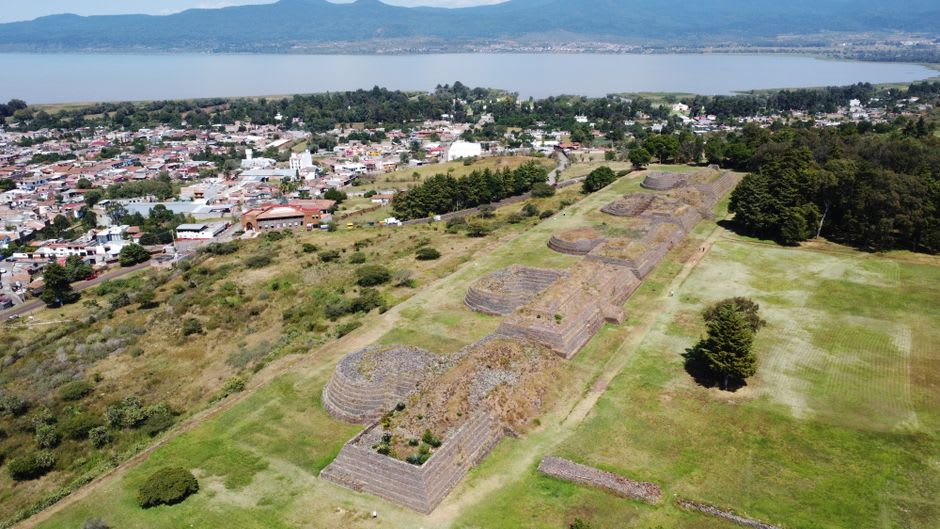
From Pátzcuaro’s main bus terminal, catch a colectivo heading toward Uruapan and ask to be dropped at the zona arqueológica de Tingambato — the journey takes around twenty minutes and costs next to nothing. The site is a short walk from the road. There is no direct bus. Taxis from Pátzcuaro will negotiate a round-trip price if you prefer to control your timing, which is useful if you plan to stay through lunch.