Xochimilco
"The canals were the roads. The floating gardens fed a city of two hundred thousand people. Seven hundred years later, the flowers are still growing."
Xochimilco is what remains of the hydraulic civilization that built Tenochtitlán. The Aztec capital sat on an island in Lake Texcoco, connected to the mainland by causeways and supplied by a network of chinampas — artificial islands of woven reeds and lake sediment, anchored by willow roots, built up over centuries into the most productive agricultural land in the pre-Columbian Americas. When the Spanish drained the lake after the conquest and built Mexico City over the mud, the chinampas of Xochimilco survived. Seventy square kilometers of canals and floating gardens in the south of the city, declared a UNESCO World Heritage Site in 1987, still being farmed by families who have been here for seven centuries.
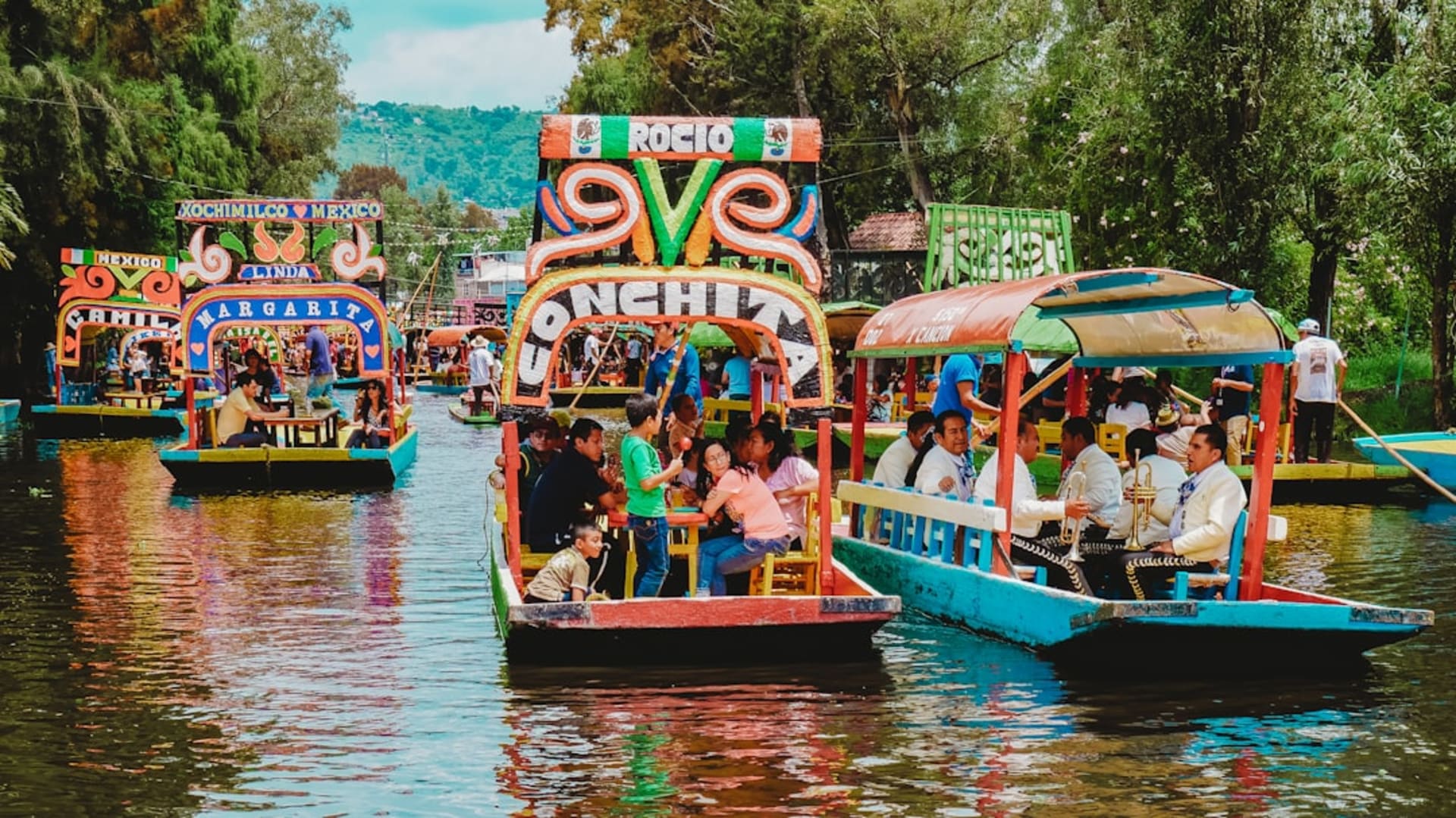
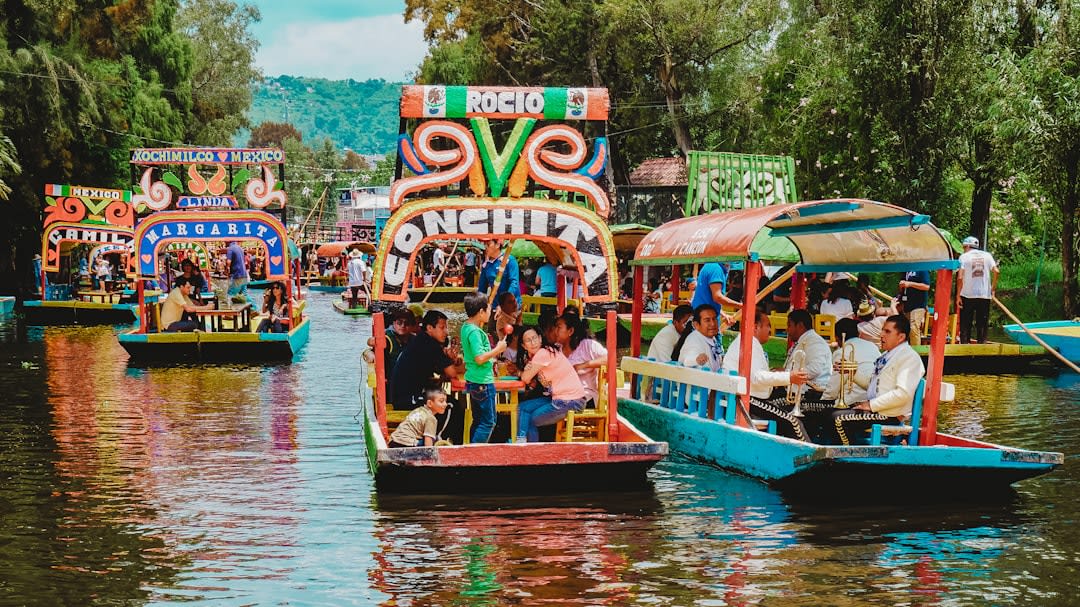
This context matters, because Xochimilco is often presented as a day-trip party destination — the flotillas of brightly painted trajineras (flat wooden barges), the marimba bands, the beer vendors paddling alongside in smaller boats, the general chaos of a Mexican Sunday afternoon on water. All of that is real and, with the right approach, actually enjoyable. But underneath the noise is something with genuine weight.
The Trajineras
The trajineras — large painted boats that seat anywhere from ten to forty people — are available for hire at the embarcaderos (boat landings) along the main canal network. The largest embarcaderos, Nuevo Nativitas and Cuemanco, are where the Sunday party traffic concentrates. They are loud, celebratory, and distinctly Mexican in the way that involves mariachis, chicharrones, and a lot of beer at eleven in the morning.
Hire a smaller trajinera at one of the lesser embarcaderos — Fernando Celada or Salitre — on a weekday, and the experience is categorically different: narrower canals, working chinampa farms visible on both sides, herons standing in the willow roots, the Mexico City skyline visible in the distance above the trees. A two-hour circuit of the secondary canals shows you what Xochimilco actually is beneath the weekend tourist economy.
Negotiate the price before boarding. Rates are posted at the embarcaderos but are negotiable on weekdays. A two-hour hire of a small trajinera for two to four people costs the equivalent of a taxi across the city.
The Chinampas
The working chinampa farms are the reason to take the smaller canals. The farmers here — some operating plots that have been in their families for generations — grow flowers (Xochimilco means “place of the flower fields” in Nahuatl), vegetables, and herbs on the same artificial islands the Aztecs built. The soil, continuously renewed by composting and lake sediment, produces without rest.
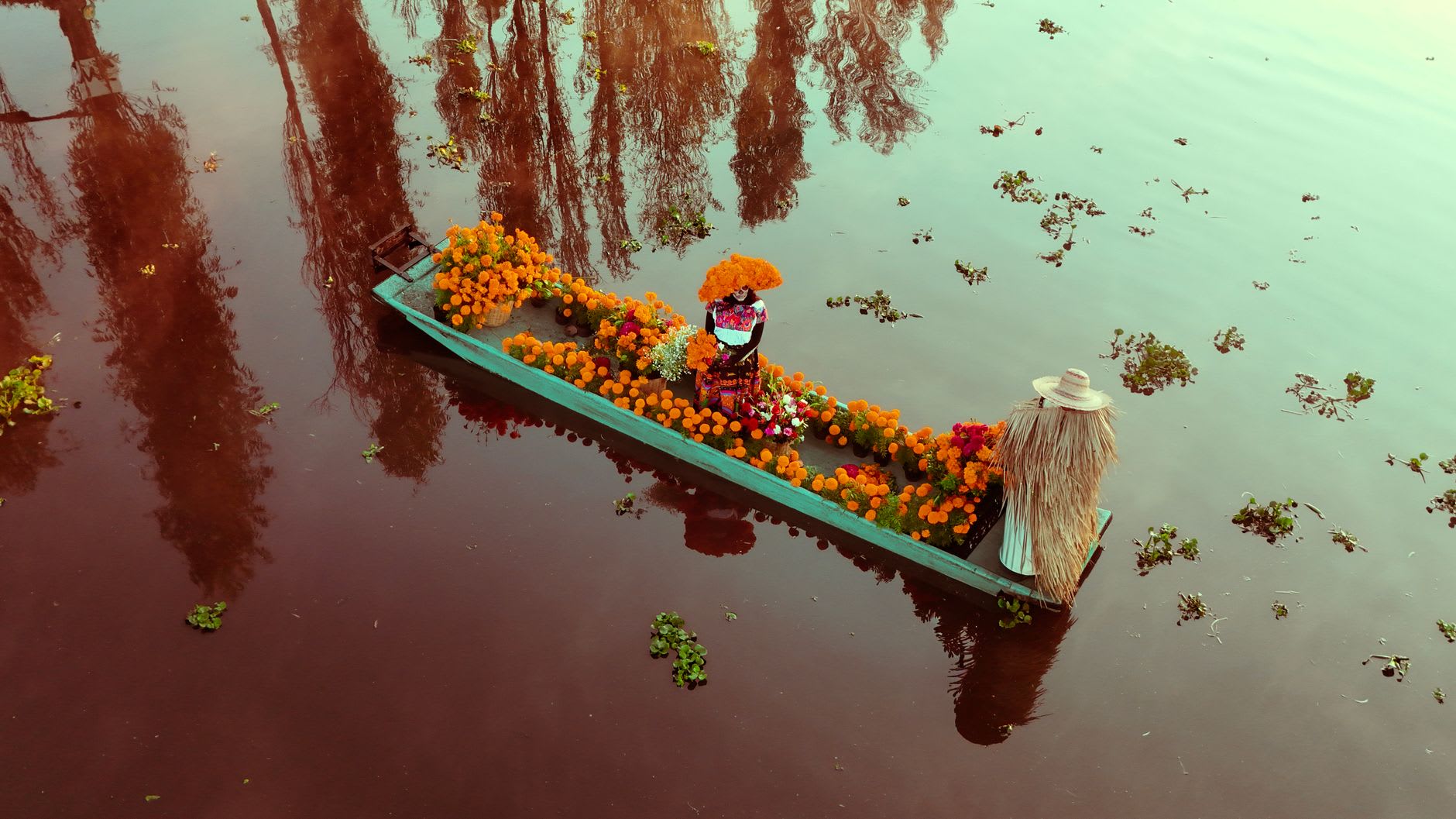
The Jardín de las Flores along the main canal is where the flower market concentrates: hundreds of stalls selling gladiolas, dahlias, chrysanthemums, roses, and the marigolds that supply a significant portion of Mexico City’s Day of the Dead flower demand. The smell in October, when the marigold harvest peaks, is extraordinary.
The axolotl — the endemic salamander of Lake Xochimilco, critically endangered, visible in the wild almost nowhere else on earth — survives in the cleaner secondary canals. Several chinampa farmers have converted plots into axolotl conservation areas, accessible by appointment. The creature — pink-gilled, permanently larval, the basis for the Mexican myth of eternal transformation — has been in these canals since before the Aztecs named the city.
Day of the Dead
Xochimilco’s Day of the Dead celebration combines the chinampa tradition with the canal network in a way that is genuinely distinct from any other ceremony in Mexico. The decorated trajineras, loaded with altars, marigolds, and candles, fill the canals on the night of November 1st-2nd; the flower farms are stripped of their marigold harvest to supply the offerings; and the cemetery at San Gregorio Atlapulco — a chinampa village south of the main canal network — conducts a vigil over the island graves that is quiet, intimate, and unreported by most guides.
Practical Notes
Xochimilco is in the extreme south of Mexico City, accessible by Metro to Tasqueña and then a tren ligero (light rail) to the Xochimilco terminus. The journey from Roma or Condesa takes about an hour by public transport. Uber is faster and still cheap by Mexico City standards.
When to go: Weekdays year-round for a calm experience. Sundays for the full fiesta version — loud, crowded, and genuinely fun if you’re with the right people. The last weekend of October and November 1-2 for Day of the Dead, which transforms the whole canal system.
Eat at the market: The Mercado de Xochimilco near the main embarcadero has excellent tlayudas, quesadillas, and enfrijoladas at local prices. Eat before boarding — food on the boats is possible but at a significant markup from the canoe vendors.