
San Ángel should not work as well as it does. It is a preserved colonial village that has been absorbed into a megalopolis of twenty-two million people, and by all logic it should feel like a theme park — a curated past surrounded by a chaotic present. Instead it feels, particularly on a Saturday morning, like a functioning human settlement that simply refused to participate in the twentieth century on everyone else’s terms. The streets are too narrow for traffic to move quickly. The buildings are too old to be knocked down without a fight. The light, filtering through large trees along the pedestrian streets, falls at angles that remind me of somewhere in the Marais, but without the performance of it — more dust, more dogs, more noise from a tortillería around the corner.
I was living in Coyoacán when I first found San Ángel — it is twenty minutes south by metrobús, a journey I started making on Saturday mornings for the market and ended up making for the neighborhood itself. Lia was the one who found the café on Plaza San Jacinto that serves café de olla properly: in a clay cup, with cinnamon, slightly sweet, hot enough that you have to wait. We have been going back to that plaza most Saturdays for the better part of a year.
The Bazar del Sábado
Every Saturday from roughly ten in the morning to five in the afternoon, the Plaza San Jacinto fills with the Bazar del Sábado — the Saturday market that has been operating here since 1960 and has become, in that time, the best curated craft market in Mexico City. I use “curated” deliberately: this is not a tourist trinket market. The vendors are juried. The work includes contemporary jewelry by designers who trained in France or Germany and chose to work with Mexican materials, ceramics by third-generation families from Oaxaca and Michoacán, textiles from the highland Otomí communities, and furniture and objects made in the colonial workshops of the neighborhood itself.
Prices are not low. This is not where you buy a market souvenir. It is where, if you are paying attention, you buy the piece you will still own in twenty years. I bought a silver cuff here from a workshop in Taxco — a design that took forty minutes of conversation with the maker to understand fully — and have not regretted it. Lia bought a hand-woven rebozo in a colorway so specific it apparently maps to a particular village in Hidalgo. We have been told this subsequently by two different people who asked where it was from.
The interior courtyard of the 17th-century Casa del Risco, fronting the plaza, has a mosaic fountain that is one of the strangest beautiful things in Mexico City — thousands of pieces of Chinese and European porcelain from the colonial period, embedded in a baroque fountain structure by a process that seems equal parts intention and obsession. The Casa del Risco contains a small museum of colonial furniture and painting that is almost never crowded. The fountain alone justifies the entry.
The Rivera Studio
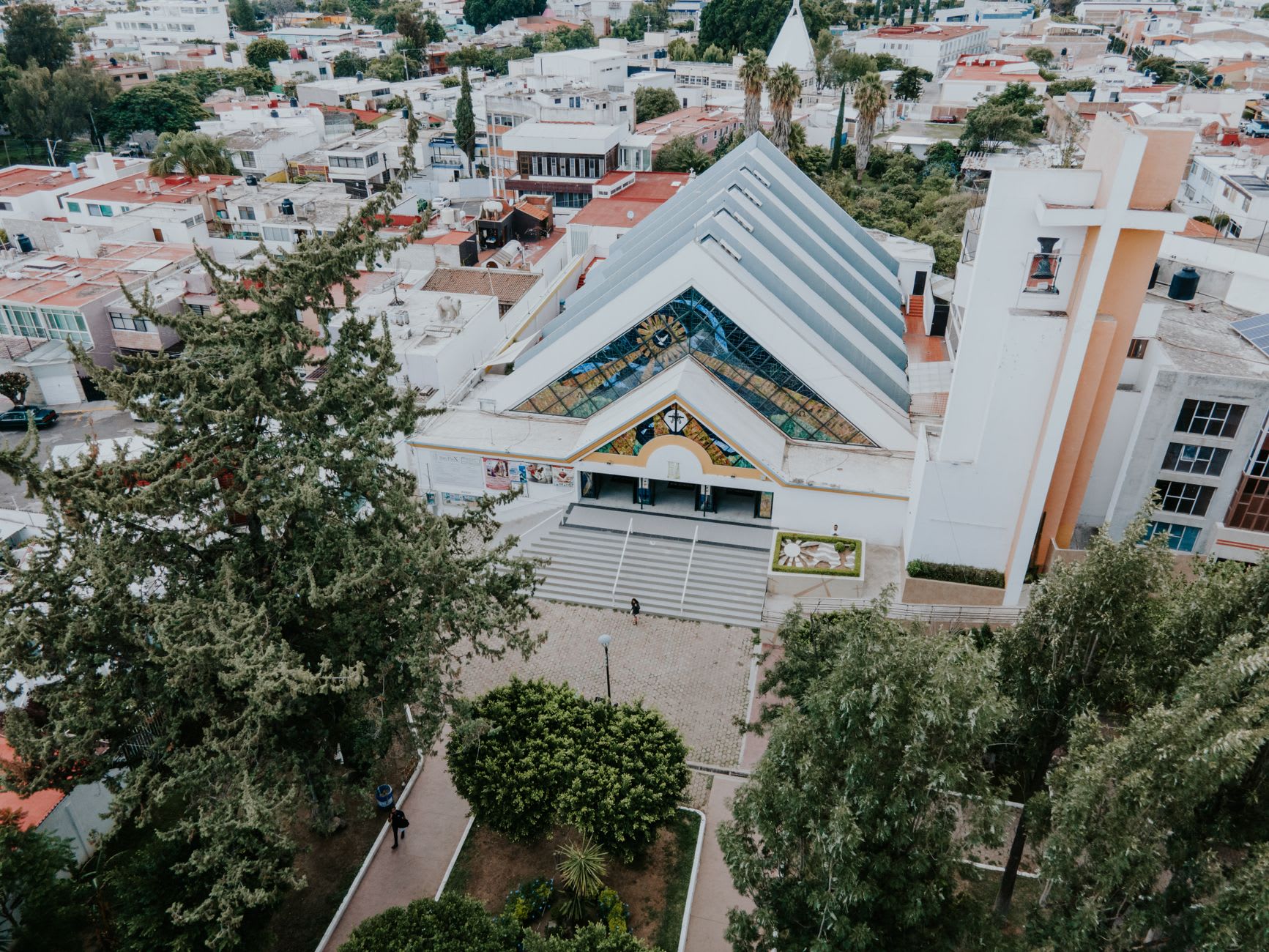
Six blocks south of the plaza, on the corner of Altavista and Diego Rivera, is the Casa Estudio Diego Rivera y Frida Kahlo — the studio houses that Juan O’Gorman designed for Rivera and Kahlo in 1931–1932, when they were at a high point of both their work and their relationship. Two separate structures connected by a bridge on the second floor: Rivera’s studio, large and north-lit for painting; Kahlo’s house, smaller and domestic.
This is not La Casa Azul, which is in Coyoacán and is Kahlo’s more famous museum-house. The studio in San Ángel is less visited, less curated, and in some ways more interesting — it feels closer to a working space, to the actual physical situation of how two people of this scale lived and worked. Rivera’s studio still has paint on the walls and an enormous wooden standing easel built to accommodate his scale of work. The spaces are small. The light is extraordinary.
What I found most interesting on my first visit was the incompatibility of scale — Rivera’s canvases were enormous, his body was enormous, and the studio, while generous for a private house, still communicates the specific cramping of a large vision in a finite space. Kahlo’s rooms communicate the opposite: intimate and precise, everything at hand. The museum also contains Rivera’s collection of pre-Columbian objects — an obsessive assemblage displayed on every horizontal surface — and a rotating exhibition of contemporary work. Entry is cheap and weekday mornings are quiet.
The Neighborhood at Walking Speed
The pleasure of San Ángel is the streets between the landmarks. Avenida de la Paz, the main pedestrian artery, has a bookshop that has been there long enough that the owner knows where things are without looking. The Mercado del Carmen off Revolución sells produce, flowers, and a prepared food section in the back where the stalls doing green enchiladas at midday are the best in this part of the city.
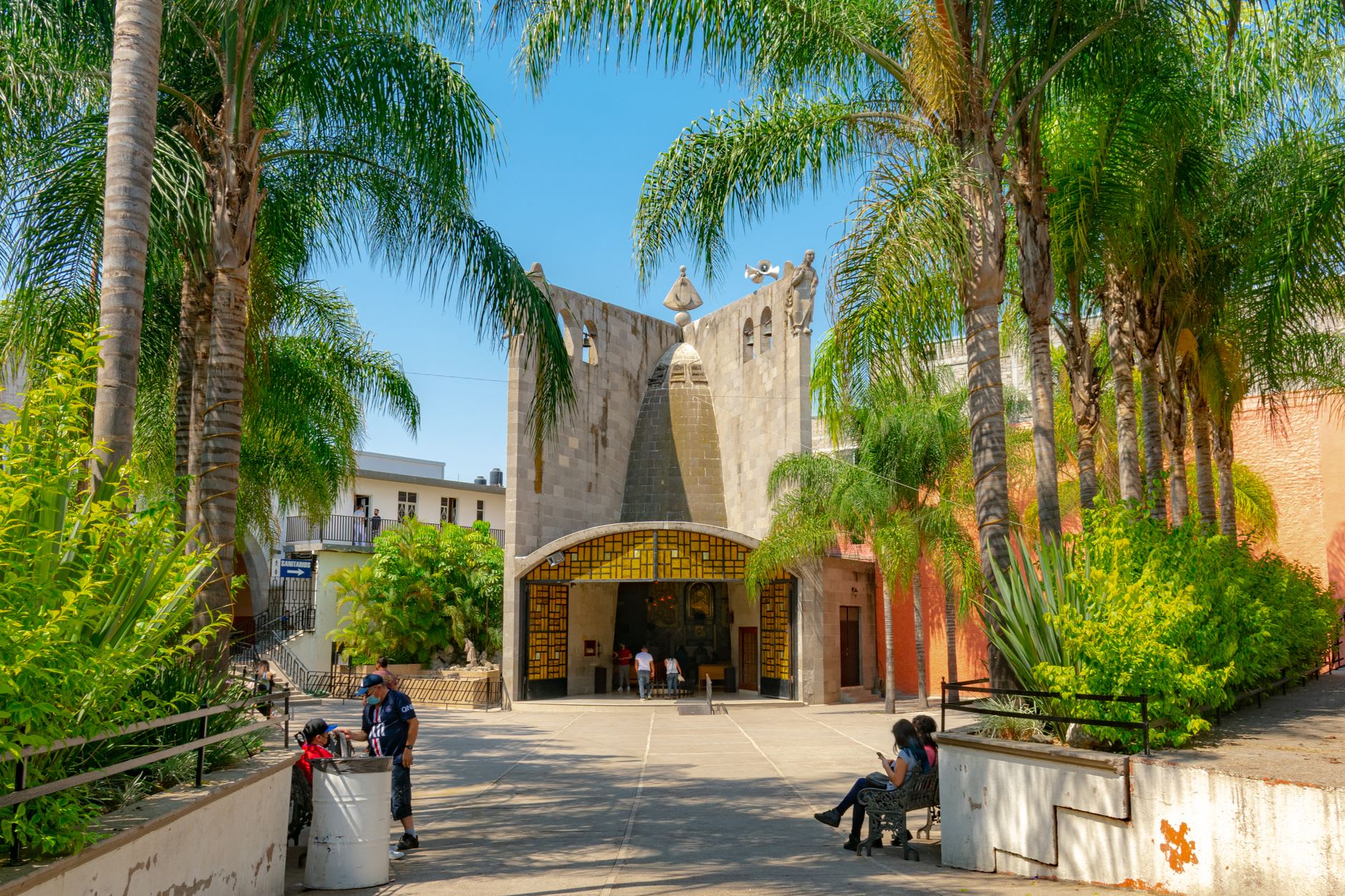
The jacarandas along the side streets bloom in February and March, turning the already photogenic streets into something almost absurd with color. In France, when the cherry blossoms come on the Canal Saint-Martin, people stop what they are doing. In Mexico City, the jacarandas produce the same public pause — vendors slow down, conversations move outside, the entire neighborhood seems to take stock of itself in the purple light. I have lived through two of these now. The second was not less affecting than the first.
The Parque de la Bombilla west of the neighborhood is a large public garden with a monument to Álvaro Obregón, the general and president who was assassinated nearby in 1928. The park on weekend afternoons is a cross-section of the southern city: families with children, joggers, amateur football, couples on the grass. It is the most un-touristic version of San Ángel and the best antidote to the plaza’s refinement.
Getting there: The Altavista metrobús stop on Insurgentes Sur puts you two blocks from the plaza. Uber from the Centro or Roma takes twenty to thirty minutes depending on traffic. Saturdays are when the market happens; the neighborhood is pleasant every day but quietest on weekdays.
Where to eat: The food market at Mercado del Carmen for lunch. The café on Plaza San Jacinto for café de olla. The jugos stall on the south side of the Bazar del Sábado for agua de jamaica in the late morning. For dinner, the restaurants on Calle Amargura behind the church serve Oaxacan and contemporary Mexican cooking at prices that reflect the neighborhood’s income level — not cheap, but worth the occasional splurge.