Colonia Roma / La Condesa
"I moved to Mexico and somehow the neighborhood I kept returning to most looked more like a French city than anything else. This was unexpected and slightly embarrassing."
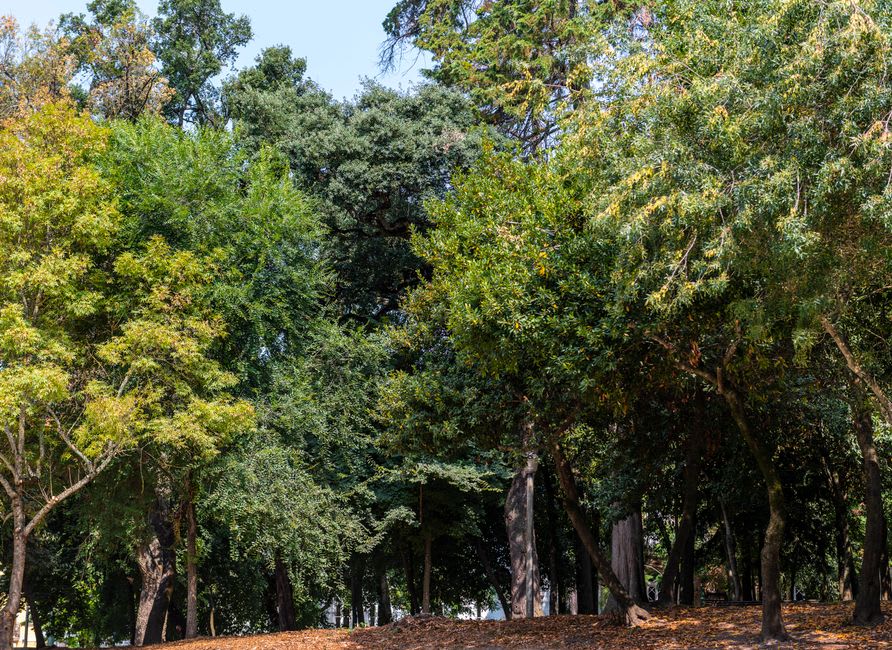
The first thing that surprised me about Roma-Condesa, arriving from France in 2022, was the tree canopy. The avenues of Condesa and the camellón — the planted median — of Álvaro Obregón in Roma are dense with mature trees: jacaranda in spring turning the air purple in the way it does in Madrid and Lisbon, Montezuma cypress and ficus big enough to form actual shade corridors over the sidewalks. After the wide, relatively treeless boulevards of central Paris, finding this quality of street-level shade in a city of 22 million felt improbable.
The second thing was the architecture. The neighborhoods expanded in the 1920s and 30s, when the city grew west of the historic center into what had been hacienda lands, and the architects who designed the new buildings were working in the Art Deco vernacular of that period: curved facades, geometric ornamentation, the specific density of 1930s apartment buildings that feels neither quite European nor quite American but somewhere with its own logic. There are streets in Roma Norte where the scale and the architectural language trigger an aesthetic memory of certain Paris arrondissements — the 11th, parts of the 15th. It is not Paris. It arrived at similar formal conclusions through different routes, and the comparison flatters both cities without fully serving either.
The Parks and How the Neighborhoods Work
Condesa’s organizing logic is its parks. Parque México — properly the Parque San Martín, though no one calls it that — is an oval park in the center of the neighborhood designed with Art Deco formality: a running track, chess tables, dog walkers, the usual park activities, but with a sense of urban purpose that makes it feel like a room of the city rather than an interruption of it. The palms and Montezuma cypresses are old enough to have presence. On Sunday mornings the park fills up in a way that shows you the neighborhood’s layers: young professionals with dogs, older families who have been here since before the area became fashionable, children, the tai chi group that meets at the same corner every week.
Parque España, a few blocks away and smaller, has a more neighborhood feel — less curated, worn at the edges, the kind of park where teenagers sit on benches in the evenings. Parque Luis Cabrera in Roma is a long narrow park on Álvaro Obregón’s median that fills on Tuesday and Saturday mornings with an organic market, one of the better markets in the city for produce and prepared food.
I have eaten lunch in these parks more times than I can count. The Saturday Roma market has a Vietnamese woman who makes pho that I would eat weekly if I lived closer. This is the kind of food discovery that Roma enables constantly: the Vietnamese pho vendor next to the Oaxacan tlayuda stall next to the Argentine empanada cart, all within twenty meters of each other, none of it performing multiculturalism — just a city where people cooked what they knew how to cook and other people decided to eat it.
The 15-Minute Walk on Orizaba
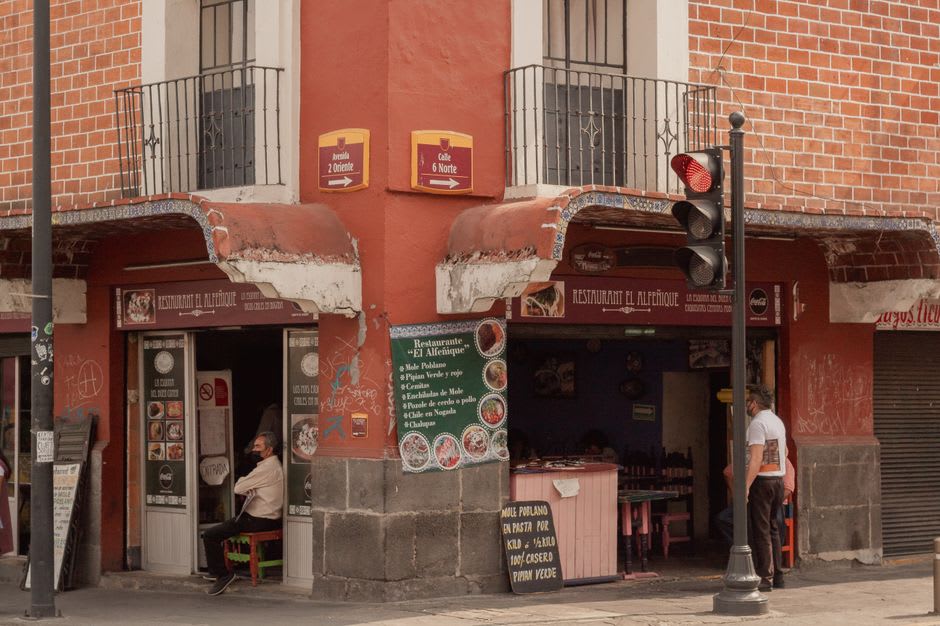
There is a specific walk I do in Roma Norte when I want to understand why food writers talk about Mexico City the way they do. You start at the corner of Orizaba and Álvaro Obregón and walk south for fifteen minutes. In that stretch — I have actually counted — you pass: a yakitori counter run by a Mexico City chef who staged in Tokyo, a taquería that has been on the corner for 25 years and serves the correct tacos de canasta at lunch, a wine bar with a natural wine list that would not be embarrassing in Paris’s 11th, a Lebanese-Oaxacan fusion place that sounds wrong and tastes right, two coffee shops with espresso quality competitive anywhere in Europe, a Yucatecan cochinita place, and a restaurant running a contemporary tasting menu with a waiting list. This is a fifteen-minute walk on a single residential street.
The concentration is not a coincidence. Roma-Condesa became the dining center of Mexico City through the convergence of real estate, demographics, and a generation of Mexican chefs who trained internationally and came back to cook in a city whose eating culture was already extraordinary. The neighborhood did not invent Mexico City’s food culture; it focused it into something visible to people arriving from outside.
The Earthquake and What Remains
The 1985 earthquake killed approximately 10,000 people in Mexico City, and a significant portion of the deaths were in Roma and Condesa where buildings failed. The 2017 earthquake — 7.1 magnitude, 369 dead — hit the same neighborhoods hard again. You can read the cityscape if you know what to look for: the rebuilt sections have different window proportions, different concrete colors, a slightly different relationship to the street. The older buildings that survived carry their own evidence — filled cracks, reinforcement added after 1985, the seismic retrofitting visible at the base of some facades.
This is not a dark thing to observe. It is the city showing its history in its skin, which is what cities do. Walking Roma knowing that the building you are passing was rebuilt after it killed people in 1985 does not make the neighborhood less beautiful; it makes it more complete. These neighborhoods were erased and rebuilt by the people who lived in them, which is part of why the parks are full on Sundays and why the corner taquerías have been on the same corners for 25 years. The place is inhabited in the specific way that surviving a disaster and rebuilding it yourself makes a place inhabited.