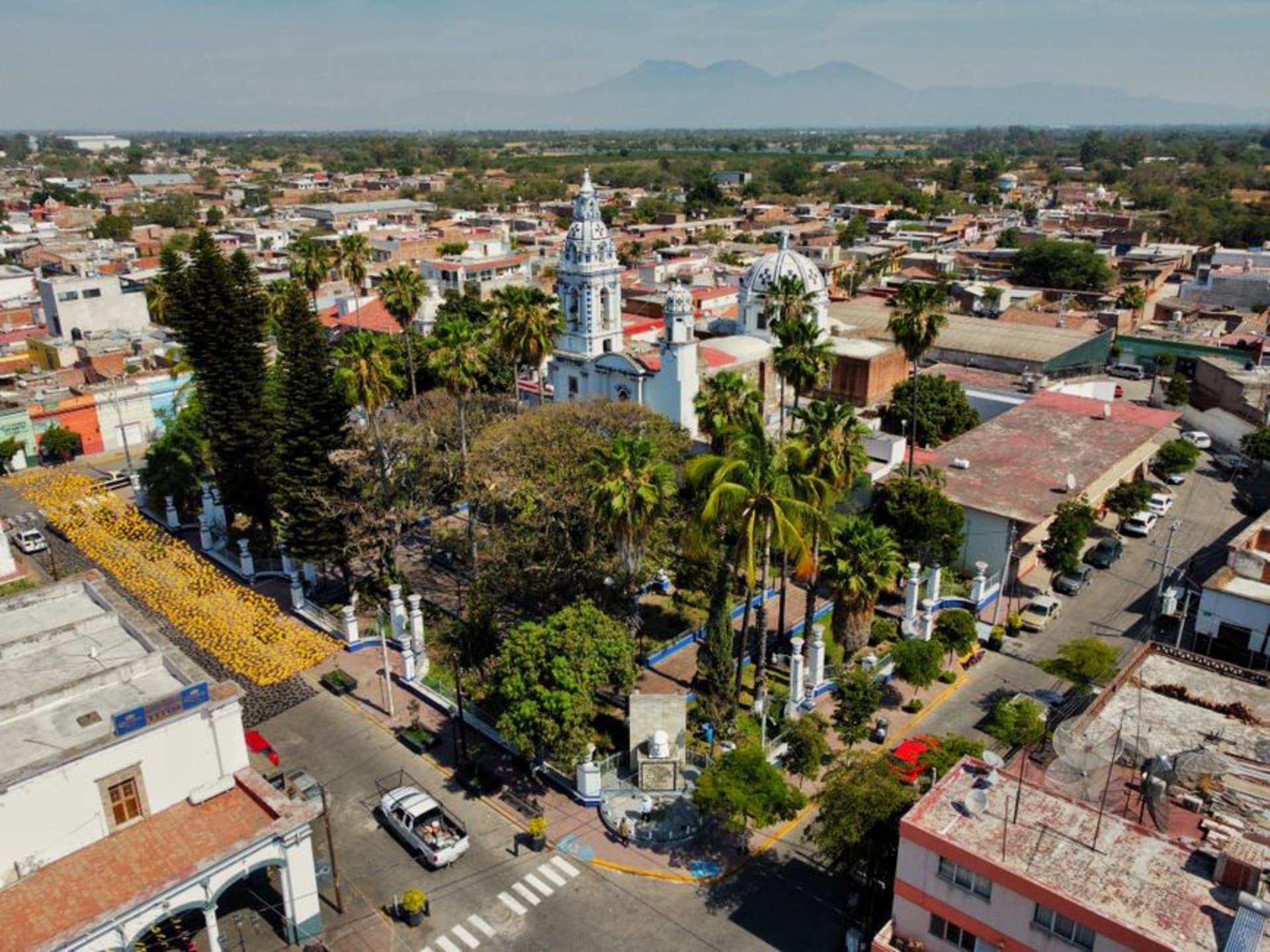
Sayula
"The waiter at the cocina económica has served the same birria recipe for forty years and absolutely does not want to discuss it for social media — Sayula is serious about being itself."
I had come down from Ciudad Guzmán with a half-hour stop in mind, the kind of stop you make when a town appears on the map and something about its proportions looks promising. I parked on Calle Hidalgo and walked into the jardín just as the light was going amber, a Thursday afternoon, and a man was sweeping the bandstand steps with the unhurried authority of someone who has swept them every day for years. Two hours later I was still there, eating at a plastic table outside a cocina I had found by following a smell through an unmarked doorway.
A Centre That Was Never Allowed to Fall Apart
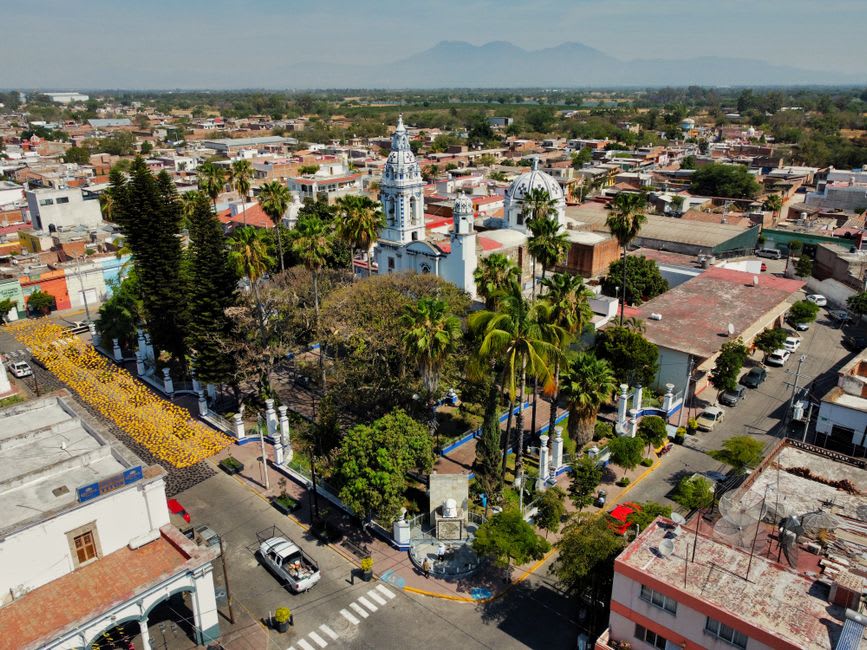
What Sayula has managed — without fanfare, without a UNESCO designation being shoved into every conversation — is a historic centre that simply kept being used. The Parroquia de Santiago Apóstol anchors one end of the jardín with the kind of worn dignity that comes from four centuries of standing in the same spot through earthquakes and revolutions and provincial politics. The portales along the plaza’s west side still shelter the same range of activity they probably sheltered in 1880: a man resoling a shoe, a woman selling chicharrón, two teenagers who have nowhere better to be. The municipal market is two blocks east on Calle Juárez, and it has the proportions and smell of a market that has never needed to perform for anyone. The cheese section alone — Jalisco’s capacity for fresh cheese is one of the great underrated facts of Mexican food — could occupy a serious thirty minutes.
The Birria Question
You will eat birria in Sayula. This is not a recommendation, it is an inevitability. The version at the cocina I found — no name on the door, handwritten menu on a chalkboard, the owner also doing the cooking — was a dark, heavily spiced broth with goat that had been going since early morning. She brought it with a stack of corn tortillas, a dish of raw white onion and cilantro, and a small lime without being asked. I tried to establish details — how long the adobo marinates, what chiles she uses — and she answered each question with the exact minimum of information required to stop me asking it again. The consommé that comes alongside is the kind of thing that makes the concept of menu diversification seem like a moral failure. I had seconds of that and nothing else.
The Lake That Isn’t There
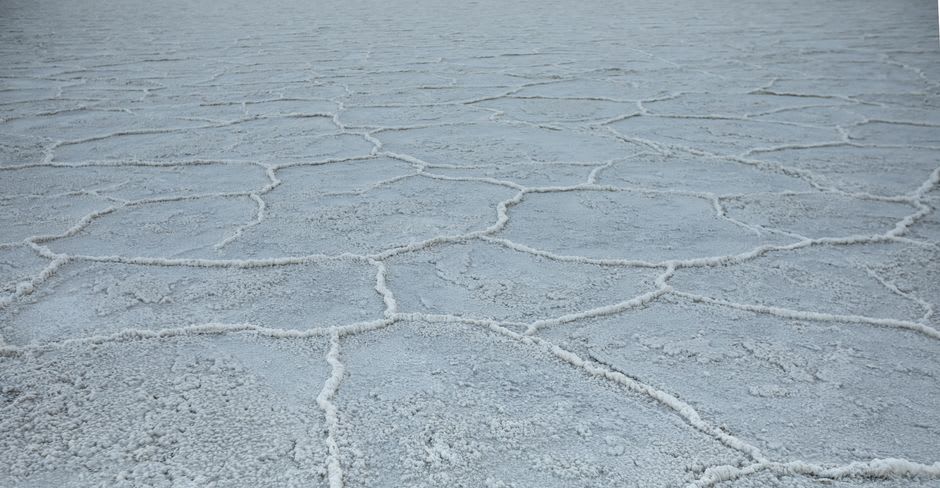
Lago de Sayula appears on maps as a lake. In the dry season — which in southern Jalisco runs roughly from March through June — it is not a lake. It is a white flat extending to a flat horizon, the salt crust bright enough to need sunglasses at midday, the surface interrupted by nothing except the occasional tire track from someone who drove out there to take a photograph of the nothing. I went in April. The stillness had a particular quality: not silence exactly, but an absence of the usual things sound bounces off. Standing at the edge of that expanse, thinking about the Pleistocene mammoths whose bones turned up here in the 1970s, I understood something about this part of Jalisco — it holds its depth quietly, below the surface, and does not announce itself.
Getting There
Sayula sits on Federal Highway 54, about 90 kilometres south of Guadalajara and 30 kilometres north of Ciudad Guzmán. By car from Guadalajara it is roughly 90 minutes. There is ADO bus service from the Guadalajara Central Camionera, though connections through Ciudad Guzmán are more frequent. The centre is small enough that a car is unnecessary once you arrive.