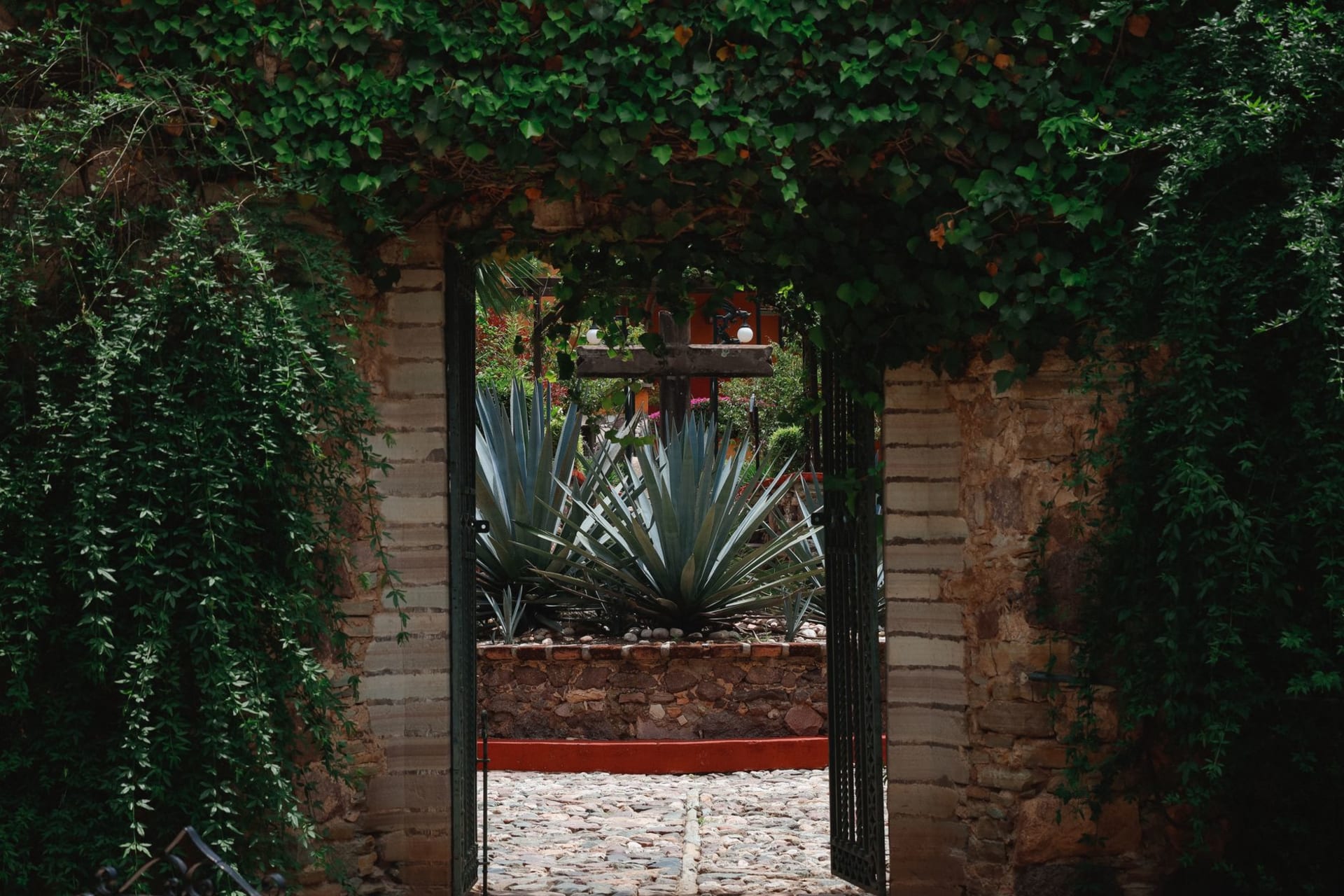
San Sebastián del Oeste
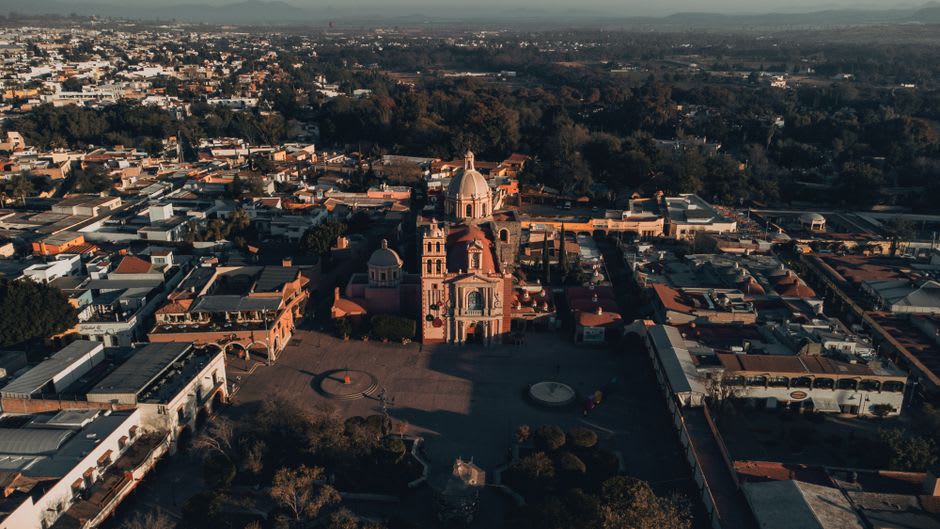
"The plane banked over the ridge and the town appeared: a colonial church, a grass airstrip, and an absence of noise I could feel from the air."
The small propeller plane from Puerto Vallarta to San Sebastián del Oeste takes about forty minutes. This is one of the stranger forty minutes I have spent in Mexico. You take off from PV’s international airport — the beachside resort airport with its open-air arrivals hall and the smell of sunscreen and the general ambiance of a place where people are beginning or ending beach holidays — and you climb immediately into the Sierra Madre Occidental. Below you: the coastal strip, the hotels, the Bahía de Banderas. Then the mountains swallow you and the terrain below becomes steep and forested and inhospitable in a way that makes the forty-minute flight feel like a translation between eras.
The airstrip at San Sebastián is grass. The plane lands, and you step out, and there is a small wooden building that serves as the terminal and two taxis and the sound of nothing except wind in the pine trees. I stood there for a moment longer than necessary to orient myself. The driver who took me into town had a cousin who worked at the airport in Puerto Vallarta. The two places are forty minutes apart by air and seem to have no other relationship to each other.
What Silver Built
San Sebastián del Oeste was founded in 1605, and the silver that came out of the sierra in the seventeenth and eighteenth centuries built a town with colonial architecture whose scale makes no sense for a current population of around 800 people. The plaza, the church, the houses around the main square — they were built for a town of several thousand at peak mining activity, and the buildings outlasted the prosperity that created them.
The church of San Sebastián faces the plaza with a facade that belongs in a city. The plaza itself is the compact, perfect type that Mexican colonial urbanism produced at its best: paved, proportionate, with stone benches where people actually sit. On the afternoon I arrived there were perhaps fifteen people in it, which was somehow more affecting than crowds would have been. A town holding its form without requiring anyone to validate it.
The houses around the center have the whitewashed stone construction of highland Jalisco colonial architecture — dark wooden beams, tiled roofs, the slightly somber beauty of buildings designed for mountain cold rather than coastal warmth. After two days in Puerto Vallarta I found the shift physically noticeable. The temperature at 1,500 meters in the sierra, even in October, is different in a way that affects how you move through a place: slower, more deliberate, less insistently sociable.
The town feels genuinely remote in the way that only mountain isolation produces — not the manufactured remoteness of a boutique hotel “off the beaten path,” but the functional remoteness of a place where the road out takes three hours and the alternative is a grass airstrip.
The Road Up and the Ecosystem Shift
For anyone not flying, the road from Puerto Vallarta to San Sebastián takes about three hours and represents one of the more complete ecological transitions available on a single drive in Mexico. You leave the coast through the tropical dry forest of the Jalisco lowlands — the thorny deciduous trees, the palms, the heat that comes through the window even at speed. Within 40 kilometers you are in cloud forest. At 80 kilometers you are in pine-oak sierra, the air cool and scented with resin, the light filtered through trees with a completely different canopy from anything below.
On the lower slopes, passing through smaller villages, you see coffee plantations, tobacco growing in low covered structures, avocado orchards. The agricultural transition follows the elevation: as you climb, the crops shift, and by the time you reach San Sebastián the farming has contracted to subsistence vegetables and the occasional apple orchard.
I walked back down part of this road on my second morning — not far, just to a viewpoint about twenty minutes below town — and looked back at the sierra. The town was invisible behind a ridge. The clouds were sitting in the valley below. Mountain isolation is not an abstraction. You can stand in it and look at it.
Practicalities
The flight from PV is the experience — check with local operators who fly the route in small Cessna-type aircraft; the cost is reasonable and the views are not. The road is fully paved and manageable in a standard car, though the hairpins require patience and the altitude gain requires attention to fuel.
The town has two or three small guesthouses and one more developed posada. Book ahead for weekends when day-trippers from PV arrive and fill the limited accommodation. The restaurant options are limited but honest — the main one near the plaza serves pozole, enchiladas, and simple highland Jalisco cooking that tastes exactly right at altitude in mountain cold. I ate there twice and did not wish for more options.
