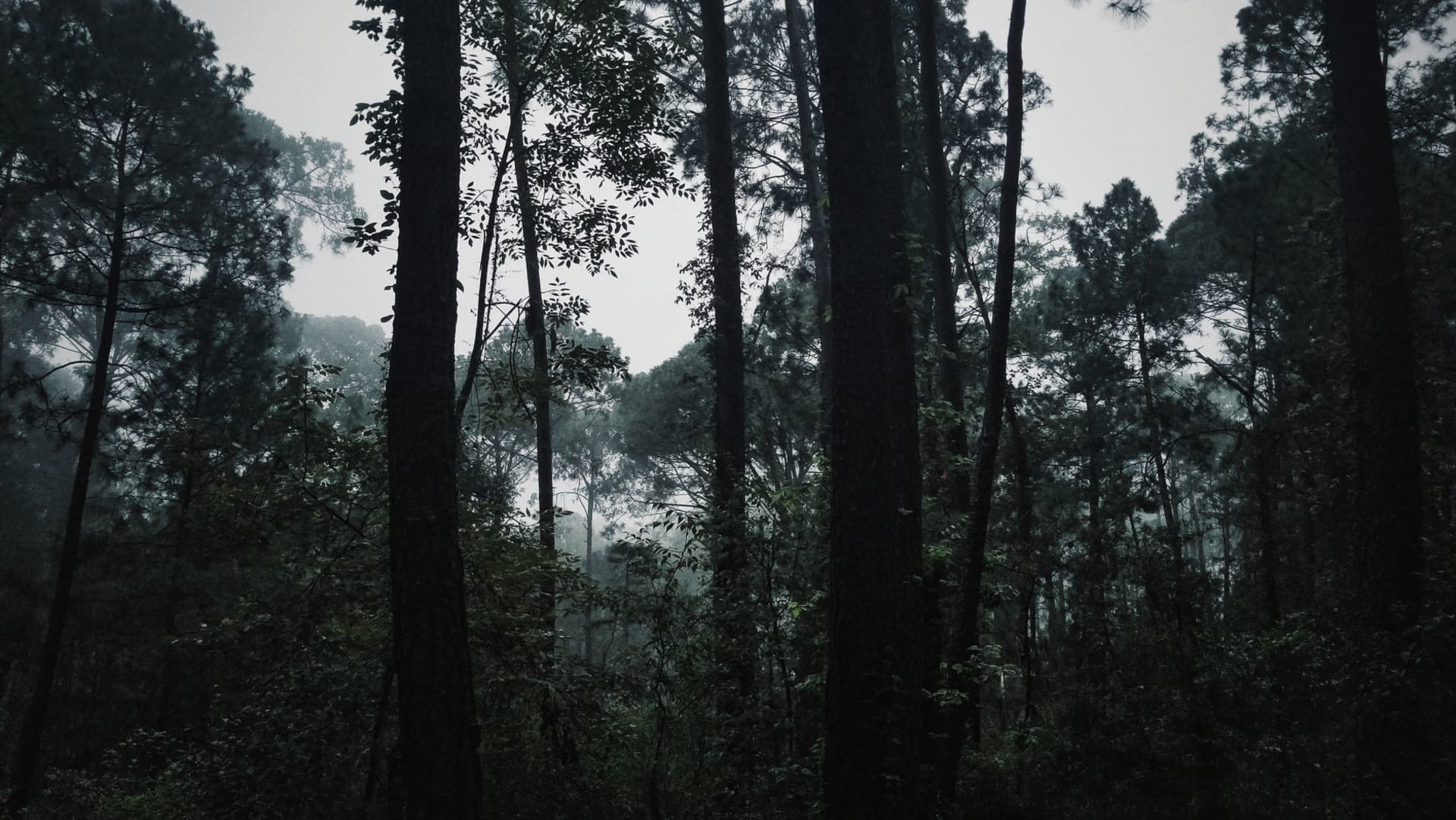
The drive from Guadalajara to Mazamitla takes about two hours on the road through Jocotepec and Sahuayo, or slightly less if you take the toll road to La Barca and cut south from there. Either way, the last forty minutes are through mountain pine forest, the road climbing through a series of switchbacks as the altitude increases toward 2,200 meters and the landscape changes from the dry scrub of the lakeside lowlands to a cooler, denser, more northerly-feeling sierra. The fog, in the November when Lia and I drove up, arrived at about the 1,800-meter mark: first as wisps between the trees, then as a proper low cloud that reduced visibility to fifty meters and turned the pine trunks in the forest into a line of grey pillars disappearing into white.
We arrived in fog and the fog stayed for most of the weekend, lifting occasionally in the late morning to reveal the village and the valley below and then closing again by noon. I had been told that Mazamitla was one of those places that looked better in photographs than in reality, which in my experience is something people say about places they visited on the wrong weekend or in the wrong weather. Fog is not the wrong weather for Mazamitla. Fog is, arguably, the correct weather.
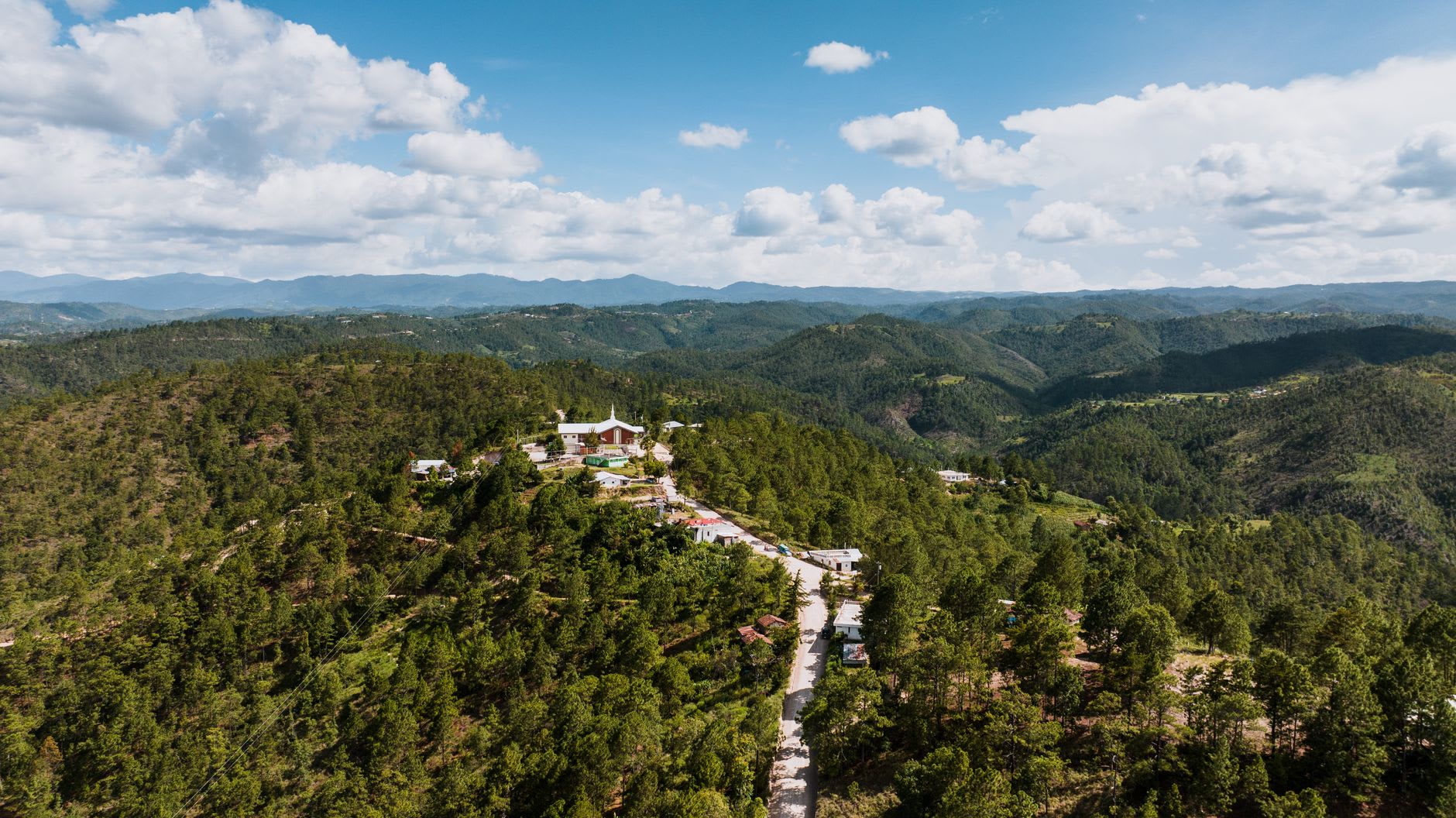
The village has the architecture of high-altitude sierra Mexico: log cabins and heavy timber construction, wooden balconies with carved railings, flower boxes under the windows, stone streets that are easier to navigate on foot than by car. The aesthetic is coherent in a way that suggests either genuine preservation or coordinated restoration — I suspect some of both, but the effect is a village that looks like it grew from its landscape rather than being imposed on it. Compared to Guadalajara, two hours and what feels like two climates away, it is extraordinarily quiet.
Arriving and Settling
We found the posada we had reserved through a recommendation rather than a booking platform — a small place run by a woman named Doña Carmen who had been operating it for twenty years and whose approach to hospitality was to explain where everything was, leave us alone, and reappear at meals. The room had a fireplace, which she showed us how to use. The wood was stacked outside the door. She left us a box of matches and said: the nights are cold, you will want it by eight o’clock. She was right. By eight o’clock Lia had the fire going and we were the kind of warm that only a wood fire in a cold room produces — the specific warmth that radiates from one source and leaves corners and the backs of chairs at a different temperature, which is different from and better than the uniform warmth of central heating.
The wood smoke from the chimneys of Mazamitla is the smell of the village. Walking the stone streets in the morning, it comes from every direction: the breakfast fires in the posadas and houses, the street food stands, the bakery that runs its clay oven from before dawn. In France, wood smoke has a specific set of associations for me — alpine winter, the chalet kitchens of my grandmother’s village in the Vosges, a particular quality of cold air. In Mazamitla, the same smell in a completely different context produced the same involuntary sense of comfort, which is either evidence of the universality of fire or just evidence that my nervous system is easily manipulated by smell.
The Village and Its Pleasures
Mazamitla’s main commercial street runs a few blocks from the central plaza and contains the full catalog of the village’s tourism economy: posadas, restaurants, artisanal shops selling furniture and pine-wood objects and locally produced jams and honey, and the strawberry-and-cream operations that are the village’s most specific culinary identity.
The strawberries are grown in the surrounding sierra at this altitude, which produces a different fruit than lowland commercial strawberry farming: smaller, more intensely flavored, less uniform in size and color, higher in acidity. They are sold by the flat in the morning market and by the cup or plate at the street stands. The cream — nata, the thick cultured cream that Mexican dairy produces, different from crème fraîche but not entirely unlike it — is the counterpoint. The combination is simple and, in this context, at this altitude, after a morning walk through pine forest, exactly right.
I had strawberries with nata at a stand on the main street at about eleven in the morning and felt the mild absurdity of this clearly, because ordering strawberries and cream in a mountain village in Mexico at 2,200 meters is not an activity that maps onto any prior category in my experience. It is neither Mexican in any canonical sense nor French nor anything else I have a name for. It is simply the specific pleasure of this place, developed here for reasons of geography (the altitude, the climate, the particular farm conditions) and consolidated into an identity. Lia had two portions and declared that Mazamitla had made the correct choices.
The Silence
Guadalajara is not a quiet city. This is not a criticism — it is a city of over four million people and it produces the sound of four million people going about their business continuously and at a volume that, after a few months, your brain calibrates as background. You stop noticing it the way you stop noticing the sound of your own heartbeat. Then you go to Mazamitla and spend a weekend in the fog and the pine smell and the wood smoke, and when you come back to the city, you notice the sound again. For about three days, until calibration re-establishes itself.
The silence of Mazamitla at night is a genuinely different phenomenon from urban quiet: no traffic hum, no air conditioners, no sirens, the specific absence of the subaudible city drone that persists even at 3am in Guadalajara. What replaces it is not silence in the sense of no sound but silence in the sense of only natural sounds: wind in the pines, occasionally rain on the roof, the fire settling, an animal somewhere in the forest beyond the edge of the village. We slept both nights from ten until seven, which for two people who usually function on six hours is the most reliable evidence I have of the mountains working.
The Bosque de Mazamitla, the pine forest that surrounds the village, has marked hiking trails of varying length — from one-hour loops above the village to half-day routes deeper into the sierra. The longer routes require reasonable fitness for the altitude; the shorter ones are accessible to anyone who can walk on uneven ground. We did one on the morning of our second day, the fog just lifting enough to see the valley below through breaks in the cloud. The trail was wet from the previous night’s rain. The smell of wet pine and earth after rain is the Mazamitla smell distilled to its purest form.
Getting there: By car from Guadalajara, 2h via Jocotepec (on Lake Chapala) and continuing south into the sierra. The road is well-maintained and fully paved. There is no reliable direct bus service from Guadalajara; the most common public-transit route goes via La Barca or Jiquilpan with a connection, which adds significant time. Mazamitla is primarily a rental-car or private-transport destination, or a tour from Guadalajara. Parking is available near the main plaza.
When to go: October through February for the fog, the cold, the wood fires, and the most atmospheric version of the village. The strawberry season runs from October through April. July and August are the high season (school holidays, Guadalajara families), when posadas fill completely — book well in advance. The village is slower and more peaceful on weekdays regardless of season.