Ciudad Guzmán
"Ciudad Guzmán is Juan Rulfo's birthplace and the capital of a Jalisco that tourists have largely not discovered yet."
I came for Rulfo and stayed an extra day because of the birria. That is, I think, roughly the ratio the city deserves — the literary claim is real and worth honoring, but Ciudad Guzmán has enough substance outside the museum walls that reducing it to a pilgrimage stop would be a kind of insult. I arrived on a Saturday evening from Guadalajara, four hours on a second-class bus that cut through sugarcane and avocado country, and when I stepped out at the central terminal the Nevado de Colima was sitting on the southern horizon like a fact that refuses to be argued with.
Reading Rulfo in the House Where He Was Born
The Casa Museo Juan Rulfo sits a few blocks from the Jardín Principal, a modest colonial building that the city has maintained with the careful pride of a place that knows it holds something. Rulfo’s novel Pedro Páramo runs to barely 130 pages — I reread it on the bus down — and standing inside the museum, looking at the photographs of this valley he called the plain of flames, the book’s airlessness suddenly makes geographic sense. The light in Zapotlán el Grande, which is what Ciudad Guzmán was called when Rulfo was born in 1917, has a particular flatness in the dry season, a brightness that offers no shadow to hide in. The museum curators understand this. They have not over-explained. The photographs, the manuscripts, a few personal objects — they let the emptiness between things do what Rulfo’s sentences do. I spent nearly two hours there and spoke to almost no one.
Sunday Morning and the Weight of a Good Market
The Sunday tianguis in Ciudad Guzmán is not arranged for photographs. It begins before I was ready for it — by seven in the morning the blocks around the Jardín and the Mercado Municipal have already filled with vendors selling everything from hand-thrown pottery to plastic sandals to copal incense in rough blocks. I found my way to a woman near the corner of Colón and Constitución who was ladling birria into clay bowls from a pot she had clearly been tending since before dawn. The broth was dark and fat-sheened, the meat fell apart without ceremony. She handed me a stack of warm tortillas and did not ask where I was from. That indifference felt like its own kind of welcome. The market runs through midafternoon, and if you are patient you will find enchiladas de ceniza — corn tortillas blackened in ash — which is the kind of preparation that does not travel well and therefore remains stubbornly local. I ate two orders and regretted nothing.
The Volcano and the Unhurried Afternoon
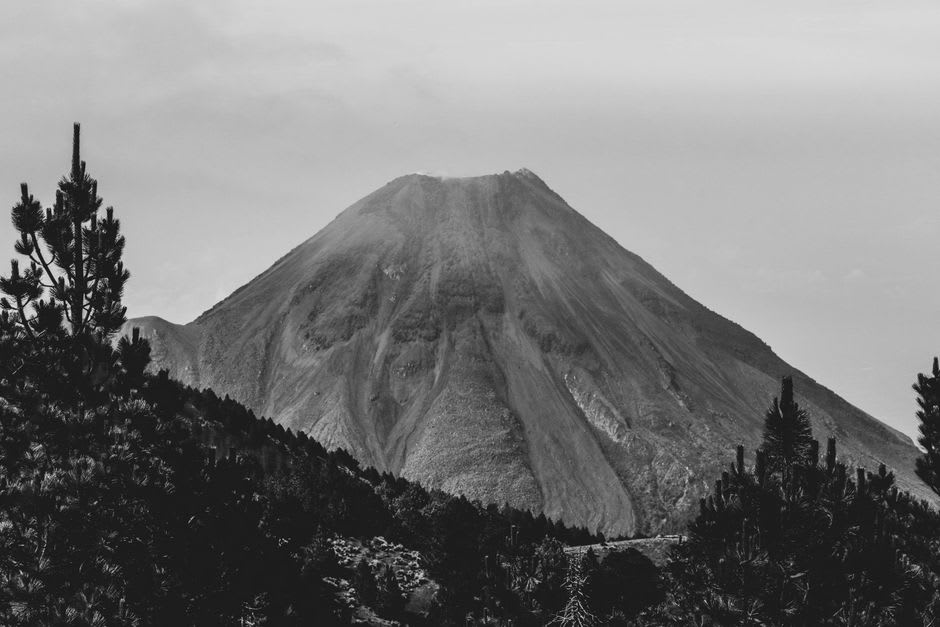
The Nevado de Colima is technically across the state line in Colima, but Ciudad Guzmán owns the view. On a clear morning — and most mornings here are clear before the clouds build — you can see both peaks of the volcanic complex from the edge of town: the dormant Nevado and the active Volcán de Colima, which sends up a thread of steam with the unconcerned regularity of someone who knows they are the most important thing in the room. The mirador at the edge of Parque Metropolitano gives the cleanest sight line. I went twice, once at seven in the morning and once just before dusk, and the mountain looked like a different country each time. The park itself fills in the late afternoon with families, teenagers, a few serious joggers. Nobody was paying attention to the volcano. I found that reassuring, somehow — the coexistence of something enormous and something ordinary.
Getting There
From Guadalajara’s Antigua Central Camionera, buses run to Ciudad Guzmán through the day with ETN and Primera Plus — the ride is three and a half to four hours depending on traffic through Sayula. From Colima city it is under two hours heading north. The bus terminal drops you within walking distance of the centro. There is no airport; the city prefers it that way.