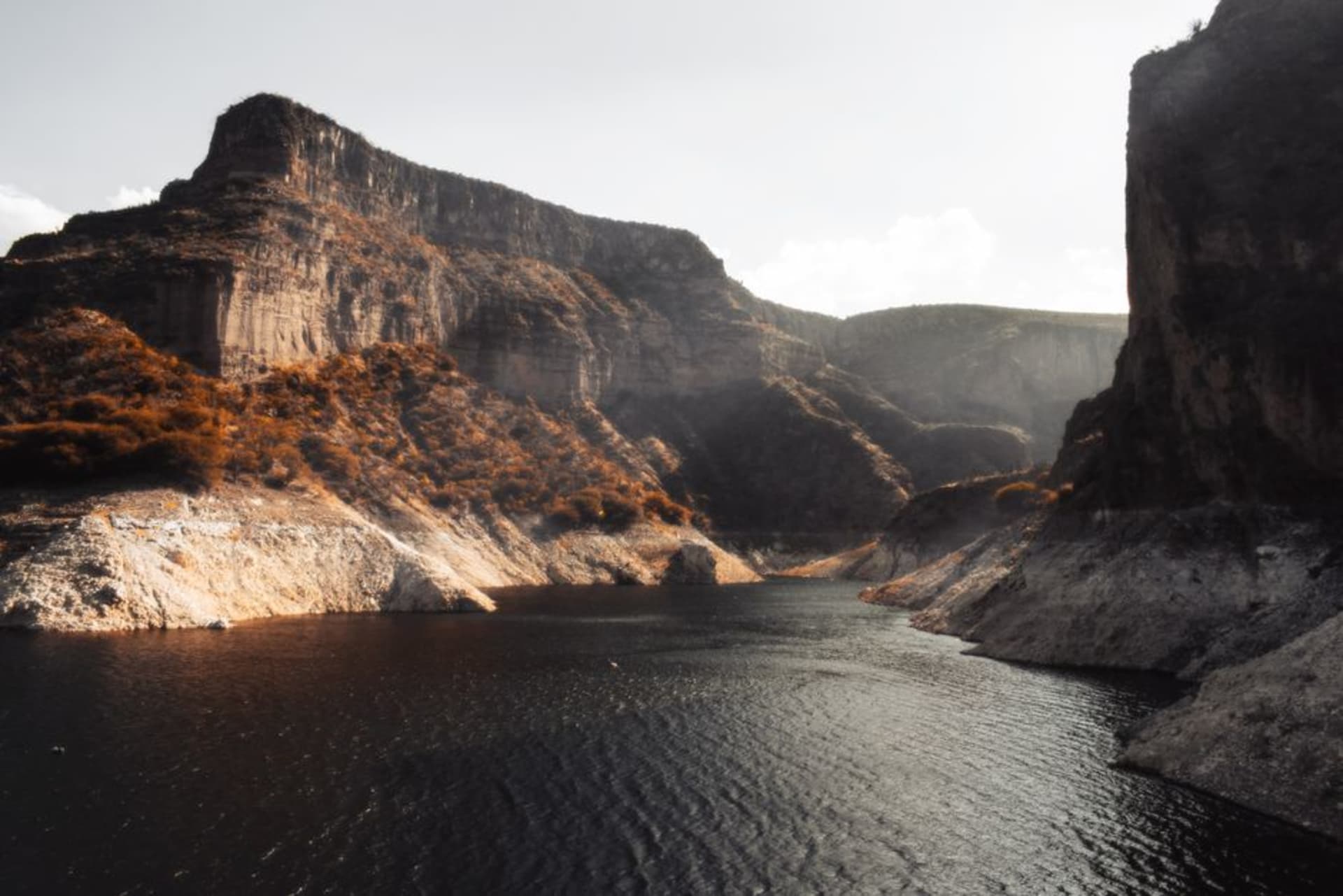
I came down from Ixmiquilpan on a bus that smelled of dried chile and engine oil, watching the Mezquital Valley unscroll through scratched windows. The landscape is the kind that takes work to love — limestone and organ pipe cactus, maguey in every direction, a palette that runs from ochre to gray. Then the road bends near Tasquillo and the reservoir appears below: Presa Zimapán, wide and entirely the wrong color for a semi-arid valley. Turquoise, genuinely, against pale rock. I had not expected to stop here long. I spent most of the afternoon.
Presa Zimapán
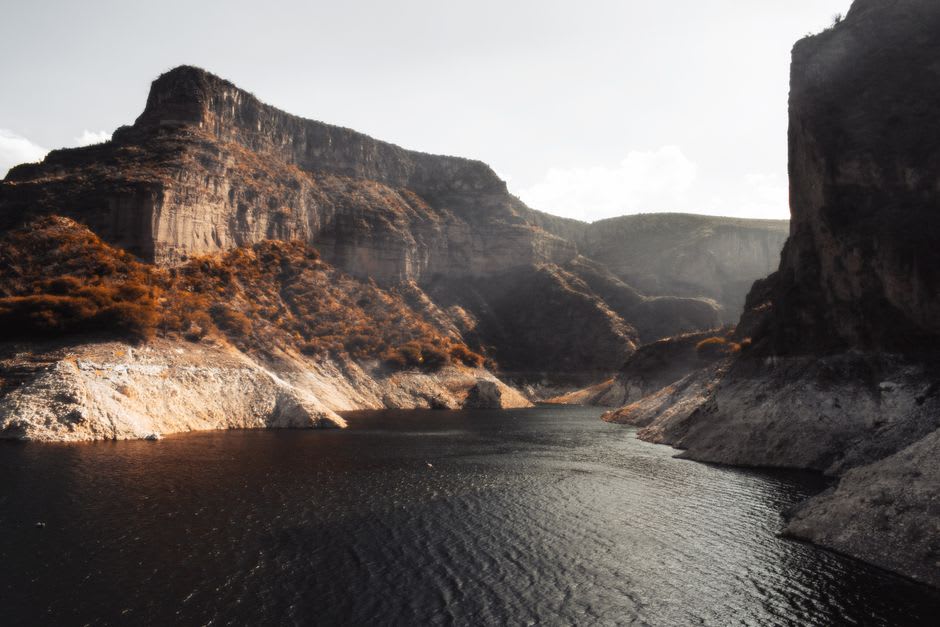
The reservoir fills what was once a deep canyon in the Sierra Madre Oriental foothills, and the view from the road above is genuinely disorienting. The water sits two hundred meters below the ridgeline, hemmed in by walls of pale limestone fuzzy with cardon and nopal. In late afternoon, when the sun drops west of the ridges, the color shifts from turquoise toward green-gray, and the whole scene turns cinematic without particularly trying.
From the town itself, which climbs a hillside in the way of all Mezquital towns, there are informal overlooks where you can sit and watch fishing boats trace slow lines across the water. The fishermen work tilapia and carp, species introduced decades ago but now entirely woven into the local diet. A woman at a roadside puesto near the water sold me pescado frito wrapped in paper, cilantro and lime squeezed over it without asking, the way it should be done. I ate standing, looking at the reservoir, and felt no particular need to be anywhere else.
The Tianguis and the Embroidered Geometry
The Mezquital Valley is one of the heartlands of the Otomí people — Hñähñu in their own language — and Tasquillo sits squarely within that territory. On Thursdays, the main market day, the tianguis near the central plaza fills with women from surrounding communities selling bordados: embroidered textiles whose geometric patterns are among the most technically exacting folk art I have encountered in Mexico. The women who make them are patient with questions if you ask in Spanish, less patient if you try to bargain too hard.
The food at the market follows the valley’s logic — maguey features in almost everything. Agua miel, the sweet sap drawn from the agave plant before fermentation, appears in drinks and certain preparations. Mixiotes — lamb or mutton slow-steamed in maguey leaf packets — are the thing to eat if you see them. I found them at a stall run by a woman who served them with consomé and two salsas, one rojo, one verde, without ceremony or explanation.
The Valley Road
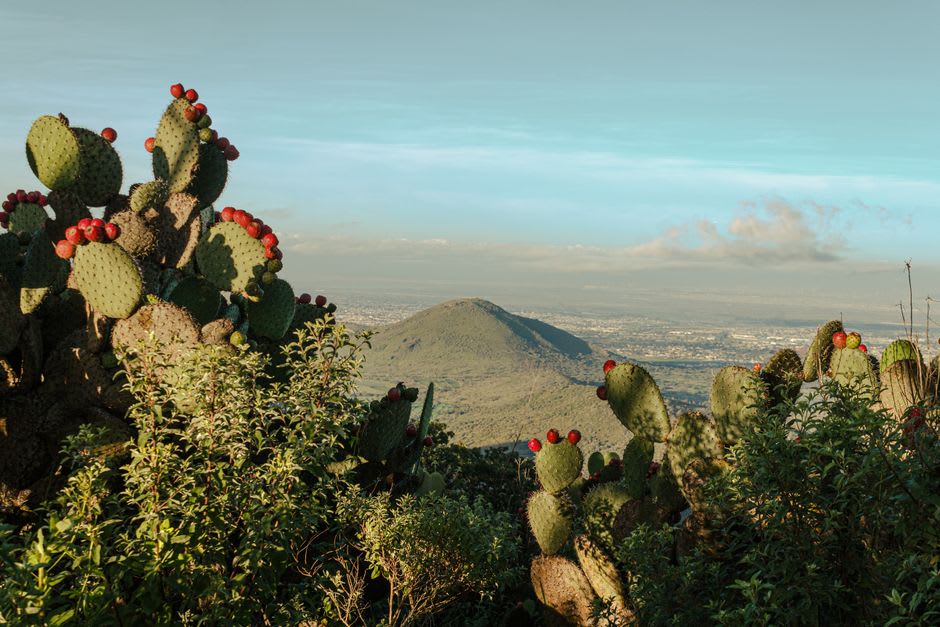
The highway between Ixmiquilpan and Zimapán — México 85 — is what I would go back for as much as anything. It runs through the valley with the reservoir visible in stretches, climbing into limestone bluffs before dropping again toward the water. There are pullouts where trucks stop to let engines cool, and where you can stop too, looking back at the ridgeline. A road like this rewards slow travel: a bus is adequate, a car or motorcycle would be better.
In town, the parish church of San Bartolomé is older than it looks, its façade having absorbed several centuries of Otomí sensibility into its stonework. Worth twenty minutes. The embankment along the reservoir edge — rougher than a malecón, more honest — is where locals gather in the early evening when the heat has dropped to something manageable.
Getting There
Local and ADO buses connect Tasquillo to Ixmiquilpan (around 30 minutes) and Zimapán (roughly 40 minutes). From Mexico City’s Terminal del Norte, frequent departures serve Ixmiquilpan, with onward local transport from there. Driving from the capital via Pachuca and Actopan takes under three hours. The route itself, México 85 through the Mezquital, is half the reason to come.