San Bartolo Tutotepec
"The bright bird-and-flower embroidery you see all over Mexico was born up here, in the fog, on the knees of Otomí women."
I went to San Bartolo because of a tablecloth. Years ago in a Mexico City market I’d bought a piece of Tenango embroidery — those vivid hand-stitched birds and animals and flowers on white cloth — without knowing anything about where it came from. When I finally traced the name back to its source, it led me here, into the cloud forest of eastern Hidalgo, up a road so misty and winding that I understood at once why this art had stayed a secret for so long.
Into the Sierra Otomí-Tepehua
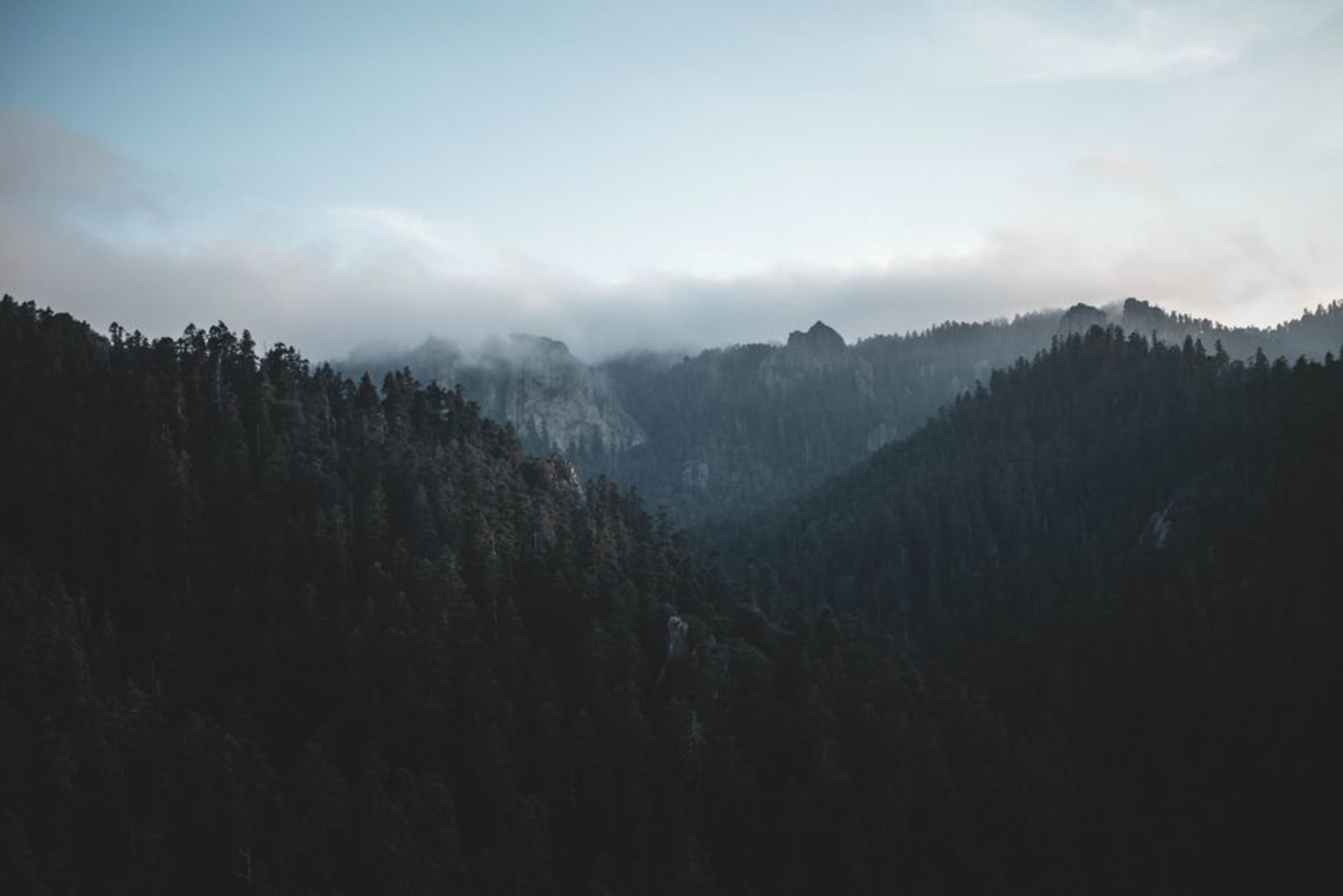
The Sierra Otomí-Tepehua is one of those pockets of Mexico that the country’s own postcards forget. Steep, folded green mountains permanently draped in cloud, coffee growing in the shade, tiny communities strung along ridgelines that vanish into fog by afternoon. The road in is slow and often wet, the kind where you take a blind curve trusting nobody’s coming the other way, because usually nobody is.
San Bartolo Tutotepec sits in the middle of this, a modest town of tin roofs and mist that serves as the hub for scattered Otomí (Ñähñu) communities in the hills around it. When I arrived the whole place was under low cloud, dripping, quiet, woodsmoke hanging in the streets. I ducked into a comedor and ate a bowl of something hot while the fog pressed against the doorway, and a couple of men at the next table spoke Otomí to each other, easily, the way you’d expect Spanish anywhere else.
The Birthplace of the Tenango
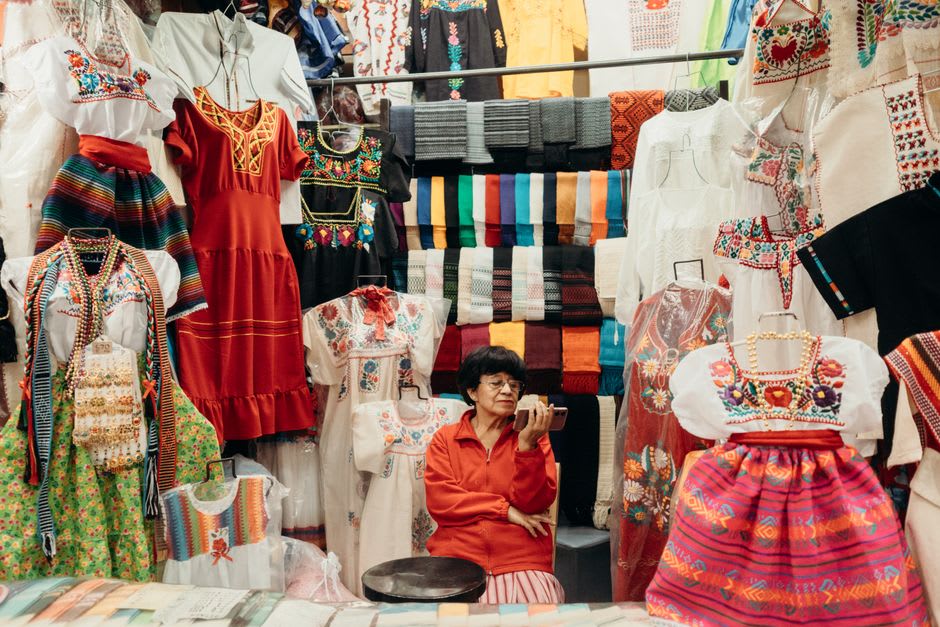
The embroidery Mexico calls “Tenango” — named for the wider Tenango de Doria region that San Bartolo belongs to — was born in these hills. The story locals tell is of hard years decades ago when Otomí women began stitching the old designs from cave paintings and ritual paper cuttings onto cloth to sell, and out of that necessity came one of the most recognizable folk arts in the country. What surprised me is how alive it still is here at the source.
I sat with a woman who had a piece stretched across her knees, a riot of impossible animals in colors that shouldn’t work together and completely do. She stitched while we talked, barely looking down. A large piece, she said, is months of work. When I see Tenango sold cheap now in tourist shops I think of her hands and that fog and the months, and it changes what the object is. Buy it here, from the women who make it, and pay what it’s worth.
Coffee, Cloud, and Deep Tradition
Beyond the embroidery, San Bartolo is a deeply traditional Otomí place, and you feel it. Coffee grows on the shaded slopes and gets roasted dark and drunk strong. The market days bring people down from the ridge communities in numbers, and the festivals — tied to the old calendar as much as the church one — are intense, local affairs rather than anything staged for outsiders. I happened onto the tail of one and understood only a fraction of what I was seeing, which felt exactly right.
Mostly what I remember is the atmosphere: the permanent damp, the moss on everything, the way the cloud would lift for twenty minutes to show impossibly green mountains and then close again. It is not a comfortable, easy destination. It is remote and wet and requires effort. But it is one of the most genuinely rooted places I’ve been in Mexico, and it gave me back the origin of a thing I’d carried around for years without understanding.
Getting There
San Bartolo Tutotepec is deep in eastern Hidalgo, roughly three to four hours from Pachuca or from Tulancingo over increasingly narrow, foggy mountain roads. Shared vans and second-class buses connect it to Tulancingo and to nearby Tenango de Doria, which is the other main center for the embroidery and worth pairing with a visit. A car gives you freedom to reach the smaller Otomí communities in the hills, but the roads are steep, wet, and slow — go in daylight, keep your speed down, and don’t trust your phone map on the last stretches. Come for the cloud forest and the textiles, and come patient.