Mineral del Chico
"The rock climbers were already on the columns when the cloud arrived and slowly erased them from the bottom up. They kept climbing anyway."
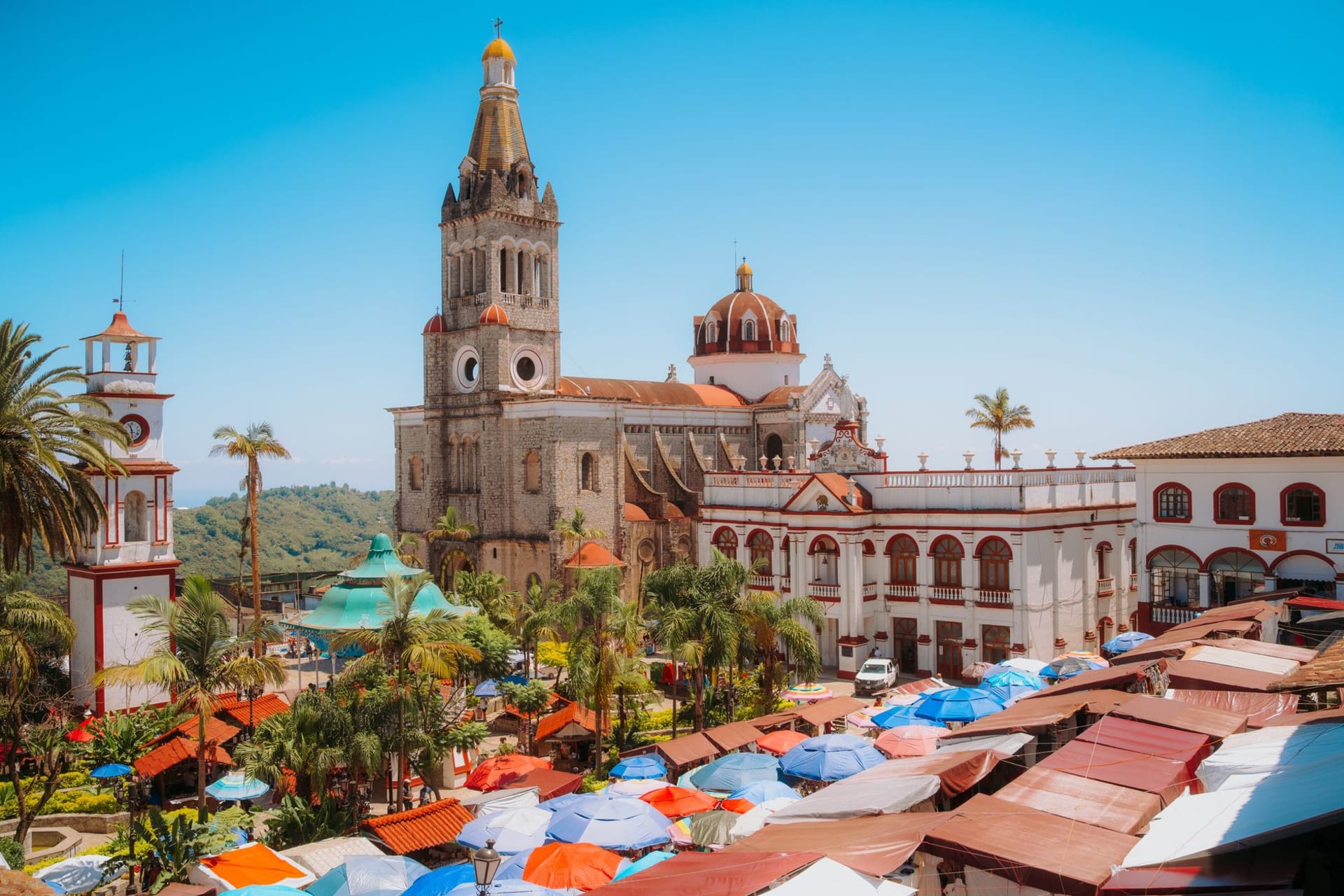
The road from Pachuca to Mineral del Chico takes about forty-five minutes through pine forest that gets denser and taller and more cloud-wrapped as the altitude increases. At some point around 2,500 meters the forest changes character — the pines become more massive, the undergrowth more lush and fern-heavy, the light more diffuse and green, the air noticeably cooler and moister — and you understand you are in a cloud forest. The village arrives shortly after this transition: a cluster of stone and stucco houses on a hillside, a small plaza with a church, a few restaurants with smoke coming from their kitchen chimneys, and the smell of pine resin and wood smoke that I associate with Mineral del Chico the way I associate the smell of fresh bread with good boulangeries in France — a smell that produces an involuntary positive response before any conscious evaluation has occurred.
I went on a Sunday in November, which turned out to be exactly the right time and exactly the wrong time simultaneously. The right time because the cloud forest on a November Sunday morning is extraordinary — the cloud building from the east, the light fractured and soft, the rock formations at Los Órganos appearing and disappearing through the mist. The wrong time because every family in Mexico City who owns a car and has a child between the ages of three and twelve had apparently chosen this same Sunday to make the same drive. The trail to Los Órganos had a queue. A queue. In a cloud forest at 2,700 meters.
I did not mind as much as I expected to. The Mexico City families on their Sunday mountain escape are a specific and entertaining demographic: well-equipped, mildly competitive about their gear, feeding their children from small containers of prepared food they brought from home, taking photographs of everything. The children were enthusiastic about the rocks in the way that children are enthusiastic about things they can physically touch and climb. The parents looked healthy and a little cold. Everyone was happy to be out of the city, including me.
The Forest and the Rocks
Los Órganos — the Organs — are a formation of vertical basalt columns on the eastern face of the Parque Nacional El Chico’s main ridge. The name is accurate: seen from the trail below, the columns rise like the pipes of a massive stone organ, their faces grey and faintly striated, their height variable but reaching in some sections to sixty or seventy meters. The geological explanation is the same as for similar formations worldwide (columnar jointing in cooling lava flows), but the visual effect in this specific landscape — cloud forest, mist, pine trees at the base of the columns and at the top, the grey stone going in and out of cloud — is something that the geological explanation does not capture.
Rock climbers from Mexico City use Los Órganos on weekends; there are bolted routes of various grades on the accessible columns, and on the Sunday I visited, three parties were on the rock simultaneously. One group had reached a ledge about forty meters up when the cloud came in — not the wispy high cloud of early morning but a dense low fog that arrived from the east and moved through the trees with noticeable speed, erasing the rock face from the bottom up. The climbers disappeared into it with calm deliberateness, continuing their route by touch and rope and trust. Five minutes later the cloud passed and they were visible again, ten meters higher than before.
The forest itself, at this altitude, is a different organism than the pine forests of lower Mexican mountains. The tree trunks are covered with moss and lichen to a degree that makes them look upholstered. The undergrowth is diverse: ferns, bromeliads, small orchids visible only if you are looking for them. The birds are highland cloud-forest birds — tufted flycatchers, mountain trogons, the occasional resplendent quetzal (rare this far north in its range, but present in the park and occasionally seen). The air smells of wet pine and earth and something floral that I never managed to identify.
The main trail from the village to Los Órganos takes about forty minutes at moderate pace. The trail system in the park extends considerably further — full-day routes exist for those with the equipment and navigation — but the Los Órganos circuit is the accessible option and entirely sufficient for a day visit.
The Village and the Food
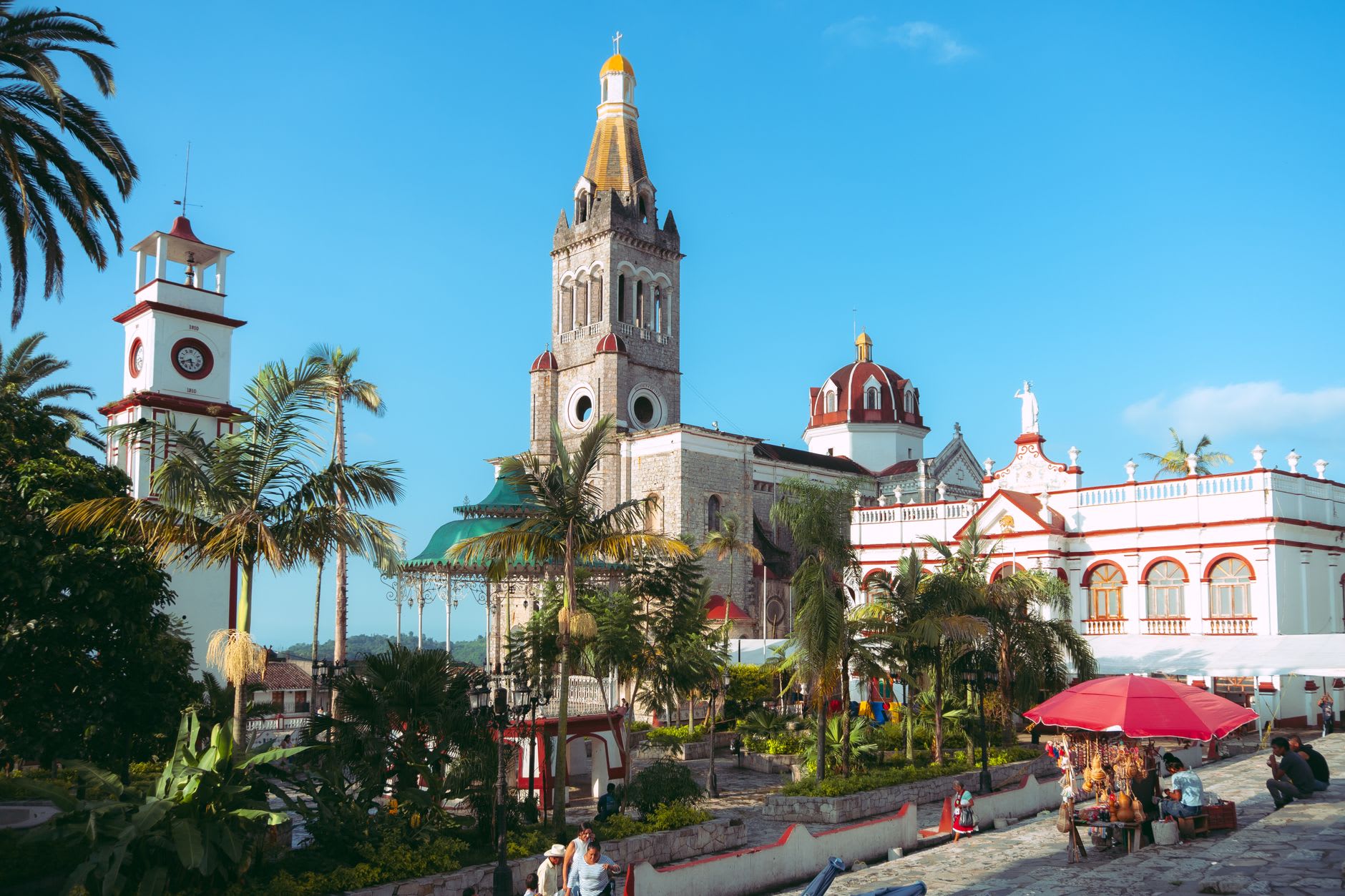
Mineral del Chico the village is small enough to walk its full length in fifteen minutes. The houses are stone and stucco, built on the hillside with the specific gravity of structures meant to stay in one place for a long time. The church on the plaza is colonial — the town was a silver-mining settlement and the mines gave it the same churchy infrastructure that all mining towns received. The mines have been closed since the early twentieth century. The village now lives on weekend tourism from Mexico City and the slower traffic of people who come to hike or climb or simply be in the forest.
The restaurants around the plaza and along the main street serve a version of highland cooking anchored by barbacoa. On Sunday mornings, the barbacoa places — they are not restaurants in the full sense, more like covered outdoor cooking stations with tables — begin serving around seven and often sell out by noon. The barbacoa here is borrego (lamb), cooked wrapped in maguey leaves in a covered underground pit from the previous evening, pulled in the morning and served in deep clay pots with its consommé. You eat it with handmade tortillas and various salsas at a plastic table near the pit, the cooking smell still in the air.
I arrived at eight and got the last table at one of the barbacoa places. The family at the table next to mine had driven from Mexico City, departing at 5am, specifically for this barbacoa — they explained this with the matter-of-fact dedication of serious food people. The lamb was extraordinary: long-cooked and yielding, the maguey leaf imparting a slight herbal quality to the fat, the consommé rich and not oversalted, the tortillas made while we waited by a woman at a comal behind the counter. I had two portions. The family next to mine had three rounds each, including the children, who ate with the focused attention of people doing something important.
After breakfast I walked to the rocks through the building cloud. By the time I reached the base of Los Órganos the mist had come in properly and the tops of the columns were invisible. I sat at the trail junction for a while with the climbers’ approach routes spread out in the guidebook one of them had left on a boulder, drinking coffee from a thermos, listening to the forest.
Getting there: From Pachuca, colectivos to Mineral del Chico run from a small terminal near the market; the trip takes about 45 minutes and costs very little. From Mexico City, drive via Pachuca on highway 85D (about 2h30 total, less if you leave early on a Sunday before traffic builds). Buses from TAPO to Pachuca run frequently, from where the colectivo is the simplest onward connection. Parking in Mineral del Chico is limited and fills early on Sundays.
When to go: Year-round, but November through March for the clearest cloud forest conditions and the most dramatic mist on the rocks. October through February for the best bird activity. Sundays are the busiest day by far — if you want solitude, go on a weekday. For the barbacoa, Sunday morning is the event; most places don’t operate on weekdays. The park charges a small entrance fee at the main gate, payable in cash.