Jacala de Ledezma
"You come around a bend and Jacala is just there below you — carved into a canyon, small, completely calm, and seemingly unbothered by how hard it was to reach."
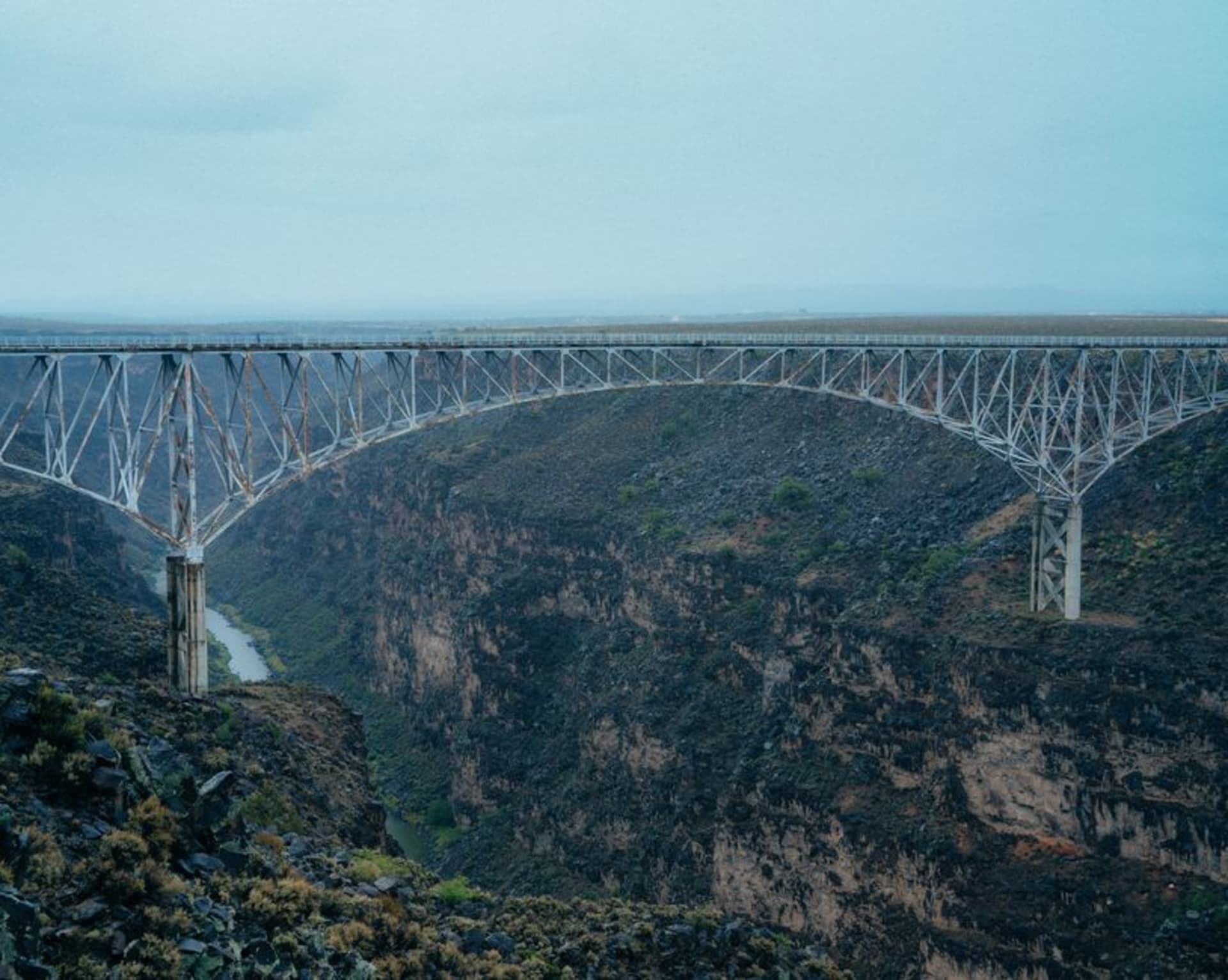
I drove into Jacala from the south on a Wednesday morning, coming off an hour of highway where the Sierra Gorda had been pressing in from both sides. You round a curve and the road tips downward and there it is — the town already below you, fitting into the gorge like something placed there deliberately: red-tile roofs, a church tower, a suspension bridge crossing a ravine you hadn’t yet seen. I pulled over at the overlook and looked for a while. It was eleven in the morning. I had planned to eat something and continue north. I did not continue.
The Bridge, and What the Bridge Asks of You
The puente colgante over the Barranca de Jacala separates travelers by temperament. It is a pedestrian suspension bridge, perhaps sixty meters across, and it sways with a conviction that makes your inner ear reconsider everything it thought it knew about solid ground. Below, the ravine drops into dense vegetation — banana trees and subtropical undergrowth that feel improbable given that you are at roughly 1,600 meters, surrounded by pine-covered slopes on every side. The canyon has carved its own microclimate, which explains why the center of Jacala feels almost warm and lush while the hills above it stay cool and austere.
I crossed the bridge three times. Once to see the other side, which is a path leading to some houses and then upward into the trees. Once because I had left my water bottle at the railing. The third time because I wanted to stand at the midpoint while it moved, which it does continuously, and look down at the river threading through the rocks far below, and look up at the walls of the gorge going green in both directions. There is no ticket, no guide, no barrier beyond your own legs deciding when to stop.
Morning at the Market
The market occupies a covered space near the central plaza and runs through midmorning. I found a woman tending a clay pot of barbacoa de res — the meat slow-cooked to the point where it barely held its structure — and she folded it into handmade tortillas with a salsa verde that had real heat, not decorative heat. Consommé came alongside without my asking, a small clay cup of it, rich and slightly fatty and correct.
Jacala sits in the transition between the highland and lowland food traditions of Hidalgo, and you feel that in the market stalls. Quelites on the side. Memelas with frijoles negros and queso fresco crumbled over the top. At one end of the market, a man was selling chile pastes out of labeled glass jars. I bought one without fully understanding what I would use it for and it lasted me three weeks. I ate too much, as I usually do in markets where nothing is priced for tourists, and then sat on a bench near the church in the sun for longer than I’d intended.
The Town That Does Not Know You Are There
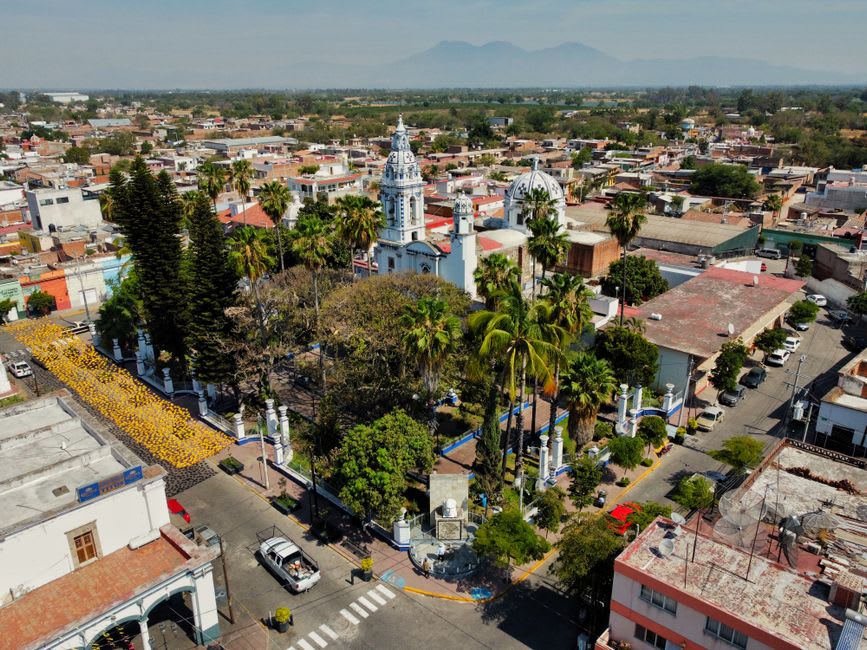
The Parroquia de San Juan Bautista sits at the center of the colonial grid with the slightly crooked confidence of a building repaired many times and never replaced. The streets around it are narrow and mostly empty on weekday mornings. A hardware store. A pharmacy. A comedor on Calle Hidalgo where the television is always on and nobody is watching it, and where I had a coffee so strong it reorganized my afternoon entirely.
The woman running the comedor told me Jacala is quiet in winter and very quiet in summer when the rains make the road difficult. She said most people who stop are truckers, or families on the Monterrey run who need a bathroom and end up staying for lunch. She said it without complaint, as a statement of fact about where she lived. That lack of performance is what makes Jacala work as a place to spend time in. Nothing here is oriented toward being found.
Getting There
Jacala sits on Highway 85, the old overland corridor connecting Mexico City to Monterrey through the Sierra Gorda. From Pachuca, allow roughly three hours north; from Tamazunchale coming south, about two. Intercity buses on the Mexico City–Monterrey route stop in town, though infrequently. The approach by car from the south is dramatically better — the canyon descent alone is worth choosing this highway over the faster alternatives.