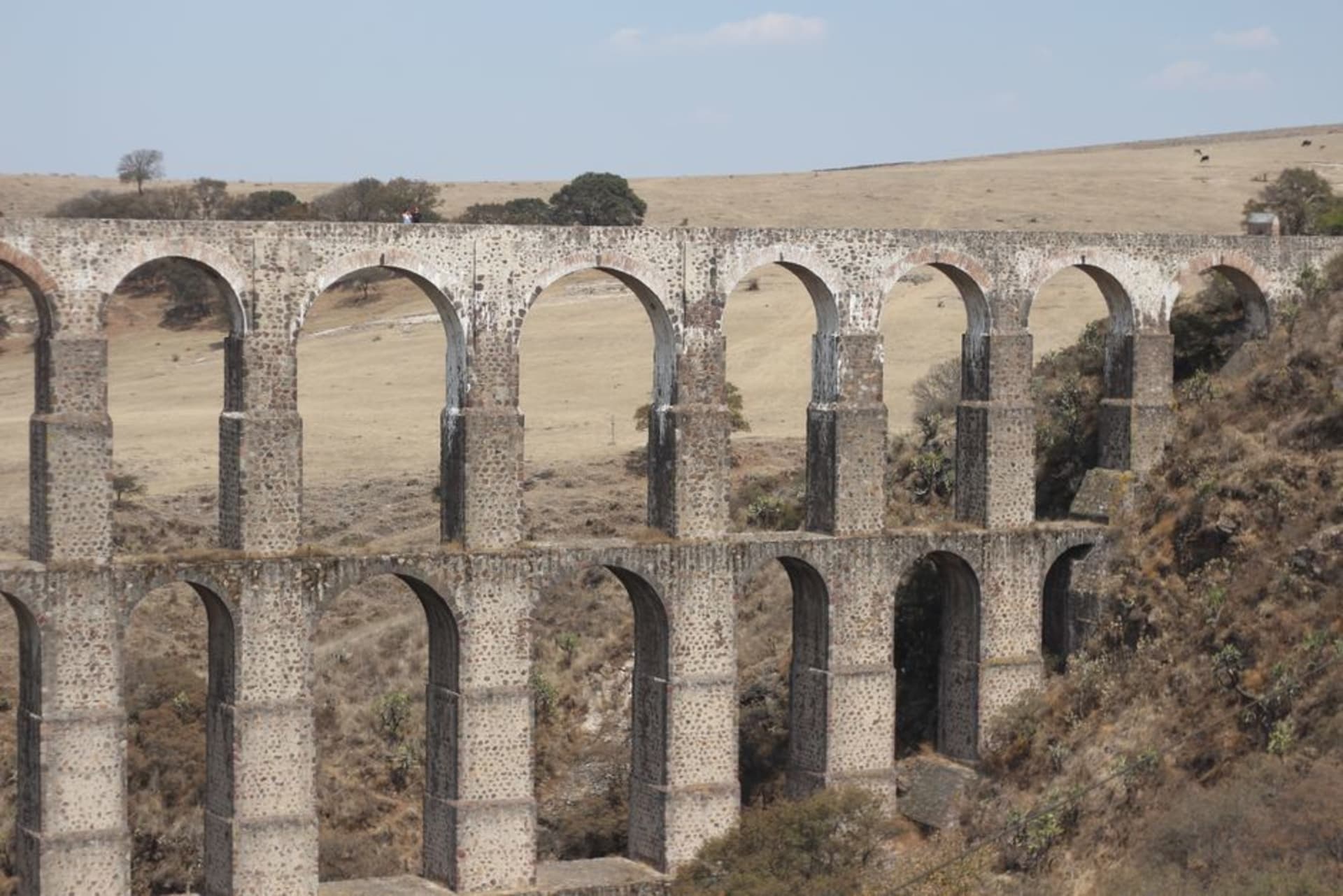
Chilcuautla
"The valley looks like it has nothing to give. Then you notice the canals, and the corn, and the steam rising off the water."
The first time I drove into Chilcuautla I nearly didn’t stop. The road out of the Tula direction runs through kilometers of the same pale, thirsty country — mezquite, prickly pear, the occasional maguey holding its ground against the dust — and one dry town blurs into the next. But I’d been told there was warm water here, and a man at a taco stand in Ixmiquilpan had said the name the way you say the name of somewhere you’re fond of. So I turned off. What I found wasn’t beautiful in any postcard sense. It was something better: a place that had made an honest peace with a difficult valley, and wasn’t pretending otherwise.
A Valley That Learned to Drink
The Valle del Mezquital has a reputation in Mexico, and not a flattering one — it’s shorthand for hard, arid, poor country, the kind of land people leave. Chilcuautla sits in the middle of it, in the Ñähñu (Otomí) heartland, and the first thing you understand is how much work it takes to make this ground produce anything at all. The mezquite scrub goes on for kilometers, silver-green and low, the soil pale and cracked between the plants.
And then, threading through all of it, the canals. Water arrives here from far away, and the valley has been irrigated for generations — some of it, controversially, with treated water carried down from the Valley of Mexico. The result is a strange, hard-won green laid over the brown: fields of corn and alfalfa that shouldn’t exist in country this dry, tended by families who know exactly what each drop is worth.
Warm Water in a Dry Land
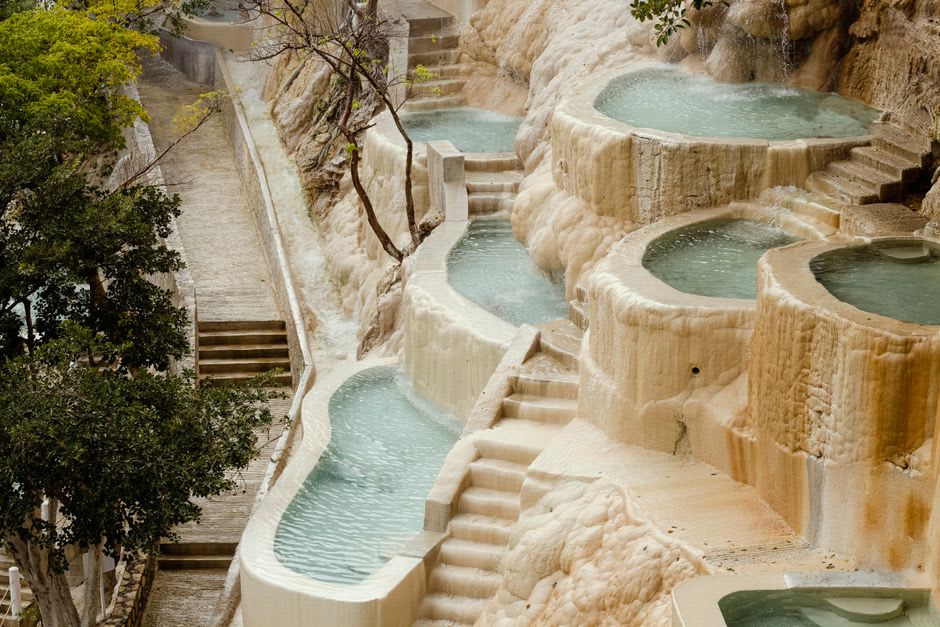
The thing that makes people turn off the road, like I did, is the thermal water. The Valle del Mezquital is dotted with springs and balnearios where warm mineral water rises out of the ground, and around Chilcuautla the local swimming spots fill up on weekends with families from the surrounding towns. There’s nothing polished about them — concrete edges, plastic chairs, someone selling gorditas from a comal — and that’s the charm of it.
I spent an afternoon in one of them, chest-deep in water that came out of the earth warm in a place where everything else was dry and dusty. Kids shrieked and cannonballed. Grandmothers sat in the shallows talking in Otomí, a language you still hear on the streets here, soft and full of nasal vowels that I’ve never come close to pronouncing. It felt less like a tourist attraction than a communal living room that happened to be full of warm water.
The Otomí Thread
What stayed with me most about Chilcuautla wasn’t the water or the scenery — it was the sense of a culture that has held on. The Ñähñu people have farmed this valley for centuries, and you feel that continuity in small things: the language in the market, the maguey worked for pulque and fiber, the particular patience of people who have made a living from land that gives grudgingly.
I bought a bag of mezquite pods from an old man near the church — he showed me how to chew the sweet pulp off the seeds, a taste of the desert that people here have eaten forever. The parish church is plain and solid, no baroque fireworks, the kind of building that was made to last in a place where excess would be foolish. Chilcuautla doesn’t perform for visitors. It simply is what it is, dusty and resilient, and lets you take it or leave it.
Getting There
Chilcuautla is in the Valle del Mezquital of Hidalgo, roughly between Ixmiquilpan and the Tula region. From Mexico City it’s about 2.5 hours by car, heading north past Tula and turning off toward Ixmiquilpan; the town lies a short drive off the main highway. By bus, take a line from Mexico City’s Terminal Norte toward Ixmiquilpan, then a local combi or taxi the rest of the way. Come with a car if you can — the whole point of the Mezquital is the driving between towns, the canals and the mezquite and the sudden green fields, and you’ll want to stop when a balneario or a roadside comal tempts you off the road.