Petatlán
"I went in looking for something I couldn't name. An hour later I was still reading the wall to my left. There was enough wall to read for a week."
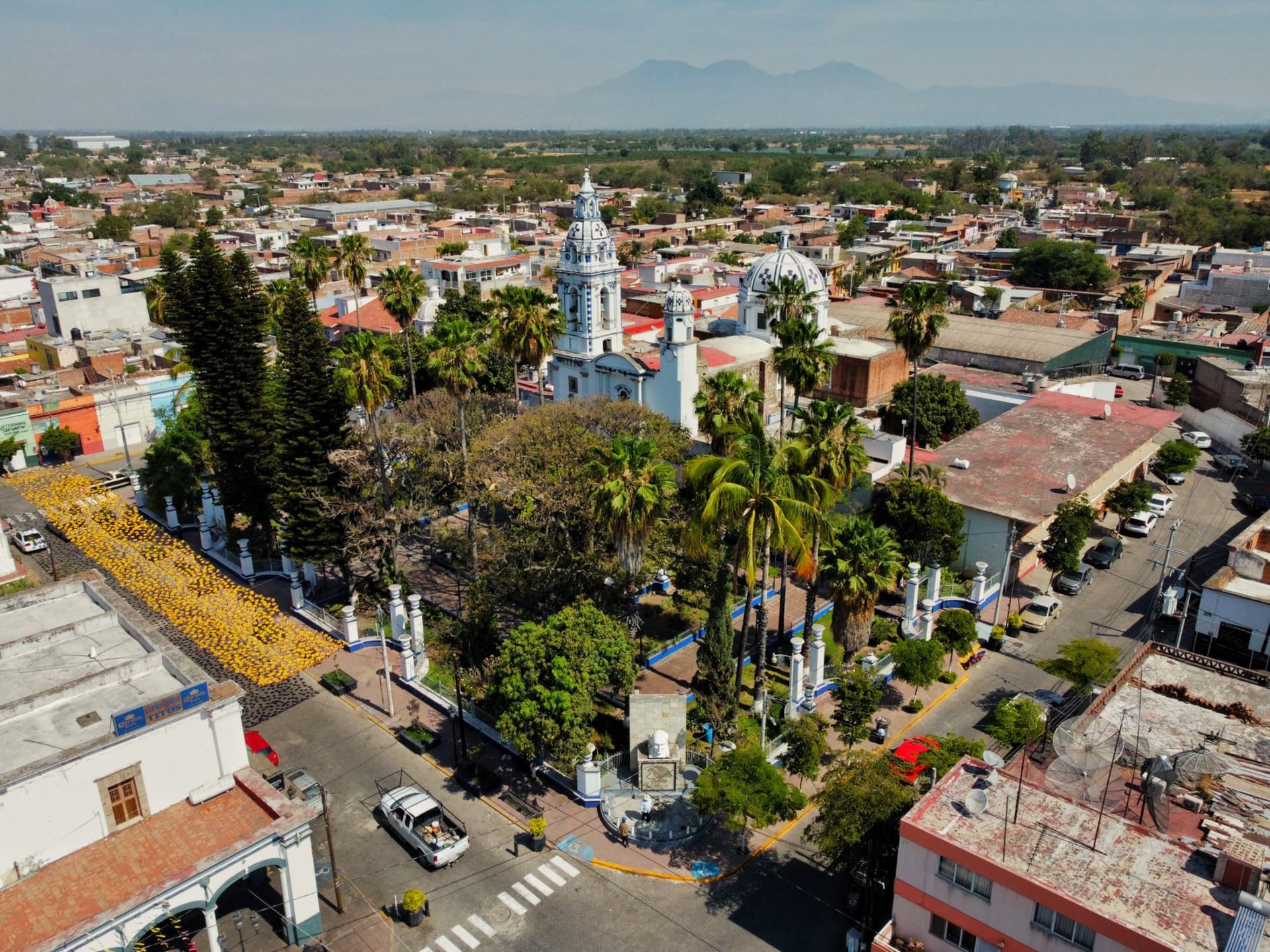
I stopped in Petatlán because I had read about the ex-votos. I did not entirely know what to expect. I had seen ex-votos in churches elsewhere in Mexico — individual tablets on a side altar, or a modest collection near a revered image — but nothing quite prepared me for what the interior of the Santuario de la Virgen de Petatlán looks like when you open the door.
The church is not architecturally remarkable from the outside. A colonial façade on a small plaza, a moderate tower, the whitewash that most churches in small Mexican coastal towns have. You open the door and the scale of the offering hits you immediately.
The Ex-Voto Interior
An ex-voto is a small painted tablet — traditionally tin, painted in vivid colors — that a devotee leaves at a church after a prayer is answered or a miracle received. The standard format shows the miraculous event: the car accident that should have been fatal but wasn’t, the illness that lifted when medicine had failed, the person who disappeared and came back. Below the image is a text, in the handwritten script of whoever made the tablet, explaining what happened, naming the person who was protected, and thanking the Virgin.
Individual ex-votos are charming and moving. The collection in Petatlán is something beyond that. The walls of the sanctuary are covered from the floor to the ceiling vault in ex-votos, arranged in dense rows that overlap at the edges, reaching every surface. The columns are covered. The arch soffits are covered. In the side chapels the ex-votos are stacked three and four layers deep where they have accumulated over the decades that people have been bringing them.
The effect, standing in the middle of the nave, is of being inside a room whose walls are made entirely of individual human events. Each tablet represents a specific person at a specific moment of extremity who survived or healed or was returned. There are tablets from the 1940s with the colors still bright. There are tablets from last year with the paint still glossy. The visual register runs from folk naive — the figures flat and stylized, the accident depicted schematically — to something approaching skilled draftsmanship in the more recent examples.
Reading the Wall
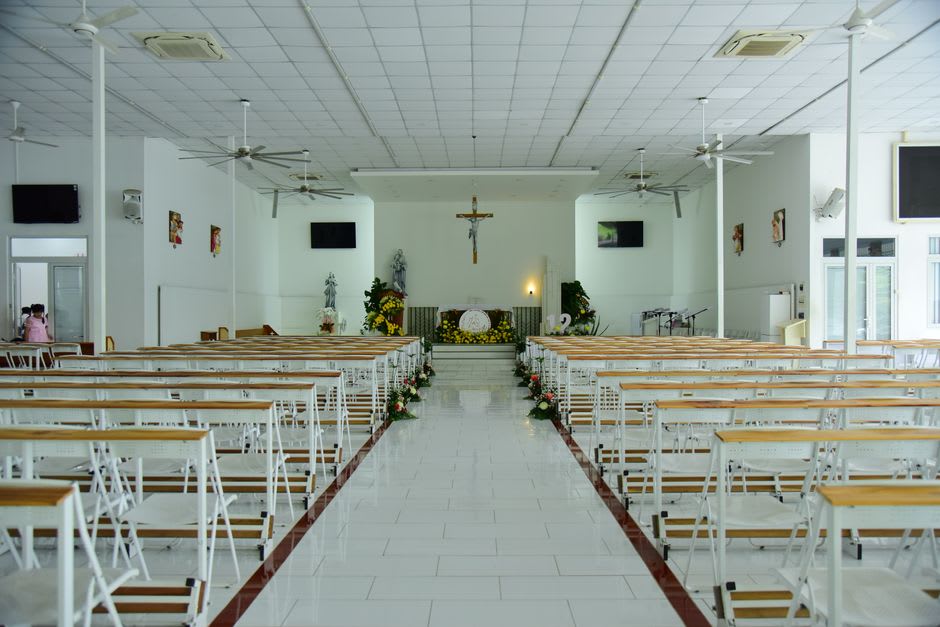
I sat in a pew to the left of the nave and read the ex-votos closest to me. This is not a quick activity. Each tablet is a complete narrative. I read about a man from Guerrero who fell from a building and was not killed, attributed to the Virgin’s intervention, dated 2003. A child who recovered from a fever the doctor had called serious. A fishing boat that capsized and the crew who survived. A woman whose husband came home after three years of silence.
The faith embedded in each tablet is not abstract. It is the record of a specific transaction between a specific person and their understanding of the divine: I was in danger, I prayed, I survived, I am here to say thank you. The repetition of this structure across hundreds of tablets, stacked to the ceiling, accumulates into something difficult to categorize — not exactly art, not exactly religion in the institutional sense, something that functions as community memory and communal testimony simultaneously.
The Santuario de la Virgen de Petatlán is a pilgrimage site. People come from the broader Guerrero coast and beyond to leave offerings, make petitions, and attend the feast days. On the Thursday I sat there, a middle-aged couple came in and added a new tablet to a section of the wall near the altar, pressing it carefully against the others, and then knelt for several minutes in prayer.
I stayed until I lost the light from the windows. Then I stayed a little longer.
Getting There
Petatlán is on Highway 200, the coastal highway, between Zihuatanejo and Ixtapa to the south and Lázaro Cárdenas to the north. From Zihuatanejo it is about 45 minutes by car or colectivo. There is no particular reason to overnight in Petatlán itself — Zihuatanejo makes a more comfortable base for the Costa Grande.

The church is on the main plaza and open in the way that Mexican pilgrimage churches tend to be open: most of the day, closed for certain afternoon hours, the exact schedule somewhat flexible. Go when you have no schedule. Go when you have time to read a wall.