
Salvatierra
"Forty-three arches of intact 17th-century stonework, a slow green river underneath, and no one selling me anything. It was a good afternoon."
I had been driving south from Guanajuato City for about an hour and a half when I saw the first arch. Then another. Then the full span of the aqueduct running along the edge of a town I had not planned to stop in for this long.
Salvatierra does not appear in the same conversations as Guanajuato City, San Miguel de Allende, or Dolores Hidalgo. It is in the same state and shares the same colonial architecture and the same general dry agricultural landscape, but it lacks the critical mass of international visitors that triggers the accommodation-and-restaurant upgrade cycle that transforms a colonial town into a destination. This is simultaneously its limitation and its appeal, and I came down on the side of appeal.
The Aqueduct
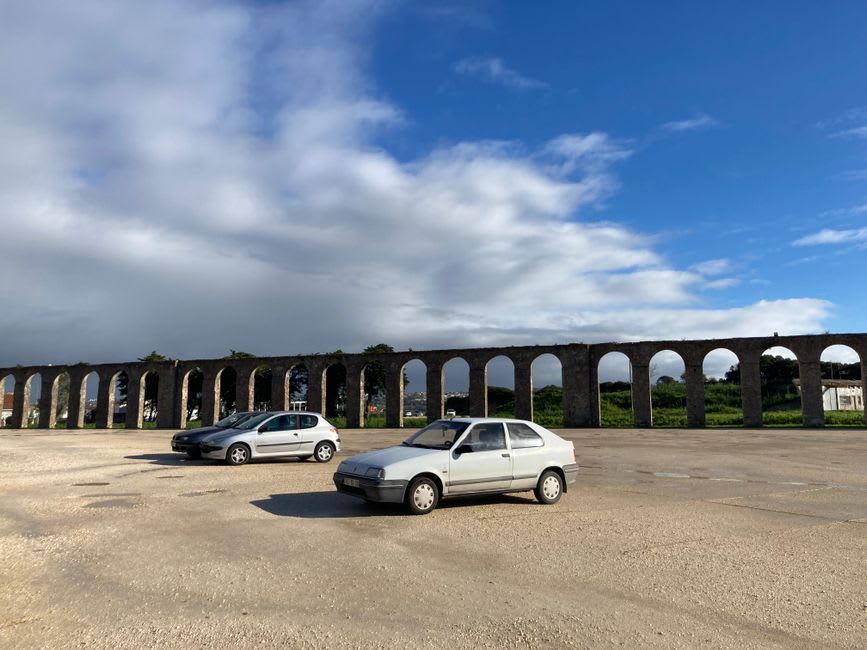
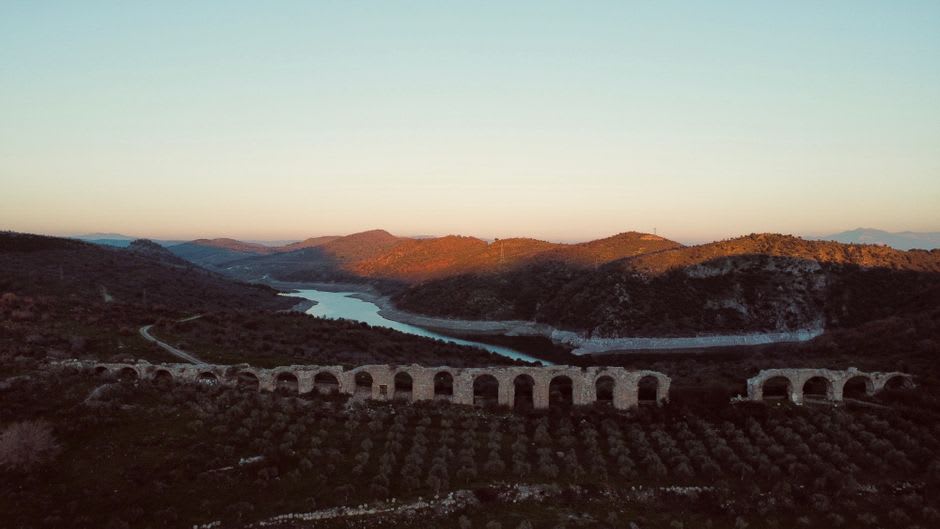
The aqueduct was built in the late 17th century to supply the town and the Augustinian convent that anchored Salvatierra’s colonial development. It has 43 arches. They are baroque in their proportions — tall, narrow, slightly pointed at the crown — and constructed from the pale regional stone that appears throughout Guanajuato-state colonial architecture.
The arches are intact. Not primarily restored — intact, in the sense that the original stonework is still doing the structural work it was built to do, weathered and mossy in the lower sections near the river but not crumbling, not reconstructed with visible modern infill. Walking the length of the aqueduct in the late afternoon, I kept measuring it against French comparisons: the Pont du Gard is grander in scale but is also a monument rather than an edge of a town, cordoned and managed and priced. The Salvatierra aqueduct is just where the town ends and the agricultural land begins.
I walked its full length twice. No one else was walking it. A dog accompanied me for about a third of the route and then lost interest.
The Augustinian Convent and Its Frescoes
The convent of La Cañada is a few blocks from the aqueduct, and the cloister inside has frescoes. This is not an unusual thing to say about a colonial convent in Mexico — most have frescoes, or evidence of where frescoes were. What is unusual is that Salvatierra’s frescoes are both extensive and sufficiently faded to be genuinely interesting.
A fully legible colonial fresco is beautiful but legible. The frescoes in La Cañada are in an intermediate state: the pigment has softened, certain sections are missing entirely, others survive at partial intensity. The figures visible in the remaining sections — saints, allegorical scenes, architectural borders — have the quality of things emerging from the wall rather than painted on it. The lower cloister walkway had a section where the fresco showed what appeared to be a landscape that I spent twenty minutes trying to read before deciding that not fully reading it was the point.
The convent complex is open irregularly in the way that things are open in small Mexican towns unaccustomed to visitors: a caretaker may or may not be present, the gate to the cloister may or may not be unlocked. I arrived on a Tuesday afternoon, walked in through an unlocked gate, found the cloister empty and lit by the late sun through the open courtyard, and read the walls for half an hour undisturbed.
The River and the Orchards
The Laja River runs slow and green through this part of Guanajuato. Slow enough that it reflects. In the evening the aqueduct arches appear in the water below them with a fidelity that makes the reflection seem like the primary thing and the stone the copy.
The river banks have small fruit orchards — guayaba, avocado, the occasional pomegranate — that belong to people and are not open to the public but are visible from the paths along the water. The smell in autumn is of ripe fruit and river mud, which is a combination that should not work as well as it does.
I ate at a comedor near the market that I found by asking a woman where she would eat. The answer involved pointing down a street and saying “la de la señora Cruz.” I found it. The señora Cruz was not present but someone who appeared to be her daughter served me a plate of beans with epazote and a stew whose name I didn’t fully catch, and it was the right amount to eat before driving back north.
Salvatierra is about 90 minutes from Guanajuato City and 45 minutes from Celaya, the nearest larger city. By bus from either is straightforward; by car is more flexible. Go in the afternoon. Walk the aqueduct. Find the convent. Eat something simple. Drive back in the dark.