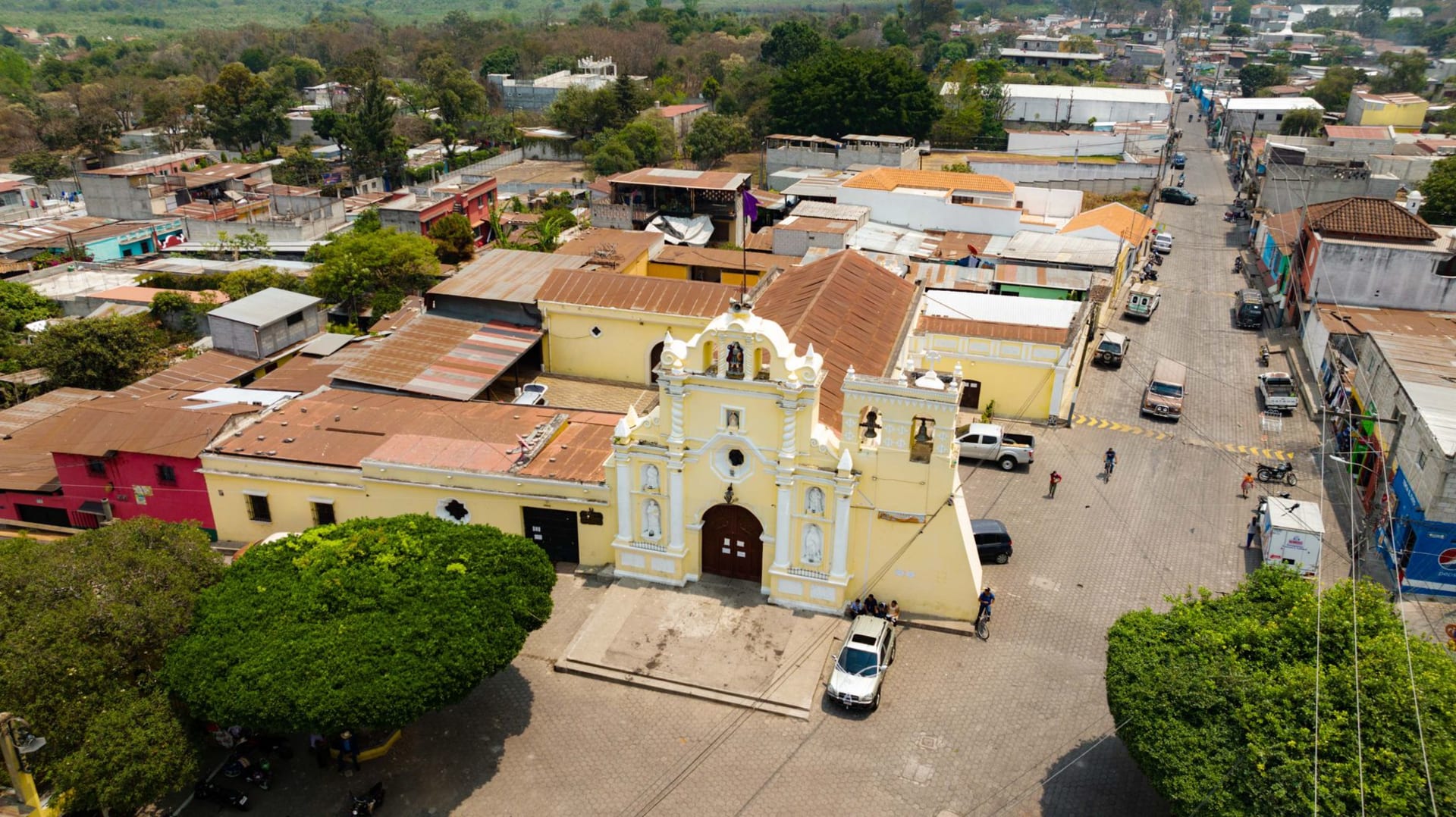
Texcoco
"A philosopher-king built his bath complex in these hills and composed poetry about the impermanence of things. He was right, and the ruins prove it."
Everyone comes to the Estado de México for Teotihuacán, which is fair — Teotihuacán is extraordinary. But Texcoco, on the eastern shore of what used to be Lake Texcoco, was once at least as significant, and now it is a mid-sized Mexican city that almost nobody visits on purpose, which tells you something about how thoroughly the colonial period reorganized what we pay attention to.
I drove out from Mexico City on a morning when I had no particular plan, which turned out to be the right approach for Texcoco. The city itself is functional and unpretentious in the way of a place that has never tried to sell itself to outsiders — a busy central market, wide avenues, the specific Saturday-morning energy of a regional capital with a lot of practical business to conduct. I parked near the market and walked around for a while before getting to what I’d actually come to see.
Nezahualcóyotl and What He Built
Nezahualcóyotl — the name means Fasting Coyote — ruled Texcoco from 1431 to 1472 and was, by any measure, one of the more remarkable figures in pre-Columbian Mesoamerica. He was a poet, an architect, a legal reformer, and a philosopher who seems to have been genuinely uncertain about the validity of the state religion — his surviving verse engages with questions of divinity and meaning in ways that read as personal rather than ceremonial. He also built prolifically: the aqueduct that brought fresh water to Tenochtitlán across the lake, the hanging gardens of Texcotzinco on the hillside above the city, and a bath complex in those same hills that survives in ruined but legible form.
The Baños de Nezahualcóyotl are reached by a road that climbs up from the city into the dry hills east of Texcoco. The complex sits on terraced hillside, with stone channels that once carried water from a spring higher up, and a series of stepped platforms and pools that in Nezahualcóyotl’s time would have been fed by a continuous flow. The lake would have been fully visible from here — a vast inland sea that covered what is now the eastern valley of Mexico City. Standing at the upper terrace, I tried to reconstruct the view: the lake below, Tenochtitlán on its island in the middle distance, the volcanoes on the southern horizon. It would have been one of the great views in the world. It no longer exists.
The drainage of Lake Texcoco was a project that took centuries, accelerating dramatically in the colonial period and continuing into the twentieth century. The ecological logic of the basin — the lake regulated flooding, provided fish and waterfowl, supported the chinampas floating gardens that were among the most productive agricultural systems in the pre-Columbian Americas — was dismantled in favor of dry land. What remains of the lake is a fragment: the Lago de Texcoco ecological reserve, a restoration project trying to bring back wetland habitat to the old lakebed. Flamingos have returned, which is either hopeful or inadequate, depending on your mood when you think about it.

The Market and the Pulque
Back in the city, I went to the Friday market, which is famous enough that I had heard about it before I went and still underestimated it. It spreads across several blocks near the center, with an organization that is not immediately legible but reveals itself if you walk through it methodically. Produce at the edges, dry goods in the middle, prepared food concentrated near the main entrance. The pulque stalls are their own section.
Texcoco has a pulque tradition that predates the Spanish by a considerable margin — pulque, the fermented sap of the maguey agave, was produced here and sent as tribute to the Triple Alliance courts. The pulquería near the market sold it in clay cups, natural or curado with fruit, and I had one cup of natural and one cup mixed with tejocote fruit. Pulque is difficult to describe to someone who hasn’t had it: slightly viscous, mildly sour, with a fermentation character that is completely different from any European drink. In France, we do not have an equivalent. The closest analogy is maybe a very young, very natural cider, but that doesn’t quite capture the texture or the slight earthiness that comes from the agave.
The market had tlacoyo vendors — blue corn masa stuffed with black beans or fava beans, cooked on a comal, sold with salsa and nopal cactus. I ate two and then a third because the second had been so good. This is a pattern I have noticed in Mexican markets: the things you did not plan to eat are consistently the best.

Getting There
Texcoco is about 25km east of Mexico City, reachable by car or by metro plus bus — take Metro Line B to Ciudad Azteca, then a colectivo east to Texcoco center. The Baños de Nezahualcóyotl are a taxi or car ride up into the hills; ask in town for Texcotzinco. The Friday market is the main market day but the city operates daily. Go on a Friday if you can.