Tenancingo
"In Tenancingo a weaver can spend three weeks making a rebozo that costs less than a hotel room in Mexico City — the math of craft work in Mexico never gets easier to sit with."
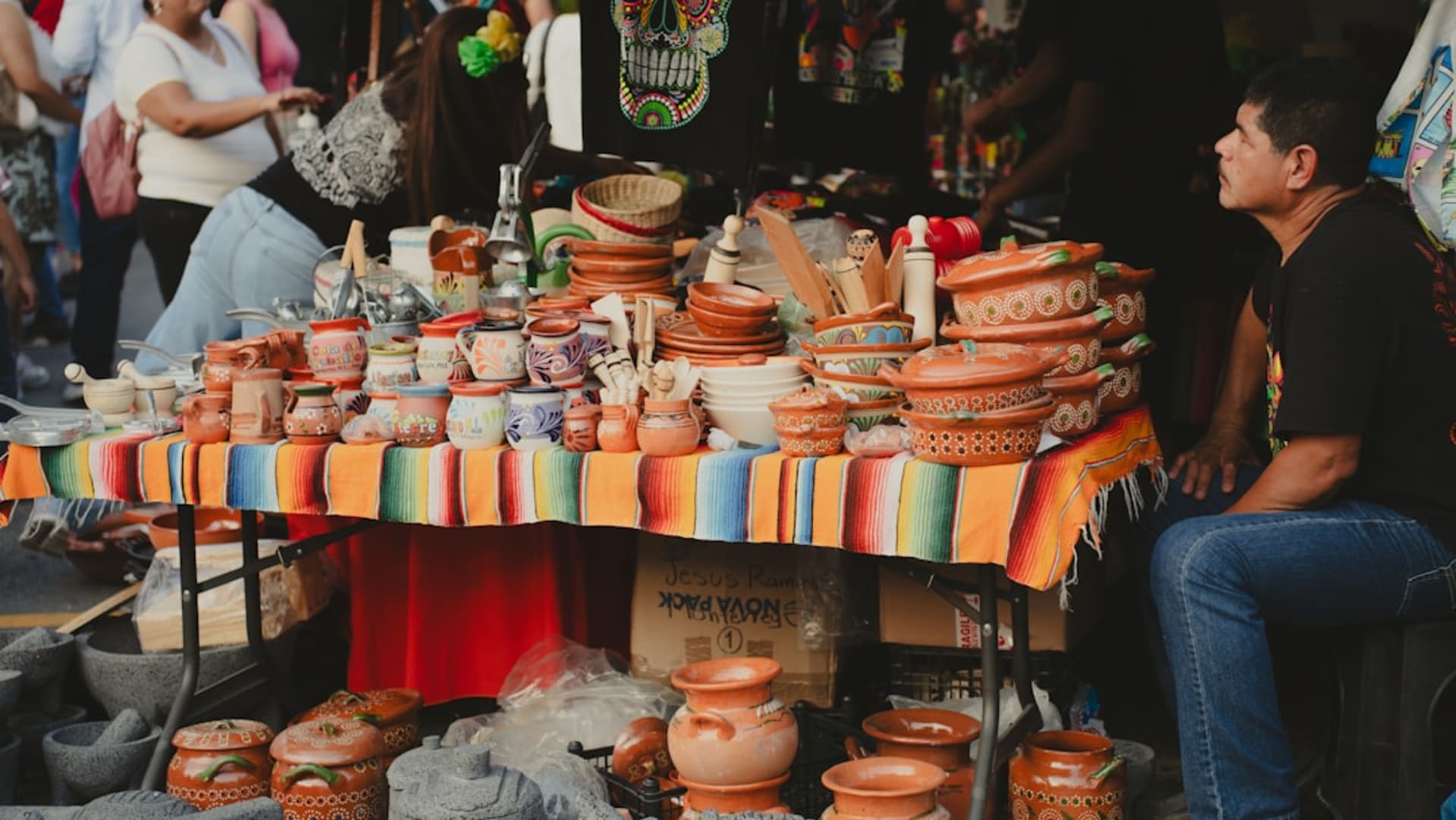
I went to Tenancingo on a Thursday because someone on the bus to Malinalco mentioned the market was worth the detour. That was accurate but understated. What I wasn’t prepared for was the particular compression of the place — flower vendors stacking gladiolas into plastic sleeves directly beside women folding rebozos into tight rectangles, carnitas smoke drifting over both. I had allocated an hour. I used three, and I left with a shawl I can’t justify economically and couldn’t have left without.
The Weavers
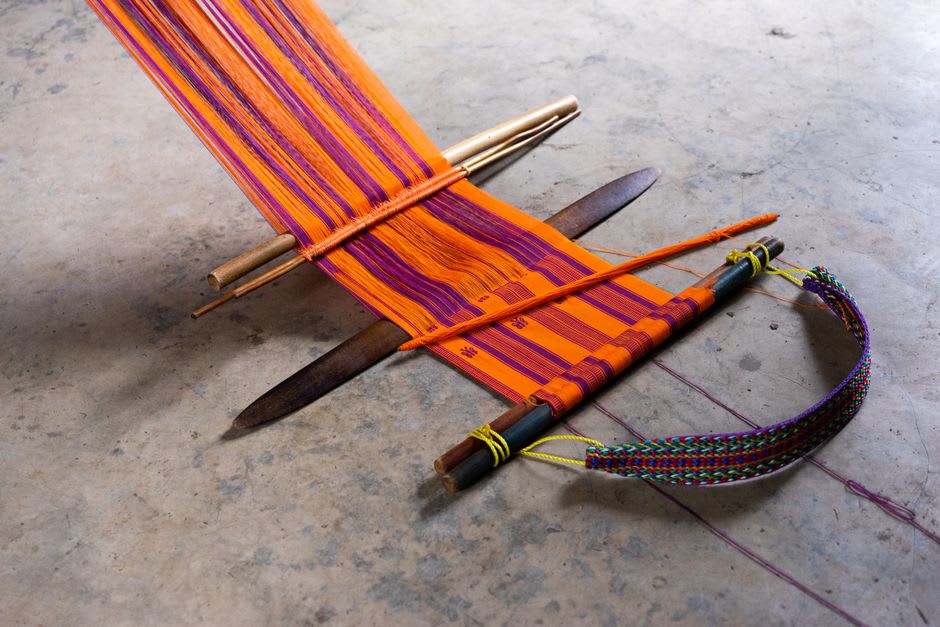
The rebozo is one of those objects that carries more history than its price suggests. In Tenancingo, the tradition is specifically linked to silk and cotton weaving on backstrap looms — the same technique used here for centuries, now adapted to synthetic threads alongside traditional materials, but still producing the same elaborate brocade patterns, the same hand-knotted fringe that takes days on its own. The workshops are mostly in family homes on the streets radiating out from the centro; some have small hand-painted signs, most don’t. The most reliable approach I found was walking slowly along Calle Benito Juárez and letting the sound of looms lead me in.
A weaver working a complex design can take three weeks to finish a single piece. That piece might sell for 800 or 900 pesos at the market. I’m not sure what the correct response to that is — admiration feels insufficient, and discomfort doesn’t help anyone. What I did was buy one and take a long time choosing. Ask to feel the fringe before you commit: the difference between machine-finished and hand-knotted ends is immediately obvious once a weaver shows you what to look for, and worth knowing.
The Thursday Market
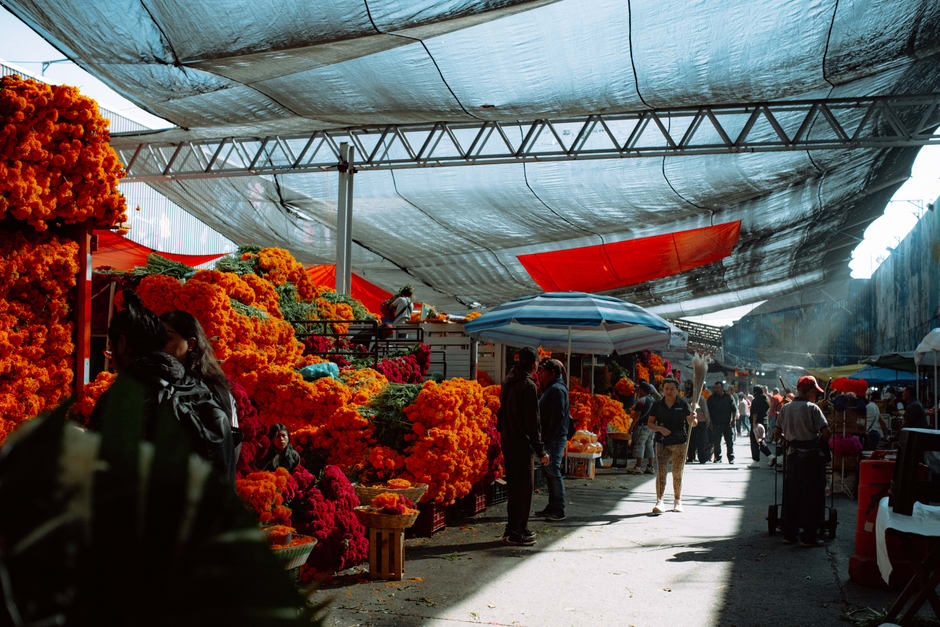
Tenancingo’s Thursday market is large enough to get genuinely disoriented in, which is a feature rather than a problem. The flower trade occupies whole streets near the market’s outer edges — this is one of the Estado de México highland valleys where cut-flower cultivation has colonized the hillsides, and on Thursdays that production comes down to town in volume. Roses, carnations, chrysanthemums, and gladiolas are sold by the gross to florists and event planners who drive in from Mexico City and Toluca; the scale is industrial but the atmosphere is not.
In the food section, the local version of carnitas draws a crowd from early morning. It’s cooked slowly in copper pots and served with handmade tortillas and a thin green salsa that has more depth than it announces. I ate standing at a folding table near the Álvaro Obregón entrance, paid around 60 pesos for a plate, and watched a man negotiate at considerable length over a dozen white roses at the next stall. The food vendors thin out by early afternoon — arrive before noon.
A Few Hours Well Spent
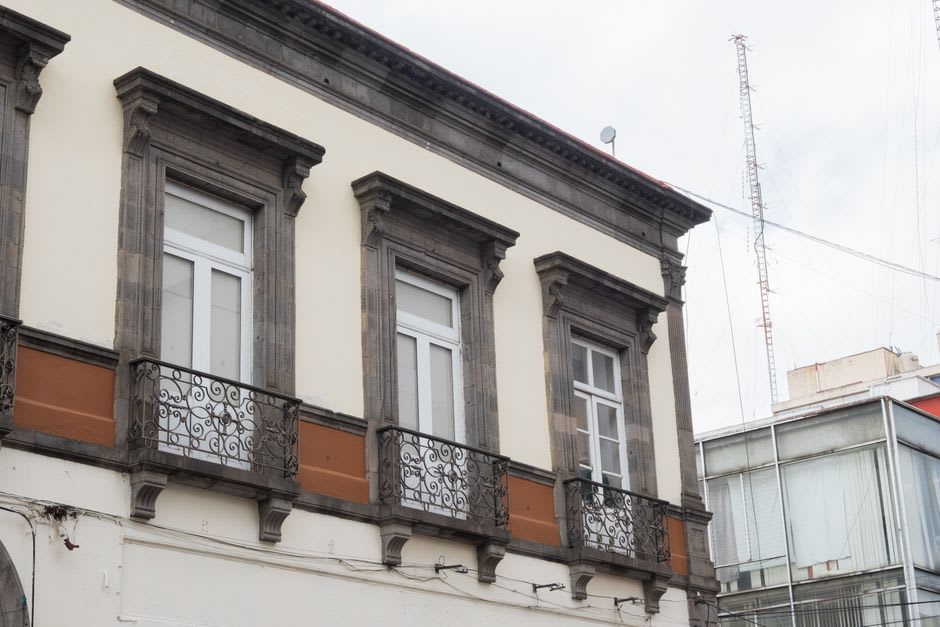
Give yourself the market morning and the early afternoon. The Parroquia de San Francisco de Asís on the main plaza is a heavy colonial structure, and calmer inside than the surrounding market noise would suggest — worth fifteen minutes. The walk from the centro down toward the flower wholesale area passes workshops that don’t advertise; if a door is open, knock. Most weavers will let you stand and watch without any pressure to buy, which is a rarer thing than it should be. If you’re continuing to Malinalco, leave Tenancingo no later than three in the afternoon to have good light at the Aztec temple. The two towns together make a full and coherent day.
Getting There
Tenancingo is roughly two hours from Mexico City by bus — several lines serve it from Terminal Poniente (Observatorio). From Toluca, the ride is around 45 minutes. If you’re heading onward to Malinalco, shared combis run the 20-minute connection regularly from near the market area. Thursday is the essential day; the town is quieter the rest of the week, though the weaving workshops stay open daily.