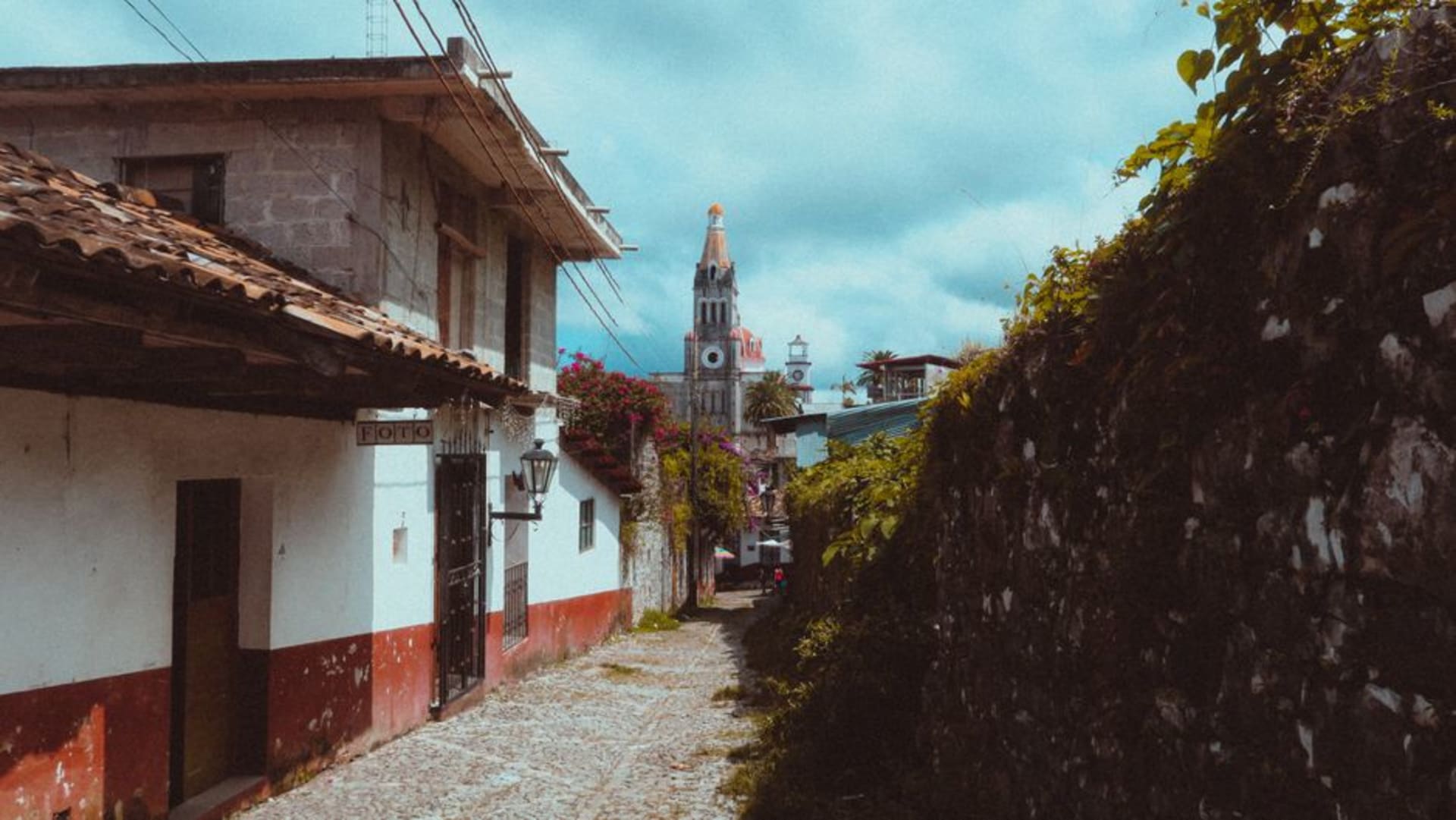
Sultepec
"Three hours from Mexico City and I felt like I had crossed into another century entirely."
I came down into Sultepec on a Tuesday morning in late October, the road narrowing to something barely two vehicles wide as it cut through pine forest. The fog was still sitting in the valley when I reached the central plaza, and I stood at the edge of it and just listened. A woman swept the steps of the parish church. A dog crossed the square in a long, unhurried diagonal. Nobody was trying to sell me anything. A man near the kiosk looked up from his newspaper, studied me for a moment with frank curiosity, and then went back to reading. That kind of attention — interested but not transactional — is rarer than it should be.
The Parroquia de Santiago Apóstol
The thing nobody tells you about Sultepec is the church. You arrive expecting something modest, proportionate to the town’s current obscurity, and instead you find an 18th-century parish that seems to have been designed for a city four times this size. The façade is elaborately carved — churrigueresque flourishes that silver money paid for and silver money eventually stopped sustaining — and the interior holds its own surprises: gilded altarpieces that have gone slightly dark with age, a side chapel that smells of beeswax and old wood, and a silence so complete that my footsteps sounded embarrassingly loud on the stone floor. The mines that funded all of this are mostly gone now, or reduced to footnotes in the municipal museum, but the church remains as a kind of argument in stone for how seriously this place once took itself. I spent longer inside than I planned.
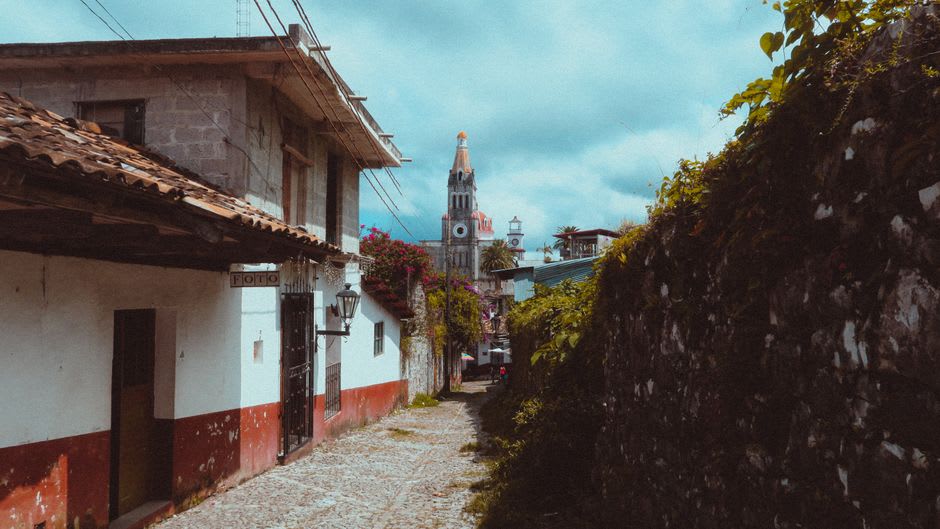
What the Market Offers
The Thursday tianguis spreads across two streets behind the plaza and runs until early afternoon, after which it folds itself up and the town becomes very quiet again. I arrived on a Tuesday and had to make do with the smaller permanent market on Calle Hidalgo, which turned out to be exactly enough. I ate a bowl of caldo de res at a folding table while a woman across from me methodically peeled nopales and watched a telenovela on her phone. The broth was serious — long-cooked, fatty, with a wedge of lime and chiles on the side that I used too aggressively. Someone at a nearby stall was selling queso de aro, a local fresh cheese pressed in wooden rings that I hadn’t seen outside this part of Estado de México. I bought a piece wrapped in paper and ate it in the square with some bolillos from the bakery on the corner of Zaragoza, and that was lunch, and it was enough.
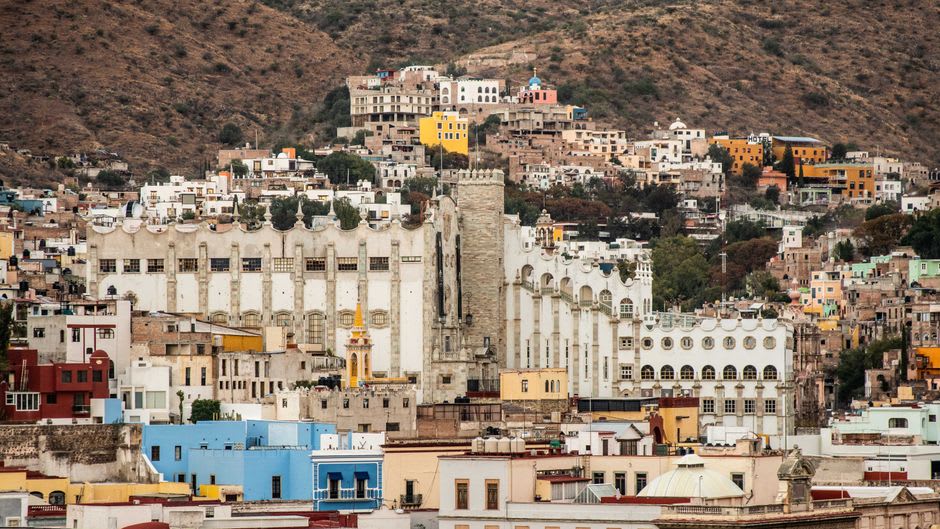
How to Use Your Time Here
Sultepec is not a place that performs its appeal — you have to be willing to sit with it. The municipal museum, housed in a former administrative building two blocks from the plaza, covers the mining history with more care than I expected and is worth the small admission. Walk the Calle del Calvario in the late afternoon, when the light is hitting the colonial facades at a low angle and the street is quiet enough that you can hear the bells from the church. There is one hotel on the plaza — the kind of place where the owner’s grandmother’s embroidery hangs in the dining room — and a couple of guesthouses that come and go. Arrive before dark; the road in from Tejupilco demands full attention and the streetlighting in town is not reliable.
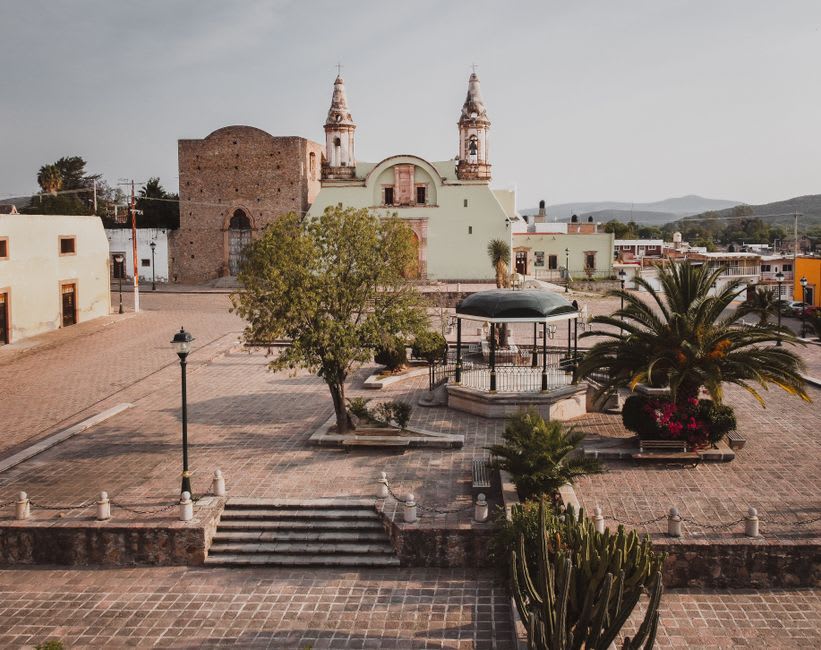
Getting There
From Mexico City’s Terminal Poniente (Observatorio), buses run to Tejupilco in roughly two and a half hours; from Tejupilco, a connecting colectivo or bus to Sultepec adds another 45 minutes on a mountain road that rewards patience. By car from Toluca, plan for just under three hours depending on the stretch through Valle de Bravo. There is no direct bus from CDMX.