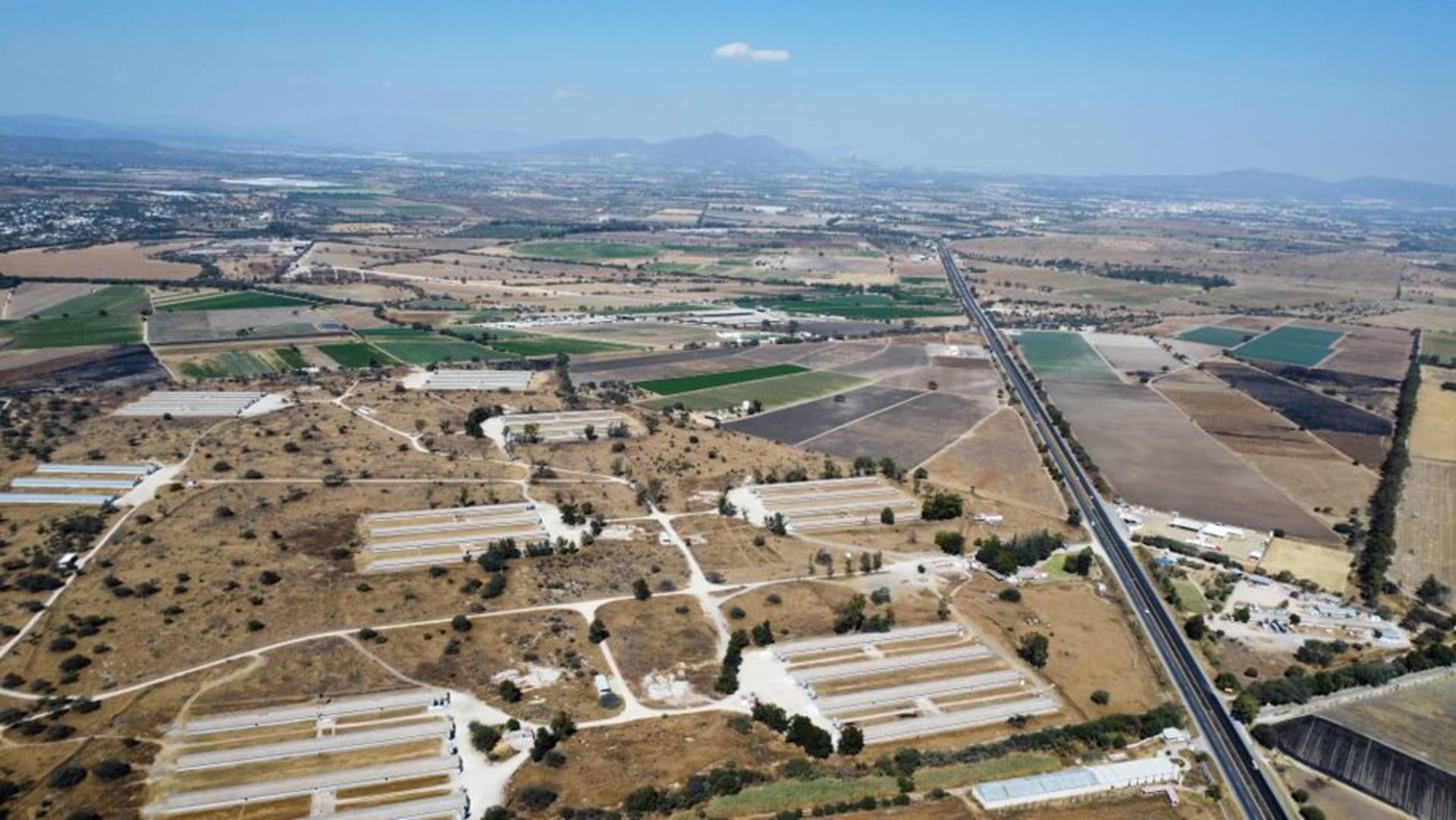
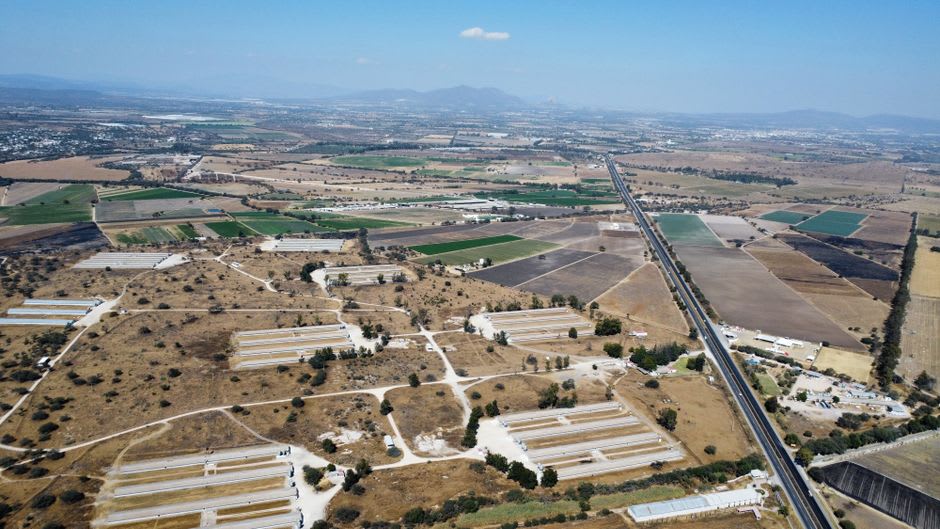
I found Polotitlán by accident, the way I find most of the places I end up loving. I had taken the wrong exit off the highway north of Toluca, chasing a shortcut that didn’t exist, and the road spat me out onto a two-lane strip running dead straight through pasture. A man on a bicycle with two milk cans strapped to the rack nodded at me like he’d been expecting me since morning. I pulled into the plaza, ordered a coffee I didn’t need, and stayed three hours. That’s Polotitlán. It doesn’t ask you to stay. It just makes leaving feel unnecessary.
The plaza and the church
The centre of town is small enough to cross in the time it takes to finish a thought. There’s a plaza with iron benches worn smooth, a bandstand nobody was using the afternoon I sat there, and the parish church holding down one side with the patience of something that has watched a lot of Sundays. I like plazas that aren’t performing for anyone, and this one wasn’t. Two old men were arguing softly about rain that hadn’t come. A woman swept the same three tiles over and over, more ritual than cleaning.
What struck me was the light. Up here, near the Querétaro line, the sky opens out in a way it never does down in the valley of Toluca. The plains around town are flat and generous, and by late afternoon everything goes the colour of dry straw and warm brick. I sat until the shadows lengthened and the church finally rang, once, apologetically.
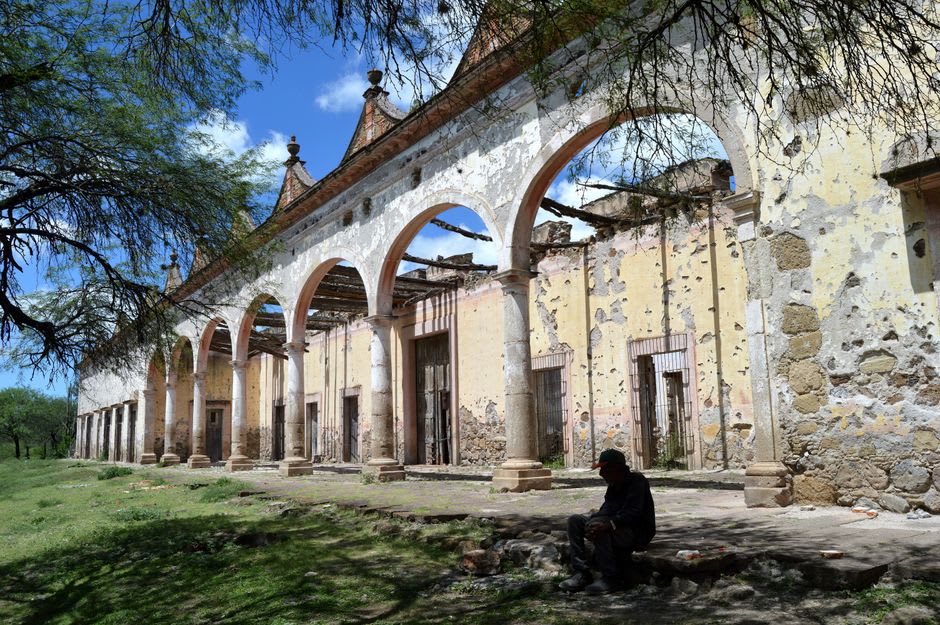
Hacienda country and the arches
Polotitlán grew up around cattle and milk, and the old dairy haciendas are still scattered across the plains like beached ships. I drove out to look at a couple of them — not to trespass, just to stand at the gates and read the shapes. The arches are what stay with me: long ranks of stone arcades, some restored, most quietly crumbling, built when this was serious ranch wealth and the milk went to Mexico City in the days before refrigeration made distance meaningless.
A rancher named Gustavo saw me photographing an archway and, instead of asking what I wanted, invited me in to see his cows. He talked about cheese the way some men talk about wine — the difference a wet year makes, which pasture gives the richest milk, why the old presses still beat the new machines. I left with a wheel of something fresh and salty wrapped in wax paper. I ate most of it in the car.
The edge of the Bajío
What I love about Polotitlán is that it’s a threshold. This is where Estado de México stops being highland-cool and starts leaning into the Bajío — the flat, fertile heart of central Mexico. You feel the change in the air, drier and warmer, and in the accent, and in the way the land stops climbing and just stretches. Querétaro is a short drive north, but the town has no interest in borrowing its polish. It stays what it is: farm plains, milk cans, ranch quiet.
I came back a second time on purpose, which is my only real measure of a place. I brought bread this time and ate lunch on a bench watching a boy teach a younger boy to ride a bicycle in slow, wobbling circles. Nothing happened. It was one of the better afternoons I’ve had in this country.
Getting There
Polotitlán sits at the far northern tip of Estado de México, right on the Querétaro line, about two hours from Mexico City on the Highway 57 toll road toward Querétaro — you’ll pass the exit before you reach the city. From Toluca it’s roughly two hours north through Atlacomulco. Buses run from Querétaro and from the Estado de México side, but this is country best seen with your own car, because the haciendas and the plains are the whole point and they don’t sit on a bus route. Go on a weekday. Bring an appetite for cheese and no particular schedule.