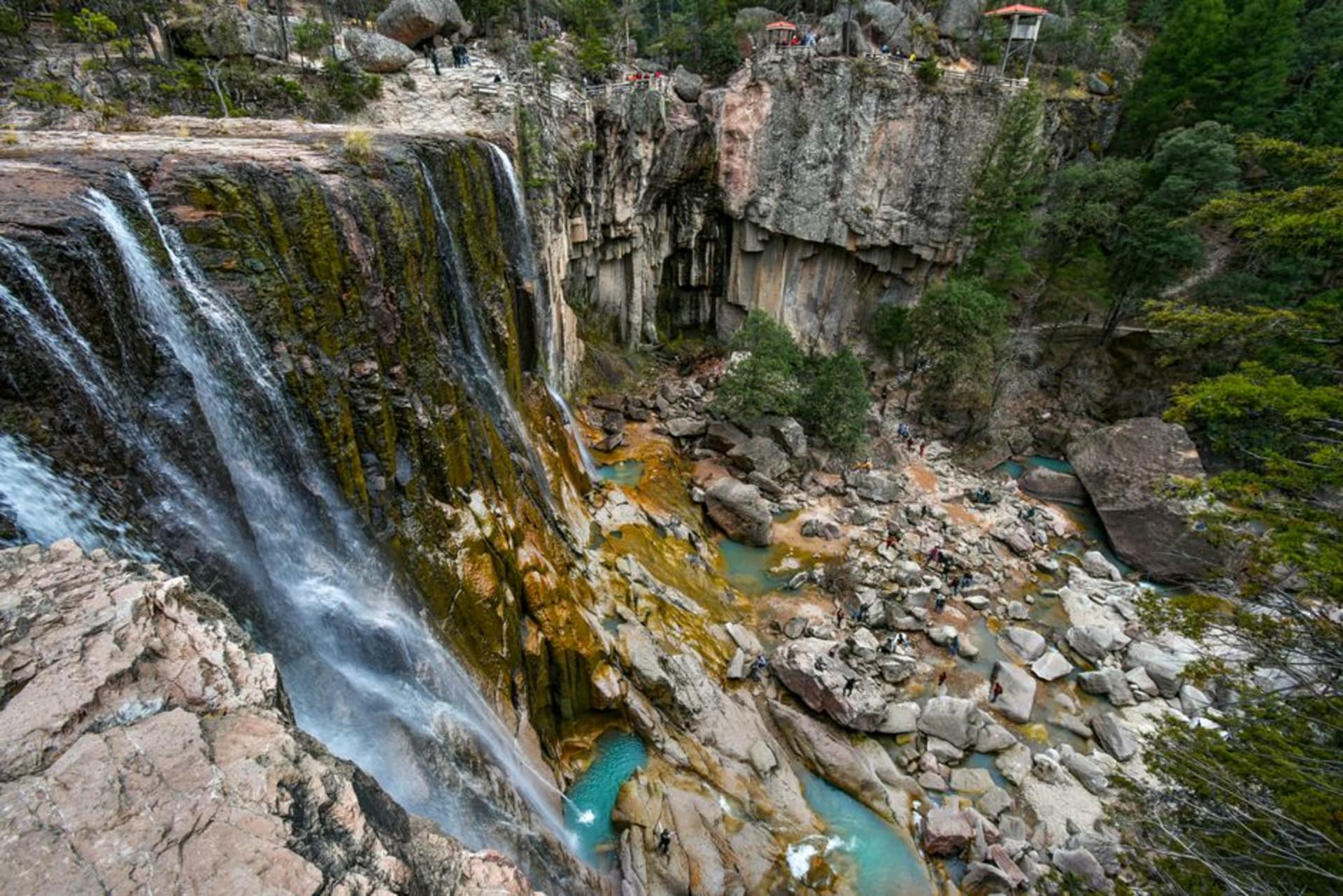
El Salto
"El Salto smells of rain and pine sap in a way that the coast never does — the Sierra Madre at altitude is a completely different country."
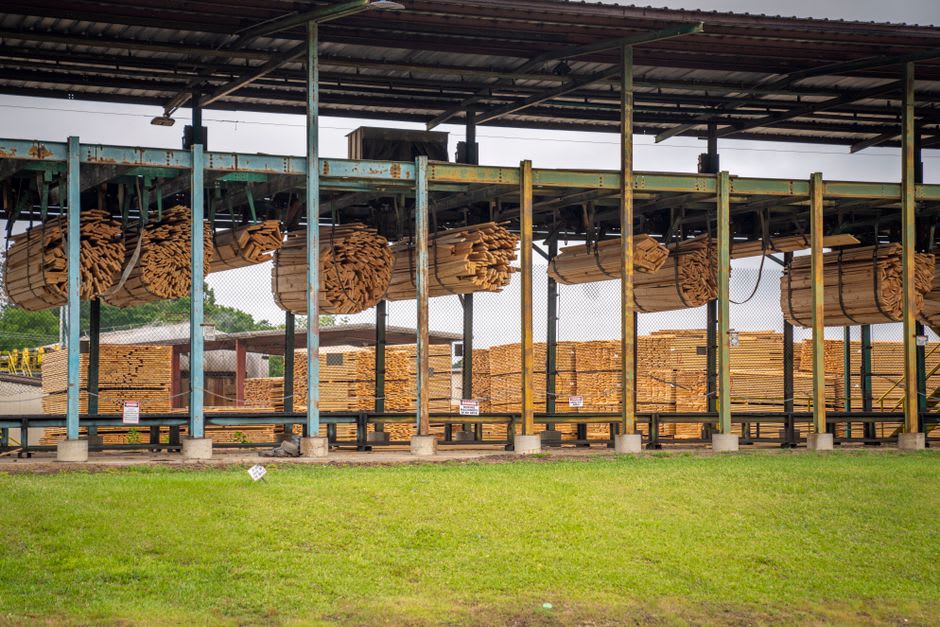
I had come from Puerto Escondido, which means I had come from sea level and thirty-five degrees of humid heat, and nothing quite prepares you for what El Salto does to your lungs at 2,300 meters. The bus from Durango city deposits you at a junction that smells of fresh-cut timber and cold air, and for the first ten minutes I stood on the roadside breathing in a way I had forgotten was possible — deeply, slowly, the resin working into everything. There are no welcome signs. There is a sawmill. That tells you everything you need to know about El Salto’s relationship with the tourist imagination.
The Town the Trees Built
El Salto exists because of the pines. The Sierra Madre Occidental here is dense with Pinus durangensis and a dozen other species, and the madereros — the timber workers — have been cutting and milling them since the early twentieth century. The economy has one logic: wood. You see it in the stacks of planks drying along Avenida Madero, in the flatbed trucks loaded with raw trunks that pass through town at six in the morning, in the smell of sawdust that layers every corner near the aserraderos on the south side. What strikes me about El Salto is not that it is poor — it is not, or not particularly — but that it is entirely oriented away from any kind of performance. Nobody here is performing rustic authenticity for an audience. There is no audience. The men in the tiendas at noon are drinking their coffee because they have been working since four, and the conversation is about board-feet and truck schedules, not about what a traveler might want to hear.
The Gorges and the Cold Water
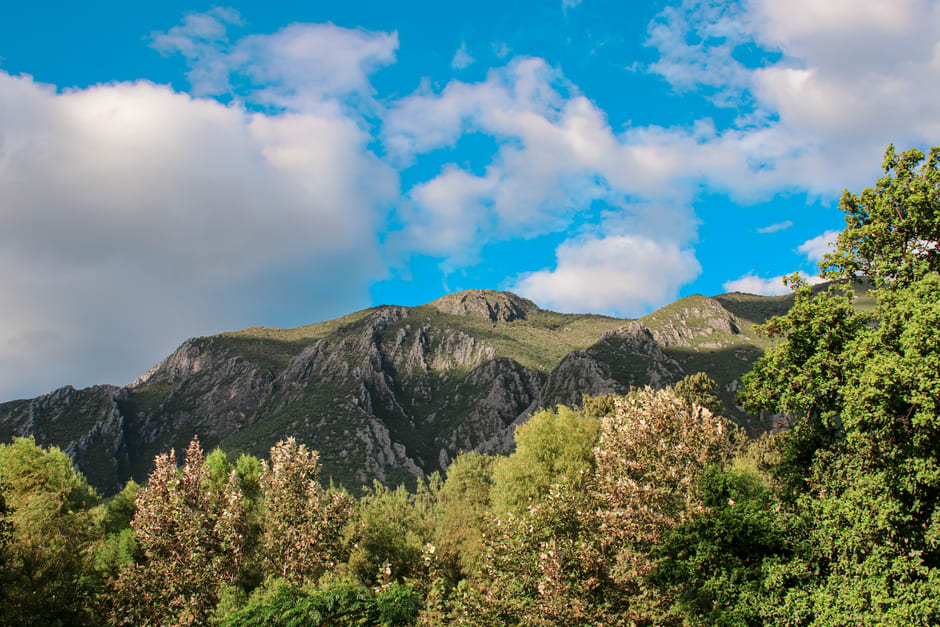
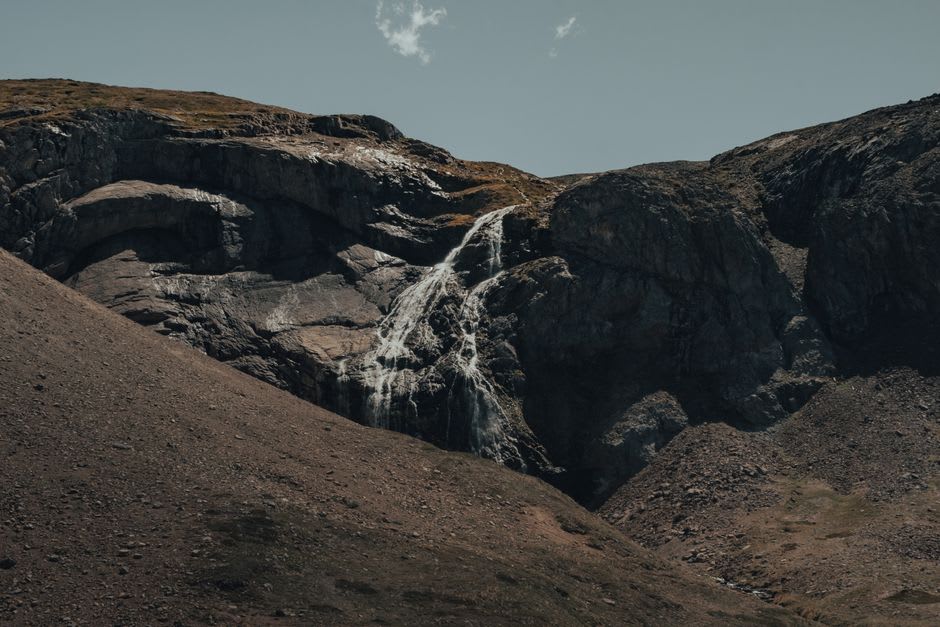
What draws the very occasional visitor to this part of Durango is not the town itself but the terrain it sits inside. The Sierra Madre here breaks into a series of deep barrancas — gorges — where rivers cut through basalt and the waterfalls run year-round, fed by snowmelt from the higher peaks even in August. The one closest to town, a forty-minute walk along a dirt track that locals call simply la bajada, drops about sixty meters into a pool the color of dark jade. I went in October and the water temperature was somewhere around twelve degrees — I lasted four minutes, which felt like an achievement. The walk back up is steep enough that by the top you have forgotten the cold entirely. There are no facilities at the falls, no ropes, no signs. You pick your way down on loose rock and hope your shoes have grip.
Where to Eat, Where to Sit
The food in El Salto tracks the altitude and the labor. Pozole rojo at the comedor on the main square — I never caught the name, it has no sign — runs about fifty pesos for a generous bowl and arrives with tostadas, dried oregano, and a small dish of sliced radishes. There is also a taquería two blocks north toward the market that does birria on weekend mornings, the broth dark and fat-sheened, served in clay bowls that are too hot to hold for the first five minutes. Order the consommé separately. Bring your own tolerance for altitude headaches until your body adjusts — I made the mistake of arriving and immediately walking uphill. An afternoon of sitting with coffee at the plaza would have been smarter.
Getting There
Buses from the Central de Autobuses in Durango city leave several times daily toward Mazatlán and pass through El Salto — the ride takes roughly three to four hours depending on stops. The highway climbs hard through the pines after the first hour and a half. A few small hotels and casas de huéspedes operate in town; ask at the main plaza if nothing obvious presents itself when you arrive.