Cuyutlán
"Lia said it was like watching someone switch something on and off under the water. That was exactly right."
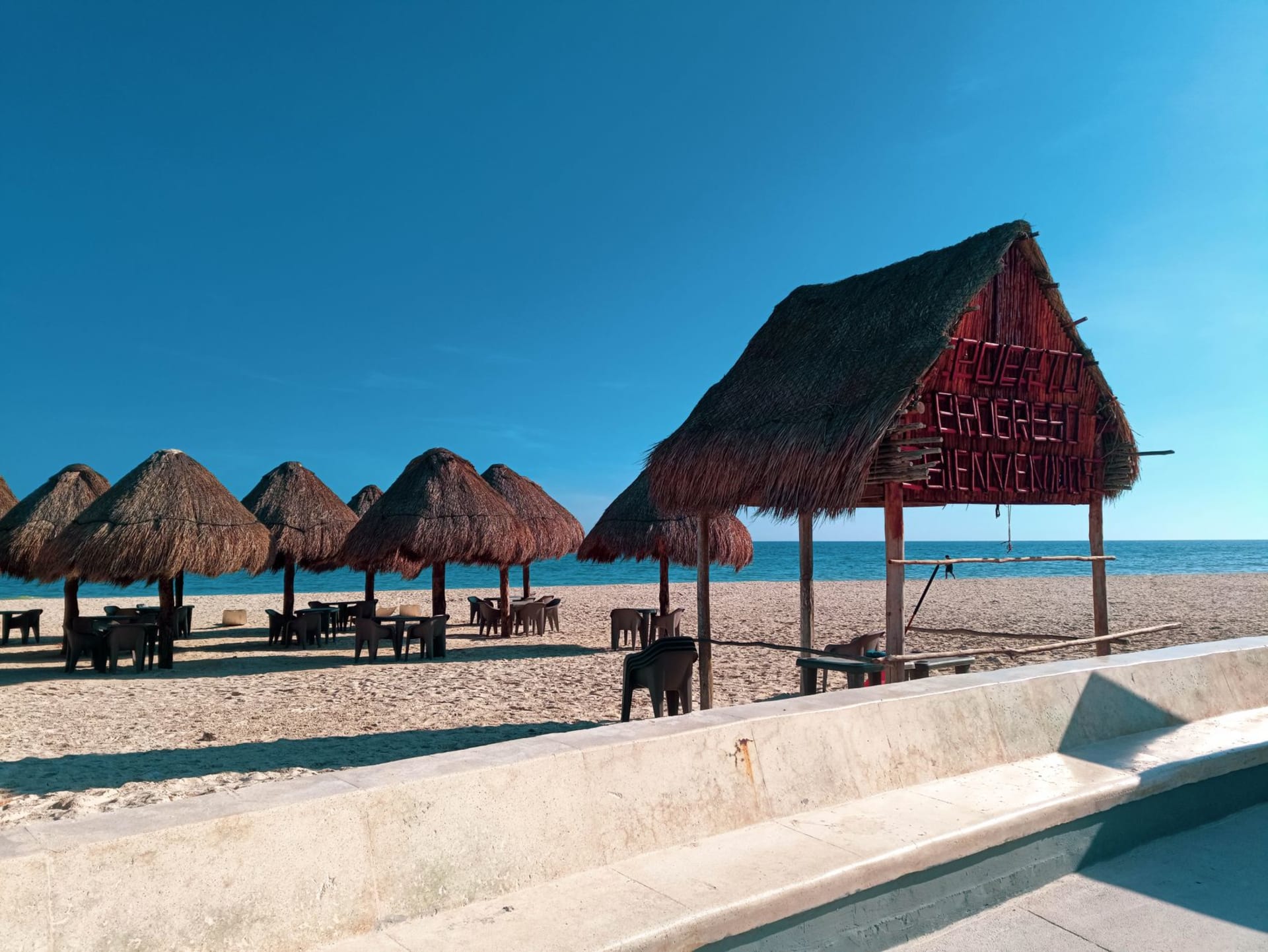
The bus from Manzanillo drops you at the edge of Cuyutlán with no particular ceremony — a small collection of buildings on a narrow strip of land between the Pacific and a lagoon, the road ending where the beach begins. What you arrive to is a grid of streets that is simultaneously inhabited and half-empty: newer concrete construction mixed with persistent vacant lots, stray dogs at every corner, a few palapa restaurants with hand-painted menus facing the sea. The Pacific here is serious — heavy surf, strong currents, the colour shifting from green to blue-black as the water deepens. It does not invite casual swimmers. It has a character.
I first heard about Cuyutlán from a man in Colima who told me to go in summer if I wanted to see the ola verde. The green wave — a bioluminescent surf phenomenon that occurs here during certain conditions from June through August — is the reason most people know this place at all. Bioluminescence in crashing surf is something I had read about but never witnessed, and the description sounded almost too specific to be real: a wave that glows green as it breaks, the light produced by dinoflagellates in the water column agitated by the turbulence of breaking. I am not a marine biologist. I went anyway.
Lia joined me for this one. She had seen bioluminescent water before, in the Marquesas, and was skeptical that a beach town on the Colima coast could produce anything comparable. She was right to be skeptical about the scale. What Cuyutlán offers is not the Caribbean enclosed-bay kind of bioluminescence — the whole-lagoon blue glow that makes you feel like you’re swimming in starlight. It is something more intermittent and stranger: a single wave catching light as it breaks, green-white, visible for three or four seconds before the next wave comes. We waited on the beach for two nights before conditions aligned. When it happened it was nothing like the photographs and everything like what I had hoped for. Lia said it was like watching someone switch something on and off under the water. That was exactly right.
The Tortugario
The Centro Tortuguero de Cuyutlán operates during nesting season (June through November) to collect, protect, and incubate olive ridley sea turtle eggs that would otherwise be lost to predation and poaching. The facility keeps a small number of permanent resident turtles — animals too injured to release, research subjects, juveniles in pre-release conditioning — that can be observed year-round. During nesting season, volunteers patrol the beach at night, relocate clutches to protected enclosures, and manage the hatchling release logistics.
The staff member who walked me through the facility in July had been working there for three consecutive seasons. She spoke about the olive ridley with the combination of affection and informed frustration that anyone develops for an animal whose survival instincts seem calibrated for a world that no longer exists. The turtles are not critically endangered in the way of the hawksbill or the leatherback, but their numbers are down significantly across the eastern Pacific, and Cuyutlán is one of a handful of protected nesting sites on this coast where the slow patient work of protection is still happening.
The part I had not expected was the wading pool behind the main sanctuary building. It is a shallow concrete lagoon, perhaps the size of a large swimming pool, where juvenile turtles awaiting release are held. Visitors can enter the water — knee-deep — among them. The turtles are indifferent to human presence in the way that sea turtles are: they go about their business at their own pace, which is slow, deliberate, and somehow deeply calming. They bump against your legs without alarm and continue past. I spent twenty minutes in that pool. It is a very quiet kind of pleasure. Not the spectacular snorkeling encounter that social media suggests — just you, shallow water, and several young turtles going about the serious business of being turtles.

Ghost Town Topology
Cuyutlán has the quality of a place that has survived itself more than once. Two tsunamis — one in 1932, generated by a significant offshore earthquake that largely destroyed the original town, and another in 1995 that caused serious damage to what had been rebuilt — have given the place a repeatedly-constructed quality. The architecture tells the story in layers: old buildings that survived are of a different weight and material than the newer construction that replaced what was lost. Gaps between buildings correspond to lots that were never rebuilt, or were rebuilt and lost again. The enormous coconut palms along the malecon have girths that predate everything around them. They watched the tsunamis come. They are still here.
The commercial strip near the beach runs to about fifteen palapas and small restaurants, most serving the same menu of Pacific seafood: fish tacos, aguachile de camarón, ceviche, grilled zarandeado fish. The tostadas de camarón at one spot two blocks from the main beach were among the best I ate in Colima state that week — small sweet shrimp, lime, cucumber, a thin layer of avocado, chile, on a tostada fried that morning. The owner had built his restaurant himself after the 1995 tsunami, in reinforced concrete, on a slightly elevated lot. He told me this without drama, the way you mention a historical fact about a building.
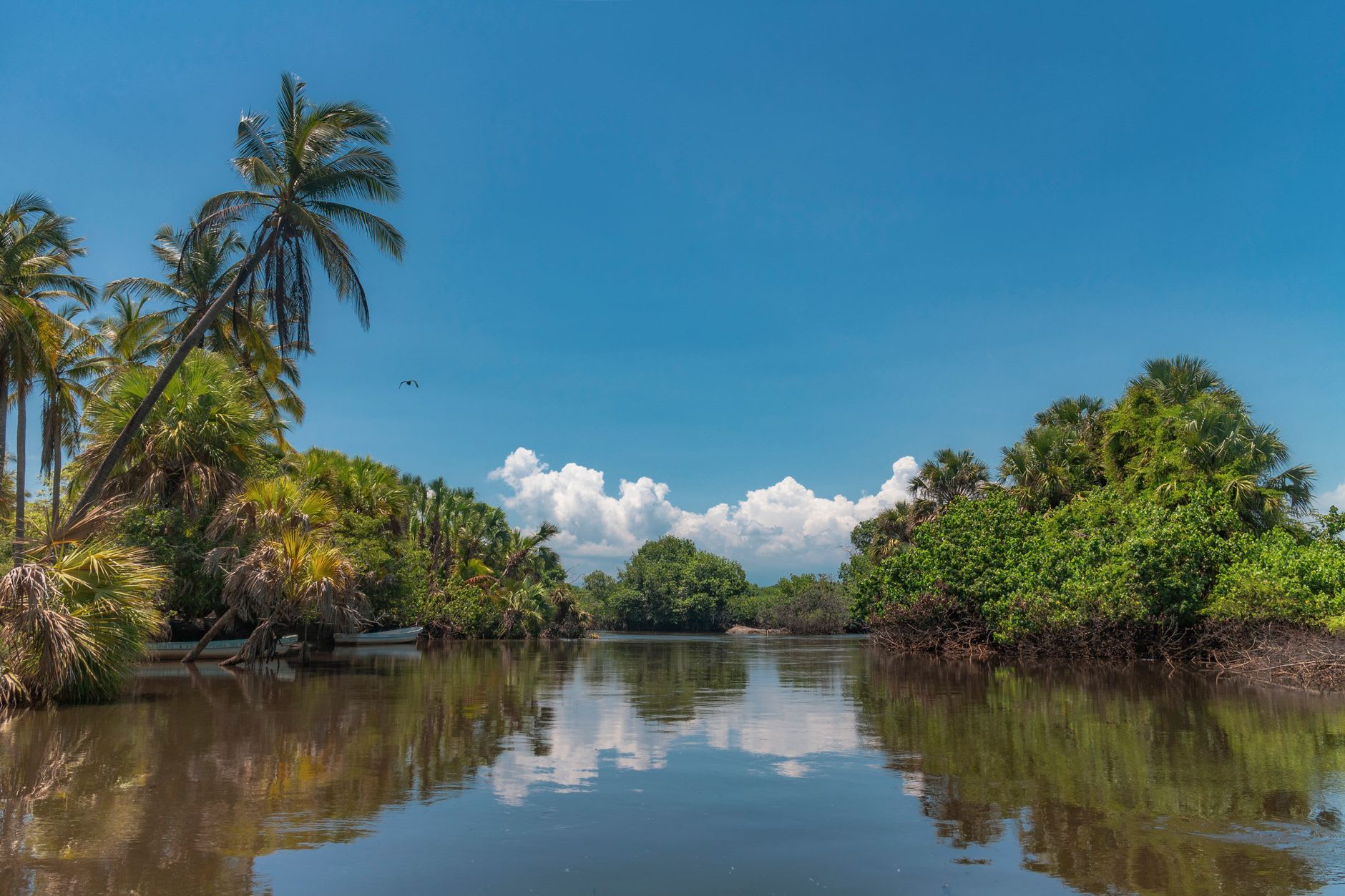
There is a small salt museum that is more interesting than it sounds. Cuyutlán was historically a salt-production town — the lagoon behind the beach strip was used for extraction, the salt pans still faintly visible from the viewing platform. The photographs inside, documenting the salt workers and the industrial process from the 1940s through the 1970s, show a different town than the one that exists now: a more purposeful, more populated place, with a reason for being here beyond the beach and the turtles. The photographs have the quality of evidence of a life that continued between disasters.
The beach at Cuyutlán is not for swimming — the currents are genuinely dangerous, the surf heavy enough that even the locals swim in the protected lagoon rather than the sea. It is a beach for walking in the early morning when the light comes flat off the water and the pelicans work the wave troughs in formation, and for sitting in the evening when the sky goes dark and you wait, quietly, for a wave to turn green.
Getting there: From Colima city, take a second-class bus to Manzanillo (about 1h) and from Manzanillo catch the local bus to Cuyutlán (30 min). Alternatively, taxis from Manzanillo take about 30 minutes and cost 350-450 pesos. There is no direct service from Guadalajara — change in Manzanillo. The town is small enough to walk entirely; no vehicle needed once you arrive.
When to go: June through August for the ola verde bioluminescence and peak turtle nesting activity — these are the two main reasons to make the trip. The bioluminescence requires dark nights (avoid full moon) and calm conditions; give yourself at least two or three nights to improve your odds. Outside these months, Cuyutlán is very quiet — pleasant if you want solitude and seafood, thin if you want the specific phenomena that make it special. Bring insect repellent for evenings near the lagoon side.