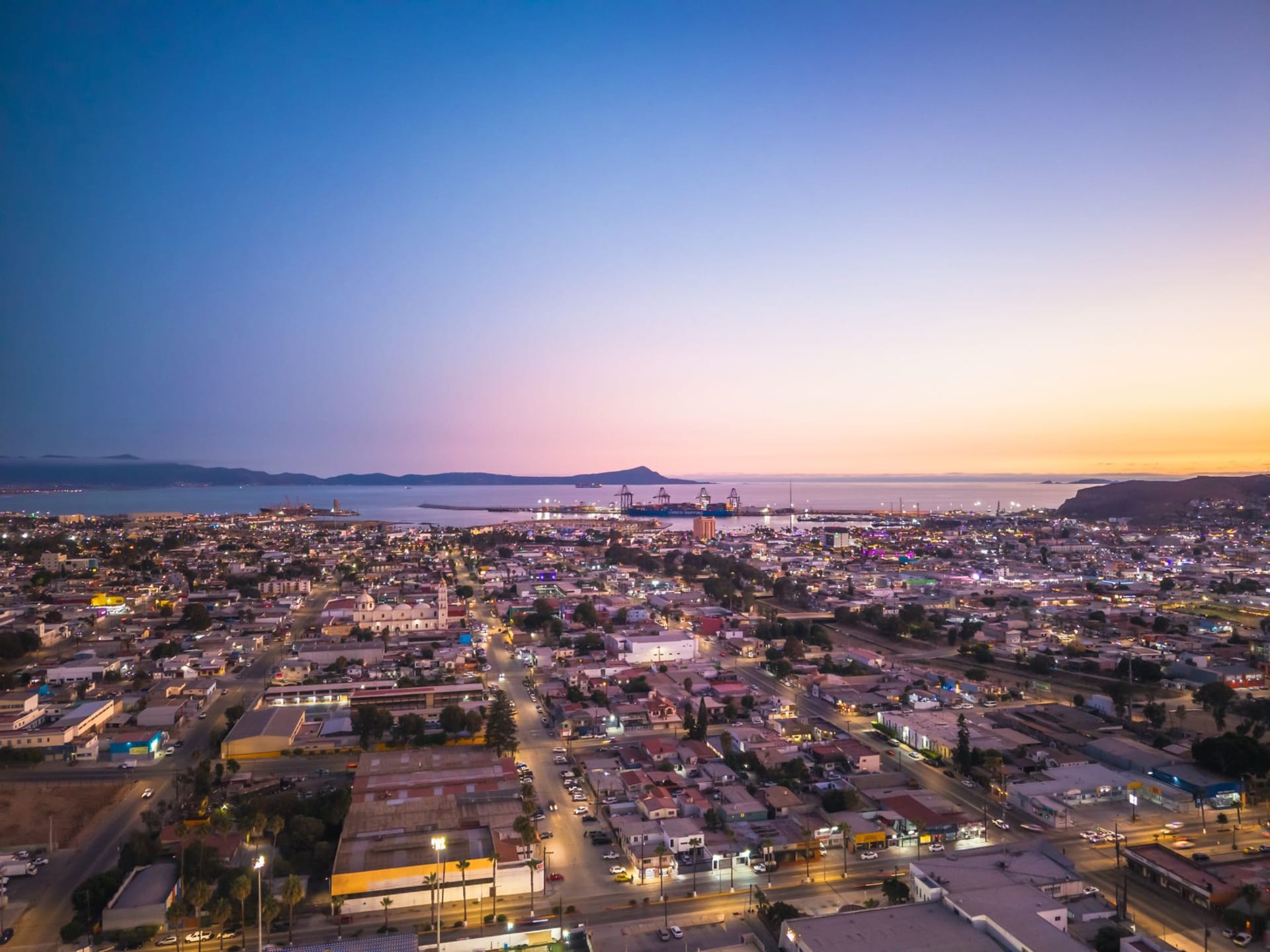
Colima City
"The volcano is visible from the central plaza. Nobody seemed particularly troubled by this."
The Volcán de Fuego is visible from the main plaza of Colima. This is the fact that orients everything else about the city. You sit under the laurel trees in the Jardín Libertad with a tejuino in your hand and there it is, forty kilometers to the north, a perfect volcanic cone with a thin white thread of gas at the summit, so clean and geometric it looks constructed. The most active volcano in Mexico, and the city has simply arranged itself below it and gotten on with things.
I came to Colima city on the way back from a few days on the coast, stopping because I had been told about the Colima dogs at the archaeological museum and because I had drunk a version of tejuino in Guadalajara that I found interesting but underpowered. Lia had already gone back to Mexico City. It was one of those weeks where I was traveling alone, which in Mexico occasionally makes you more attentive to small things — the angle of a doorway, the particular sound a market makes at ten in the morning, the way a city’s personality reveals itself when you are not explaining it to anyone else.
Colima — the city is called the same as the state and the volcano, which causes geographic confusion that everyone here seems to find mildly amusing — is genuinely undervisited in a way that is becoming rare in Mexico. The tourist circuit for the western Pacific states tends to jump from Guadalajara to Puerto Vallarta to Manzanillo without pausing. Colima city is a pause. It has the structure of a Mexican state capital that has never needed to perform for outsiders: a proper jardín, a cathedral on one side, the palacio de gobierno on another, portales, a covered market, the rhythm of civic life proceeding at its own tempo. The city is not unaware of the world. It simply has not organized itself around it.
The Dogs
The Museo Regional de Historia de Colima, which occupies a colonial building on the Jardín Libertad, holds what is probably the finest collection of Colima ceramics in existence — and by Colima ceramics I mean specifically the pre-Hispanic terracotta figurines, the bowls and vessels, the anthropomorphic figures, and above all the famous perros de Colima: the fat, hairless dogs made by the ancient cultures of western Mexico for reasons that scholars continue to argue about but that seem to have included accompaniment to the dead in the afterlife, guiding them through the underworld on the river of the dead. The dogs were bred and fattened specifically for this purpose and for food. They were important.
I spent an unreasonable amount of time in front of the dog cases. The perros are extraordinary objects. They are not stylized or geometric — they look like actual dogs. They are plump, hairless (xoloitzcuintli, the Mexican hairless breed, was common in pre-Hispanic western Mexico), with wrinkled skin rendered in terracotta with a naturalism that would be remarkable in any era. They sit, they sleep, they look up with expressions of canine satisfaction. The ones in the Colima museum range from palm-sized to about the length of a shoebox.
What struck me most was how emotionally legible they are across two thousand years. There is one piece — a fat dog curled in sleep, its chin on its paws, its expression one of absolute contentment — that looks exactly like a pet someone loved. The Colima cultures clearly observed dogs with the same close affection that people bring to them now. The feeling of recognition, standing in front of a 1,500-year-old terracotta animal that looks exactly like a dog I once had in Lyon, is the kind of thing that makes archaeology personal in a way that museum labels cannot.
The rest of the museum — shaft tombs, figurines, ceramics from across western Mexico — is also excellent. But I kept coming back to the dogs.
Tejuino and the Centro
Tejuino is a fermented corn drink — masa, piloncillo, water, left to ferment for several days, then chilled and served over a small dome of lime sorbet (nieve de limón) with chile powder and more lime juice. I had encountered it before in Guadalajara, where versions served at market stalls near the cathedral tended to be very sweet, the fermentation mild, the overall impression closer to a sweet corn slushie than anything I would describe as fermented. Interesting. Unusual. Not something I returned to.
Colima’s tejuino is different. The fermentation is longer and more pronounced, the sweetness lower, the sour, slightly yeasty quality more forward. I will say, as a Frenchman who grew up with cidre artisanal and vin de table at every family dinner, that I have sometimes found Mexican sweet drinks simply too sweet for my palate — I am not judging the tradition, it is simply a calibration question. Colima’s tejuino was the first version that made sense to me on its own terms. The nieve de limón on top is the right element: the cold burst of acid citrus at the first sip, before the warm fermented corn body comes through, is something that took me two sips to understand and then made complete sense, like a food pairing you encounter by accident and then cannot imagine undone.
The best tejuino in the centro comes from a stand on the corner of Constitución and Medellín. A woman had run it for decades; her granddaughter operates it now on weekday mornings. I went back twice. I also asked her whether Colima’s tejuino was actually different or whether I was imagining it. She considered this seriously and said it was the fermentation time and the quality of the piloncillo, and that the Guadalajara versions used shortcuts. I believed her.
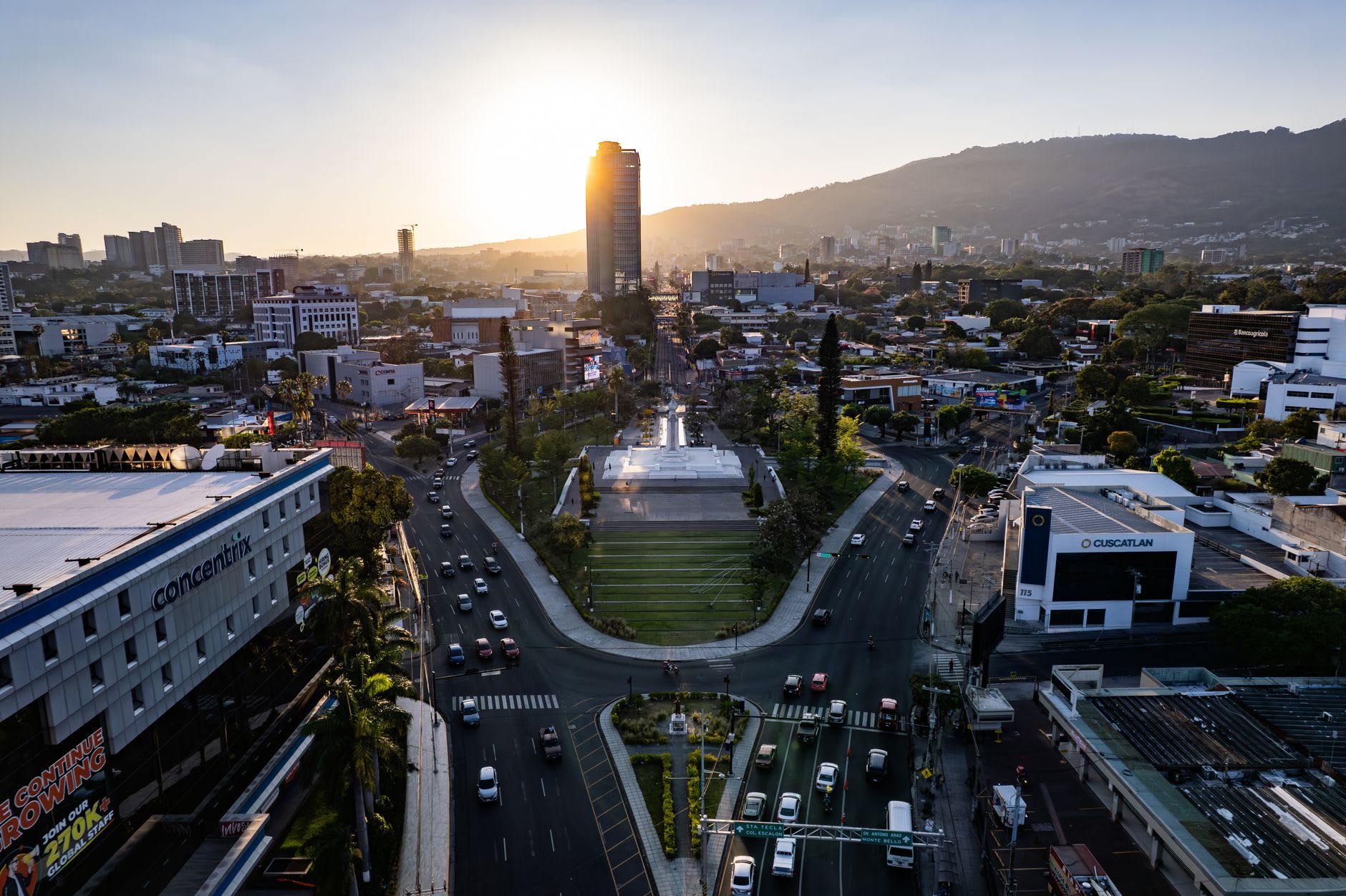
The centro itself is pleasant and human-scaled. The Jardín Libertad functions as the actual center of civic life, not just a decorative space — children on weeknights, men playing chess on weekend mornings, couples in the evenings, a peripatetic ballad singer who appeared on my second evening and performed with the specific confidence of someone who has been working this spot for twenty years. The Palacio de Gobierno has murals by Jorge Chávez Carrillo covering Mexican history with a regional emphasis on the western Pacific states. The Catedral Basílica de Colima is Neoclassical, earthquake-damaged and rebuilt several times over (Colima is seismically active), with a quiet severity inside that I preferred to the more ornate cathedral interiors common elsewhere in Mexico.
The market two blocks south has excellent pozole de res at the back comedor, and a produce section selling local specialties: chili tepín (tiny, incendiary), Colima limes (smaller and more aromatic than the standard Persian lime), and local coffee from the Comala farms above the city. I bought a bag of tepíns and spent the next two weeks adding them to everything.
The Volcano, Every Morning
Colima volcano is visible from the centro on clear mornings. By late morning the cloud builds and it disappears until the next day. This gives the city a particular morning quality: people mention the volcano’s visibility the way coastal cities mention the sea’s condition. Clear today. It was fuming yesterday. There was a small emission last month. The Popocatépetl above Puebla is Mexico’s more famous active volcano, but the Fuego has the higher reputation for actual activity — it produces more frequent eruptions, more ash, and has required evacuations of nearby villages multiple times in recent decades.
The city has learned to coexist with this. There are protocols for ash fall, there are evacuation plans for high-alert scenarios, and there is a fatalism that is not indifference but something more considered: a recognition that geological time operates on a different scale than human anxiety, and that a city has to live somewhere. The residents of Colima are not in denial about the volcano. They monitor it through the civil protection app on their phones. They keep masks at home. And they also sit in the jardín and drink tejuino and look at the cone above the rooftops without visible alarm.
I asked the woman at the tejuino stand whether she worried about the volcano. She looked at the cone visible above the cathedral, then at me. Es nuestro, she said. It’s ours.
That sentence has stayed with me as a description of a particular Mexican relationship with geography — the acceptance of a landscape’s full character, including its risks, as part of what makes a place yours.
Getting there: Colima city has a small regional airport with connections from Mexico City (1h) and Guadalajara (50 min). By road from Guadalajara it is about 2h30 on the autopista through Jiquilpan; from Manzanillo, about 1h. Second-class buses from Guadalajara’s Central de Camiones del Sur run frequently. From Comala, colectivos run the 20 minutes between the two towns throughout the day.
When to go: October through May for the best volcano visibility and driest weather. The summer rainy season (June-September) clouds the cone daily but keeps the cafetales above Comala green and lush. Check CENAPRED’s Volcán de Colima monitoring reports before any visit for current activity levels — the exclusion zone around the summit shifts based on eruption frequency. The city itself is never unsafe; it is only the slopes above 3,000 meters that change.