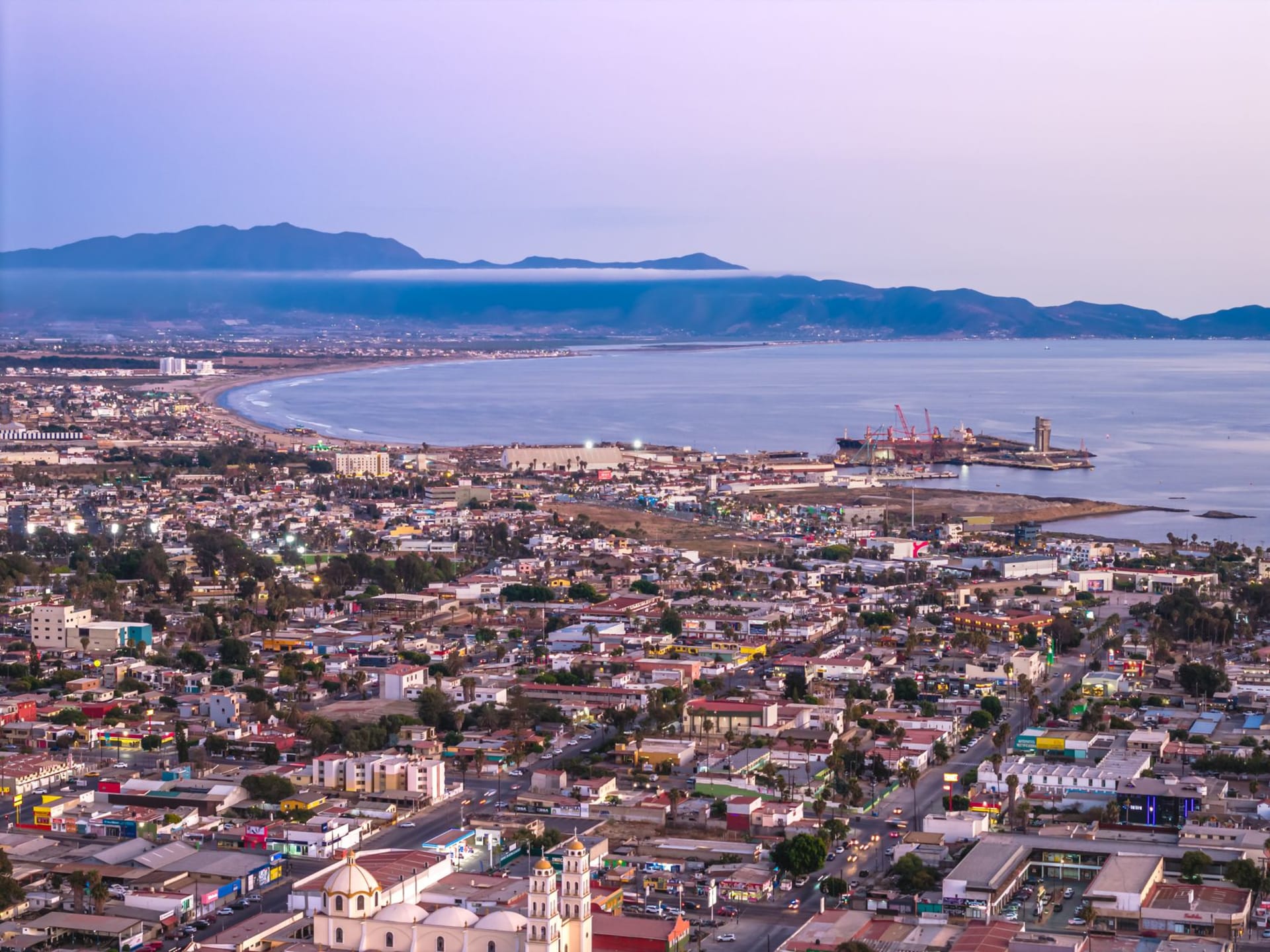
Ojinaga
"The road curved and Big Bend appeared through the windshield. I pulled over and sat there for a while doing nothing useful."
I crossed into Ojinaga from Presidio, Texas, on a morning in late October when the desert was doing that thing it does in autumn where the light goes sideways and everything looks slightly more real than it has any right to. The crossing at Presidio-Ojinaga is not one of the major border crossings — there is no particular urgency on either side, no long lines, a modest infrastructure of inspection lanes and bridge toll booths. The Rio Grande at this point is not wide. You can see the other side clearly. What you are crossing is more symbolic than physical, which is true of many borders but feels particularly acute in a desert where the same creosote bush grows on both banks.
The Mexican customs officer looked at my passport, looked at me, and waved me through with the economy of motion that characterizes every official who has processed the same action ten thousand times.
The Food, Which Is the Point
I have eaten machaca con huevo — shredded dried beef scrambled with eggs and tomato and onion — in numerous places in northern Mexico, and I will tell you that the version I ate in Ojinaga in a restaurant with six tables and a television playing a telenovela on low volume is among the better versions I have encountered. The machaca was properly dry, the way it is when someone has actually made it rather than bought it pre-processed, with the char of the drying still present in the flavor. The eggs were scrambled into it loosely, still slightly wet. The tortillas were flour — this is the north, corn tortillas are the exception — and they were fresh and warm and large.
The restaurant had a menu written on a laminated card, but the woman who ran the front of house steered me toward the machaca before I had finished reading it. This is always the right thing to do. The telenovela in the corner involved a misunderstanding about an inheritance that seemed unlikely to resolve cleanly. I was not following closely.
Border town food in northern Mexico has a specific character that I find hard to explain to people who haven’t spent time in it. It is not the Mexico of mole negro and tlayudas and complex pre-Columbian spice traditions. It is cattle country food: the beef dried and reconstituted, the chiles present but not dominant, the flour tortilla as the primary medium. It is serious food, unpretentious in a way that takes confidence to pull off, and Ojinaga does it without apology.

The Desert, and the View
South of Ojinaga, the road curves and climbs slightly toward the Chihuahuan plateau, and there is a point where the road bends and the view opens to the northeast, and through that opening you can see — across the river, across the scrublands of Big Bend Ranch State Park, into the actual wilderness — the mountains of Big Bend National Park itself. The Chisos Mountains, specifically: a dark volcanic mass rising from the desert floor. I pulled over.
The Chihuahuan Desert has a reputation for austerity that is deserved but sometimes misleads people into thinking it is empty. It is not empty. The flatness of the bajadas is populated with plants that have spent millions of years making the most of negligible rainfall: sotol with its shaggy crown, ocotillo in its skeletal winter state, creosote in its dense low mounds with a smell after rain that is one of the best smells in the world. The mountains on the US side were going blue in the haze. A hawk circled without effort. The river, barely visible as a green line of riparian vegetation, marked the international boundary between this desert and that identical desert.
I sat at the side of the road for some time. I was not doing anything in particular. This was the correct thing to be doing.
The Border Itself
There is a specific quality of attention that border towns develop. Ojinaga is not a major crossing — it processes a fraction of the traffic that Juárez or Nuevo Laredo see — but it still operates with the awareness of its own liminality. The businesses along the main commercial street are oriented toward practical trade: auto parts, hardware, pharmacies, money changers, restaurants that serve both sides of the crossing. The people who work there have often crossed the bridge many times in both directions. The US and Mexico here are not abstractions — they are the road you drove on yesterday and the road you will drive on tomorrow.

Getting There
Ojinaga is reachable by bus from Chihuahua City — the journey takes about four hours on a route that crosses the high plains of central Chihuahua. If driving from the US, the Presidio crossing is straightforward. The town has basic accommodation; most travelers passing through are en route between Chihuahua and Big Bend. The desert between Ojinaga and Chihuahua City is worth the drive in either direction if you have not spent time in the Chihuahuan Desert — it is more varied and stranger than its reputation suggests.