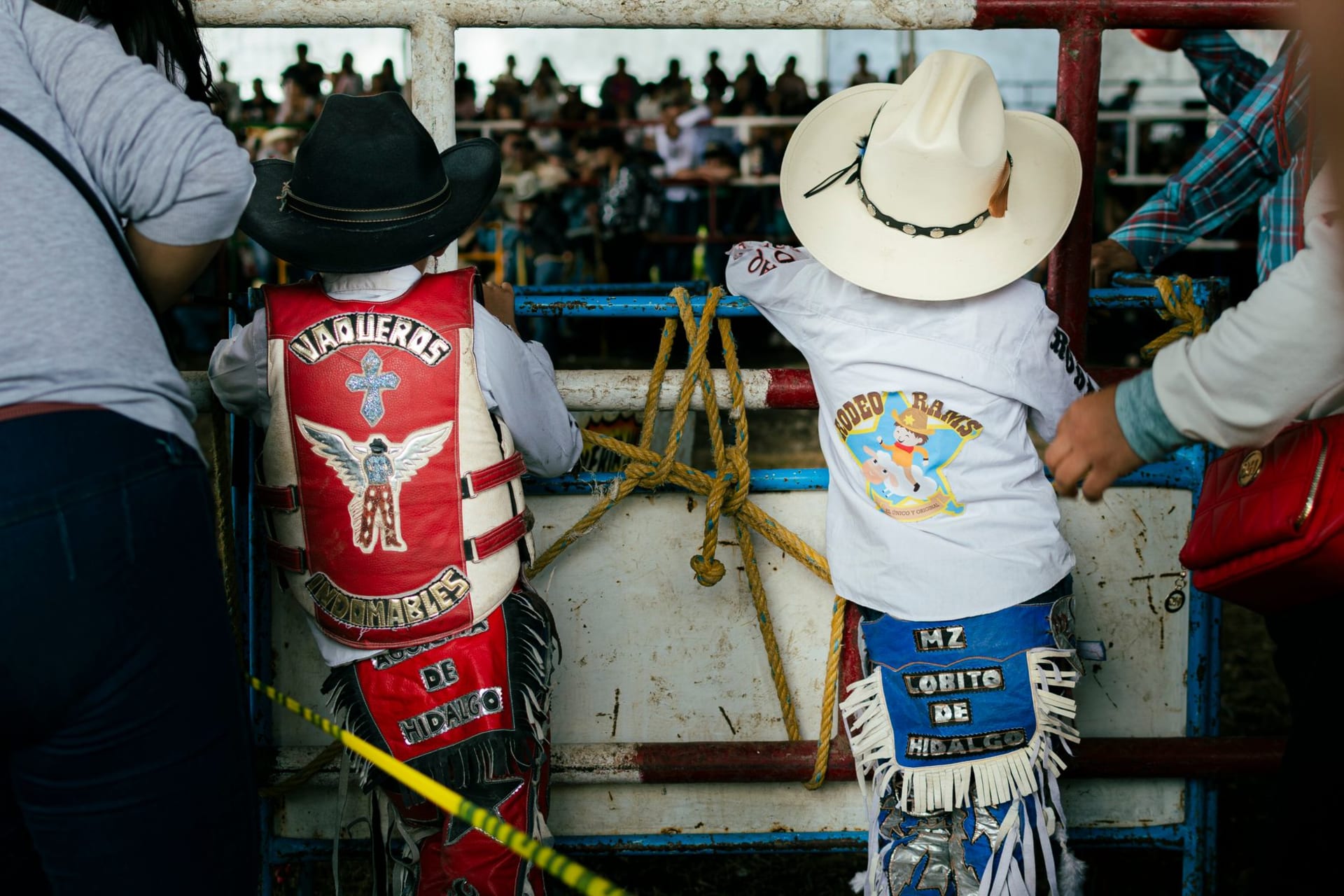
Hidalgo del Parral
"Pancho Villa died on this street. The plaque is matter-of-fact about it. The town continues around the plaque, indifferent in the way of places that have absorbed something and moved on."
Parral is not on the standard tourist circuit of Chihuahua, which runs between Chihuahua City and the Copper Canyon and back. It requires a southward detour on the highway through desert country — mesquite flats, low bare hills, the occasional ejido settlement — that takes about three hours from the state capital. Most people don’t make it. I was glad I did, and I am not usually glad about three-hour detours through desert.
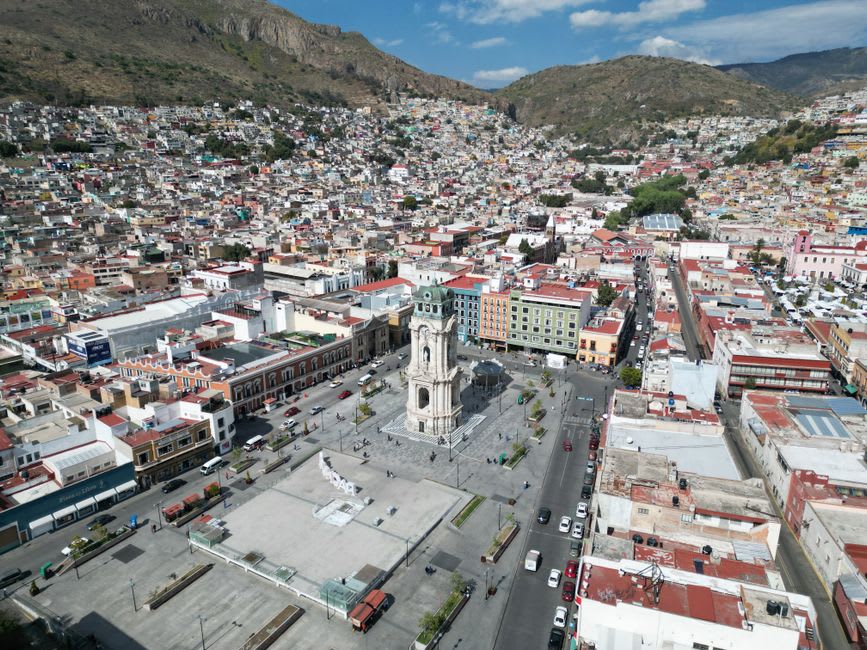
The town sits in a valley in the Sierra Madre foothills where silver was found in the early seventeenth century and where the mines ran more or less continuously until the twentieth century. The colonial center reflects the money those centuries produced: broad stone churches, a main plaza with an ornate Presidencia Municipal, streets of two-story buildings with carved limestone facades — the same vocabulary you see in Zacatecas or Guanajuato, translated into the sterner materials of the northern desert. It’s less polished than either of those cities. The buildings are lived in at a level that resists prettification.
Calle Juárez
The assassination happened on July 20, 1923, at an intersection on Calle Juárez. Pancho Villa had been living in retirement at his Hacienda de Canutillo, having accepted an amnesty from the Mexican government three years earlier, and he was passing through Parral when the gunmen opened fire from a building that overlooked the street. His Dodge touring car — a 1919 Dodge, specifically — received 47 bullet impacts. Villa was hit multiple times and died quickly. He was 45 years old.
The car is not here. The Dodge is in Chihuahua City, at the Quinta Luz museum. What’s here is the place itself: the intersection, the wall where the gunmen fired from, the plaque that records the date and the event in straightforward prose. There is also a cross painted on the street surface.
I walked to the intersection twice on the morning of my visit. The first time I was trying to construct the scene — the car slowing, the signal, the sequence of shots — and failing to make it cohere against the current reality of a functional Mexican street with parked pickups and a taquería open for breakfast. The second time I just walked past it without trying. The plaque is on the wall. The taquería is open. History and daily life coexist here in a ratio that favors daily life, which is probably how it should be.
The Museo General Francisco Villa nearby fills in context that the intersection cannot provide: the revolutionary period, Villa’s military campaigns, the politics of the amnesty, the theories about who ordered the assassination and why. There are several credible theories and they are explained with an evenhandedness that surprised me. The museum is worth two hours.
Silver Money in Stone
Apart from the Villa connection, what Parral has is four centuries of silver architecture in a state that most people only associate with desert and narcocorridos and the railroad through the canyon.
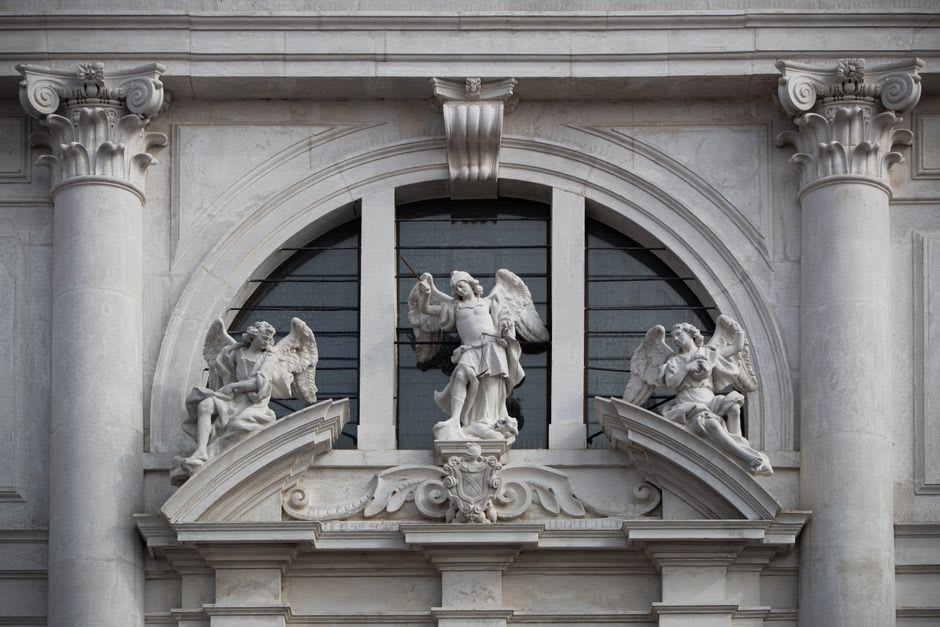
The church of San José del Parral, built in the eighteenth century with mining money, is the most elaborate building in the city — its facade a dense carved ensemble of saints and symbols that takes several minutes to read. The Templo de la Virgen del Rayo is smaller and stranger, built partly with a donation from one of the local mine owners in a negotiation with the Virgin that, per the story told in the museum, involved a lightning strike that he narrowly survived. The specificity of these origin stories is one of the things I like about colonial Mexico: the buildings are funded by named people with named events in their lives, and the events are still attached to the buildings.
The main plaza is where the town comes in the evenings. I arrived on a weekday afternoon and the benches were filling with older men, families with children in school uniforms, a few teenagers on phones. The ice cream vendor was doing business. The architecture around the plaza was warm stone going amber in the late afternoon, and the whole thing felt like a city living inside its own history without performing it for anyone.
Machaca
The food in Parral is northern Mexican food — that category of cooking built on dried beef, flour tortillas, dried chiles, and dairy — and it is very good in the direct, unostentatious way of northern Mexican cooking.
Machaca is the signature. It’s beef that has been dried and then rehydrated and shredded, then cooked with scrambled eggs and green chile in the most common preparation, though it also appears in other forms. I ate it on two mornings at the same comedor near the central market — a narrow room with six tables and a woman who brought coffee before I asked and machaca con huevo that arrived in a generous portion with fresh flour tortillas and a red salsa that was hot in a slow, building way rather than an immediate one.
The second morning she asked where I was from. When I said France she paused and then said that she had a cousin who had been to Spain once. I said Spain was close but not quite the same thing, which is an argument I make frequently in Mexico and which Mexican people receive with a patience that is somewhat generous.
Getting There
Parral is about three hours south of Chihuahua City by bus — Omnibus de México and similar lines serve the route. It also sits on the Chihuahua–Mazatlán highway, making it accessible from both directions as a stopping point if you’re doing the full crossing of the Sierra Madre. The town has adequate hotels in the center; nothing luxurious, but comfortable and fairly priced. Visit in spring or fall to avoid the summer heat.