Ciudad Juárez
"Everyone warned me about Juárez. Nobody warned me about the machaca, or the corridos, or how much more complicated the city is than the reputation suggests."
I crossed the Santa Fe bridge from El Paso on a Tuesday morning. The crossing took forty minutes in each direction: the American side had ten lanes, most of them backed up with commercial traffic; the Mexican side processed pedestrians efficiently. By noon I was walking through the Pronaf district — a neighborhood of wide boulevards and 1960s commercial architecture built specifically for American day-trippers when Juárez was a tourism economy — and by afternoon I had eaten twice and was watching the city try to figure out what it was going to be.
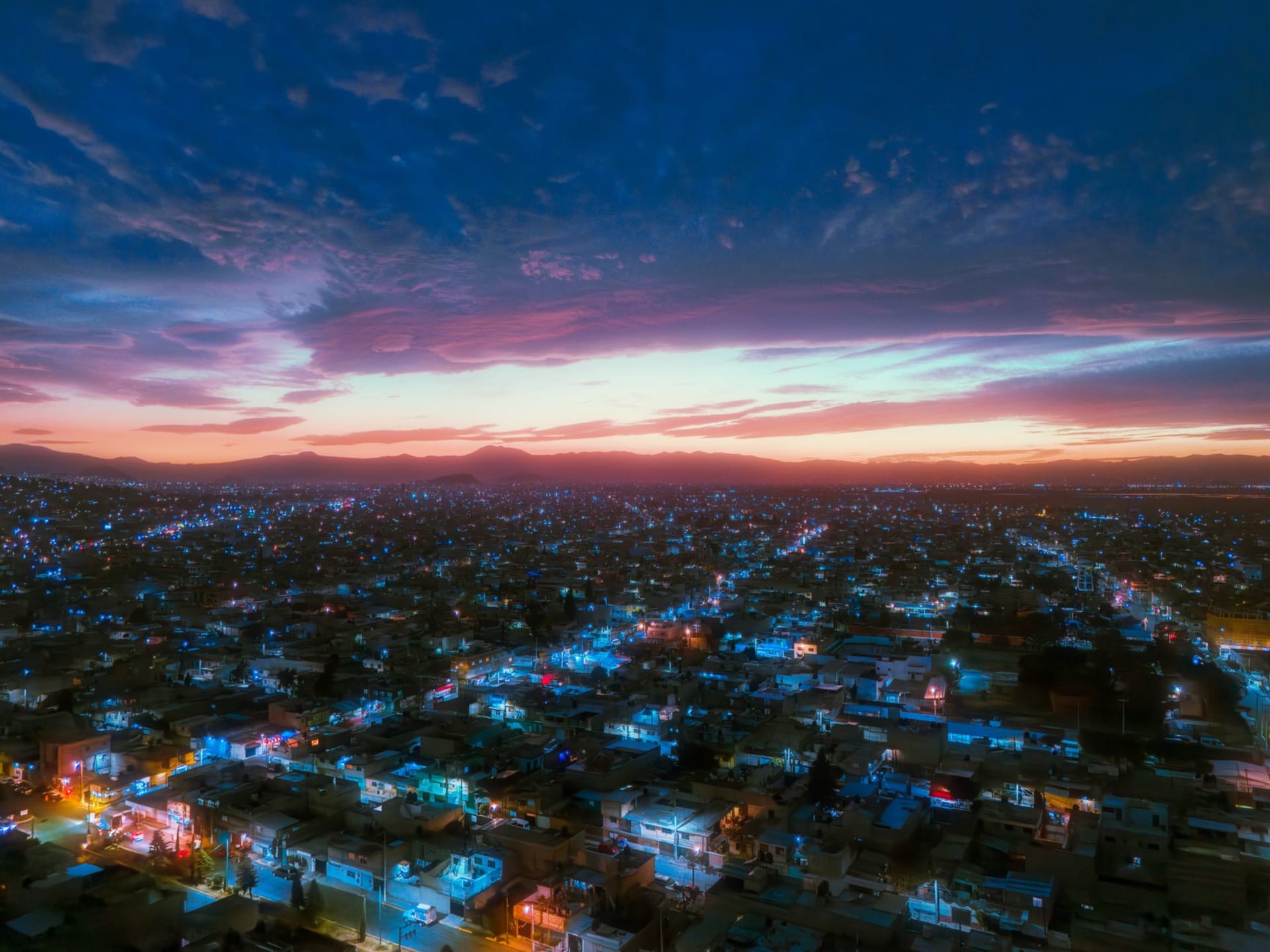
That’s the honest description of Juárez right now: a city in the process of becoming something after a period of violence that has no real equivalent in recent urban history. Between 2008 and 2011, the Sinaloa and Juárez cartels fought for control of the city’s drug trafficking corridor, and the death toll was catastrophic — over 10,000 homicides in those three years in a city of one and a half million people. The city emptied in some neighborhoods, filled in others with displaced populations, and then, when the violence receded, began the slow and incomplete process of reassembly.
What Remains and What Was Built
The Pronaf shopping district is the ghost end of this history. It was built in the 1960s when the Mexican government was actively courting American tourism — Juárez as a weekend destination for El Paso’s middle class, a place to eat and shop and experience Mexico without going very far. The tourist infrastructure of that era is still there: the hotels, the restaurants, the wide boulevards that were designed for car traffic from across the bridge. Most of it is not functioning at the purpose it was built for. The effect is of a city that dressed up for guests who stopped coming and hasn’t quite undressed yet.
The UACJ — the Autonomous University of Ciudad Juárez — has a different energy. The campus is active and its arts program generates work that takes the border experience seriously as a subject rather than a problem to be explained or overcome. I walked through an exhibition at the university gallery of photographs from the peak violence years — not the bodies, not the crime scenes, but the empty streets and the closed businesses and the abandoned houses — that was one of the most precisely observed records of what a city looks like when it stops functioning that I have encountered anywhere.

The Corridos
In France, when something traumatic happens — a major crime, a political violence, a collective disaster — the official response is a certain kind of silence and institutional processing, with art that comes later, often abstracted. In northern Mexico, the corrido tradition works differently. The narcocorrido is a ballad form that documents the cartel period with the directness of journalism and the moral complexity of literature: the protagonists are not heroes or villains in the simple sense, the violence is not aestheticized or condemned but described, and the listener is left to work out what to feel.
I bought two CDs at a music stall in the market — this is still a CD economy in ways that feel archival rather than retro — and listened to them in the restaurant while I ate. The corridos describe events that happened in specific places in this city, involving people whose names are real. They are a form of historical memory that the mainstream Mexican music industry doesn’t produce and that the international media never covered. As documents of what Juárez actually went through, they are more reliable than most of the journalism I’ve read about the same period.
The Burrito and the Machaca
The flour tortilla burrito — the original one, before it became a San Francisco mission thing and then a California fast food thing — is from Juárez. The Chihuahua border burrito is modest by the standards of its California descendants: a thin flour tortilla, seasoned meat or bean filling, not stuffed into implausibility. It is the correct size for a thing you fold in your hands and eat standing up.
I ate one at a stall near the market with machaca filling — the dried shredded beef that is northern Mexico’s signature preparation — and then ate another. The machaca in Juárez is made with chiltepín, a small wild chile native to the region, which gives it a heat that is different from serrano or jalapeño, drier and more immediate. The second burrito was better than the first because I was paying more attention.
At the restaurant where I finished the afternoon — a lunch comedor in the Centro with checked tablecloths and a television running a daytime drama at low volume — two businessmen at the adjacent table argued for forty-five minutes about a phone bill. I couldn’t follow all of it. The machaca con huevo was excellent. The coffee was serviceable. The businessmen never resolved the phone bill to either party’s satisfaction, and they left still arguing, which is how most phone bill disputes end.

Crossing the Border
The Santa Fe and Paso del Norte international bridges connect downtown El Paso directly to the Juárez city center; pedestrian crossing is straightforward for holders of Mexican tourist visas or FMM cards. The SENTRI lane on the return to the US is faster for enrolled travelers. Do not bring anything across either border that should not be crossing it. The Juárez center is walkable from the bridges; the Pronaf district is a fifteen-minute taxi from the crossing. Most restaurants close by 5pm; plan lunch accordingly. Evenings in the tourist areas are functional; late-night is for people who know the city better than a first visitor does.