Toniná
"Seventy meters of stone, two thousand years of war, and not another person in sight. Some places earn their silence."
The bus from San Cristóbal takes about two hours on a road that winds down from the highlands through cattle pastures and small Tzeltal Maya communities, dropping altitude until you reach the broad Valle de Ocosingo — a valley of dairy farms and flat light, ringed by hills. The town of Ocosingo is not the destination. It’s a functional, un-prettified market town, and you pass through it to reach the ruins about 14 kilometers east. I was the only person at the turnoff who wasn’t continuing to somewhere else.
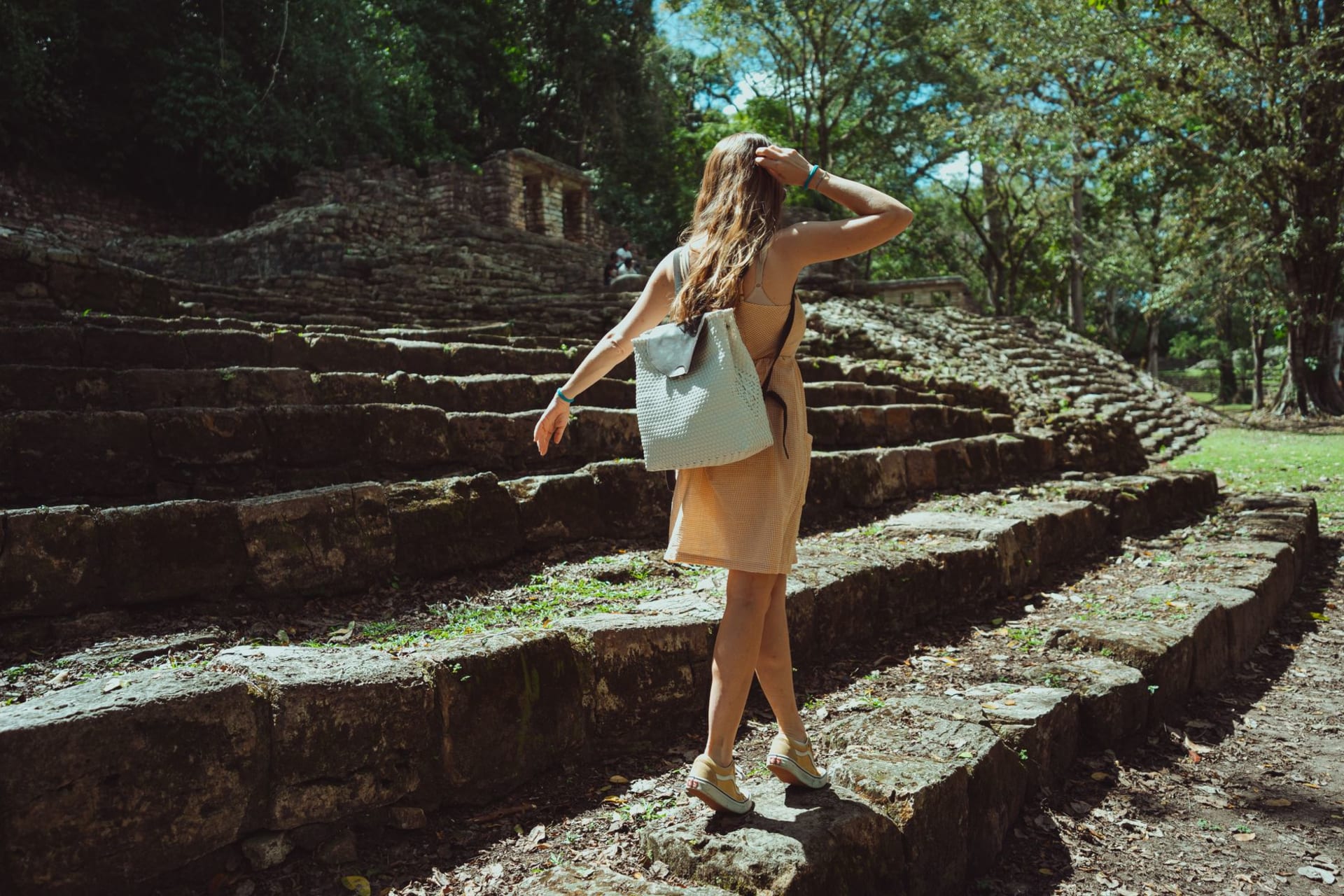
The first glimpse of Toniná across the valley is already a recalibration. You don’t expect something that large. The guidebooks and the history books tell you the numbers — seven terraced platforms, 70 meters from base to summit — but numbers don’t prepare you for the physical fact of it, a stone mountain built on a natural hill, rising above the pastureland with an authority that has nothing to do with who’s looking at it.
A City That Collected Kings
Toniná was not a city known for art or trade or astronomical sophistication in the way Palenque, two hours away, was known for those things. Toniná was known for war. Its polity spent centuries in violent competition with neighboring Maya states and, according to the inscriptions and carved panels recovered here, it captured and sacrificed at least one king of Palenque — K’an Joy Chitam II, who disappears from Palenque’s records after 711 CE and reappears in Toniná’s, on the losing side of things.
The great stucco frieze on the fourth platform is about this. It depicts the underworld and the cycle of death and rebirth with an explicitness that is unusual even in the context of Maya monumental art, which is not squeamish about these subjects. There are bound captives. There are decapitations. There is a ballgame court at the base of the complex where the outcomes of games had real consequences. I stood in front of the frieze for a long time. The information panel translates the glyphs with admirable directness.
What struck me most was how functional this all seemed — not theatrical violence for performance, but violence as statecraft, practiced with the systematic efficiency of a polity that understood exactly what it was doing and why.

The Summit
The climb to the top takes about twenty minutes if you’re not rushing, and you shouldn’t rush. Each platform reveals a different view of the valley — the dairy farms coming into focus, the hills in the distance, the small road that connects Ocosingo to the site. By the fifth platform the wind picks up.
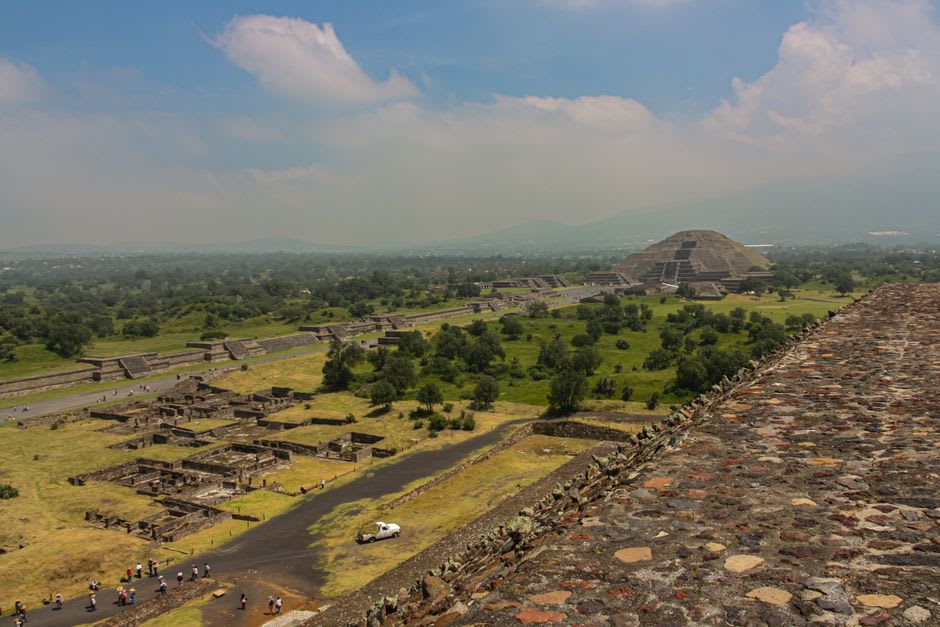
At the summit I was, as promised, alone. There was a guard stationed near the entrance plaza at the base, and a small museum beside the parking area, but no tour groups, no vendors, no other visitors I could see or hear. This is unusual for a site of this importance. Palenque, which in historical terms was Toniná’s rival and victim, receives thousands of visitors a day and you experience it in a state of managed crowding. Toniná receives almost no one, which means you receive it fully.
I sat on the upper platform for an hour without moving very much. The Valle de Ocosingo below was green and quiet. A heron passed over the access road. The sky was doing something complicated with the cloud cover that made the stone surfaces change color every few minutes — gray, then cream, then something almost warm.
The Valley and the Cheese
Coming back through Ocosingo that afternoon, I stopped at the market. The Valle de Ocosingo is dairy country — the cool highland climate and the grass pastures make it ideal — and the region produces a cheese called quesillo de Ocosingo that’s a highland variant of Oaxacan string cheese: layered, slightly acidic, with a texture that resists tearing in a satisfying way.
I bought a ball of it from a woman at the market whose stall also had cream, butter, and a soft fresh cheese that she sold by weight. I ate it with a warm tortilla that I bought from the woman at the next stall. It tasted uncomplicated and extremely good, the way food tastes when the ingredients are from somewhere close and the preparation is not trying to be anything beyond what it is.
Getting There
The easiest route is by colectivo van from San Cristóbal de las Casas to Ocosingo — the journey takes about two hours and the vans leave frequently from near the Pan-American Highway. From Ocosingo, a taxi to the ruins is the practical option; there are also occasional colectivos going east on the road toward Toniná. The ruins are open from 8am to 5pm; arrive early for the best light and the fewest people, though the latter is rarely a problem here. The small site museum is worth twenty minutes before you climb.