Tenam Puente
"The man at the entrance window looked up as I approached with an expression that I can only describe as mild surprise. I think I was his first visitor of the week."
Comitán de Domínguez is the southernmost city of any size in Chiapas, a highland town at 1,500 meters with a pleasant colonial center and a reputation as a base for visiting the Lagos de Montebello to the east and the Guatemalan border crossing at La Mesilla to the south. I was there for two nights and had seen the lakes and eaten the local drink, comiteco, which is an aguardiente made from maguey that I found unexpectedly drinkable. With a free morning, I took a taxi south to a site I had read about in a footnote somewhere: Tenam Puente.
The driver had heard of it but was not certain of the exact location. We stopped once to ask. We found it.
The Entrance, and the Absence of Other People
The access road to Tenam Puente is a dirt track off the highway, perhaps two kilometers of uneven surface that deposits you at a small parking area with a concrete block building. The man in the building accepted my entrance fee, issued a ticket, and returned to whatever he had been doing before I arrived with the air of someone who had not expected his morning to include a visitor.
I asked him if there were many people that day. He said it was Monday. I took this as a complete answer.
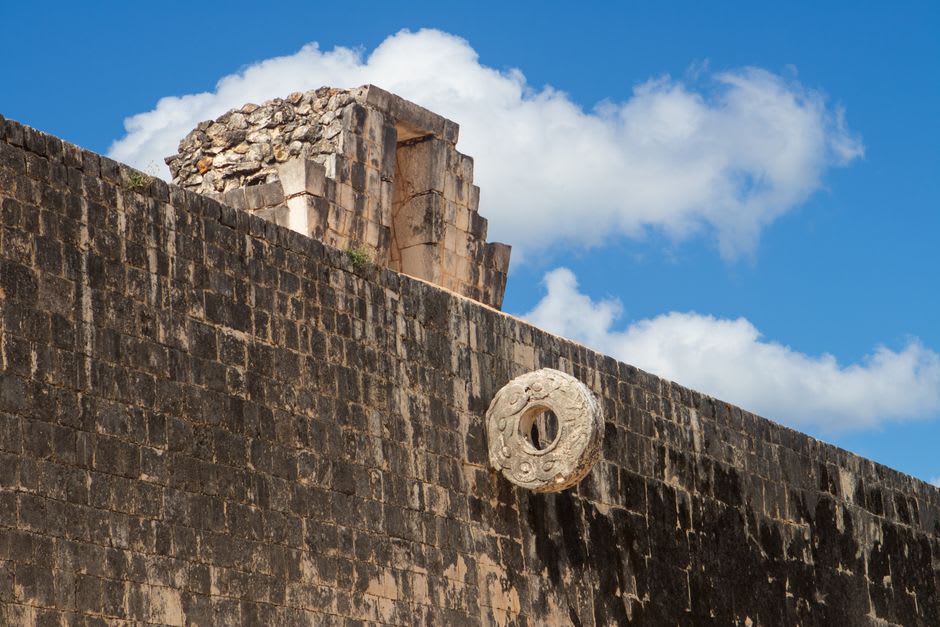
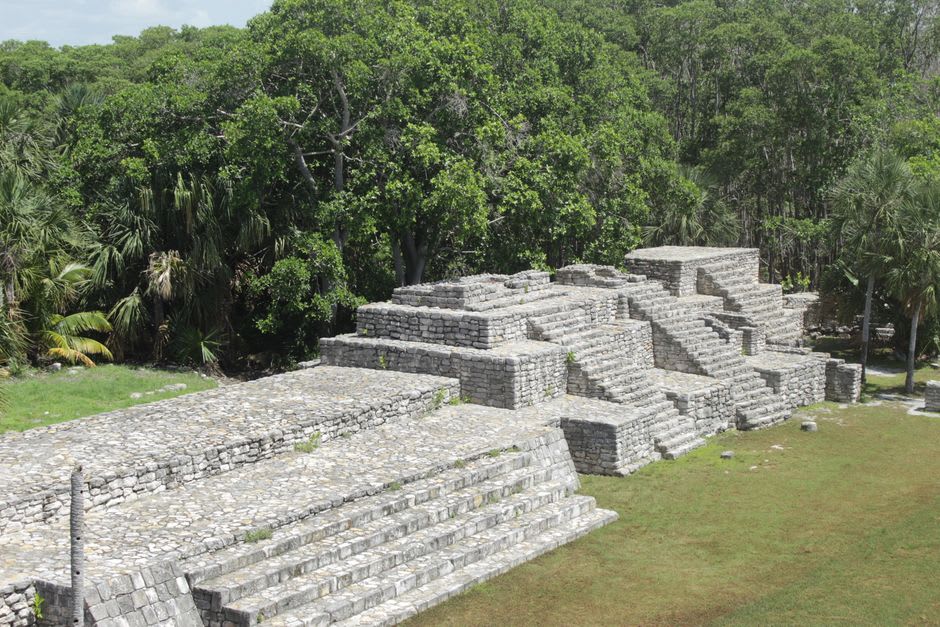
Beyond the entrance building, the site opens up on a hillside. The structures — pyramidal platforms of different scales, a reconstructed ballcourt, several ceremonial plazas — have been cleared of vegetation but the surrounding hillside is still forest, and the trees come right to the edge of the mowed areas. Founded around 200 CE and active for roughly seven centuries, Tenam Puente was a regional center during the Classic Maya period, though it never reached the scale or fame of Palenque to the north or Bonampak to the east. Partial excavation only. The signage is modest. The site invites slow looking rather than systematic ticking-off.
The Birds, and the View
What I remember most clearly from Tenam Puente is the birds. I am not a birder in the systematic sense — I don’t carry a list, I don’t know most of what I’m hearing — but the density of bird sound in that forest on that Monday morning was the kind of thing that makes you stop walking and just stand there. Something in the canopy was producing a call I couldn’t identify, complex and repeating, and something else was answering it from lower down. I stood on the main pyramid for a while listening to this exchange without moving.
The view from the top of the principal pyramid looks west and north across the Comitán valley. The valley floor is agricultural — flat green fields, small ranches, the grid of a town or two — and beyond it the mountains rise toward the highlands. On the southern horizon, the Sierra Madre de Chiapas becomes hazy and then disappears into the distance that is, more or less, Guatemala. The sky was clear when I was there, and the light was the highland Chiapas light that arrives clean and cool and makes distances seem shorter than they are.
Standing alone at the top of a Maya pyramid looking at an unobstructed view toward Central America, with birds I couldn’t name calling in the trees below me, is not a situation I had anticipated when I booked my guesthouse in Comitán. These are the discoveries that make planning slightly overrated.
The Jungle at the Edges
What strikes you at Tenam Puente, if you pay attention to it, is how provisional the clearing feels. The mowed grass and the excavated structures occupy a volume of hillside that has been actively claimed from the forest. Five meters past the edge of the cleared area, the forest is dense and immediate — the same forest that covered these structures entirely for centuries before excavation began. The archaeologists have cleared what they’ve cleared and stopped, and the jungle is patient.
In France, archaeological sites of this age are presented differently — Roman ruins at Nîmes or Arles exist in urban contexts, embedded in cities, their antiquity framed by surrounding civic life. The effect is of continuity, of the ancient past as one layer among many. Tenam Puente feels like something that was returned to briefly from the forest and might be returned to the forest again. This is not a complaint. It is one of the things I find most interesting about archaeological sites in Mesoamerica.
Getting There
Tenam Puente is eight kilometers south of Comitán on the road toward La Trinitaria. Taxi from Comitán’s central plaza takes around fifteen minutes; negotiate a wait or a return trip. There are no food vendors at the site. The entrance fee is modest. Go on a weekday if solitude matters to you, which it should.