Berriozábal
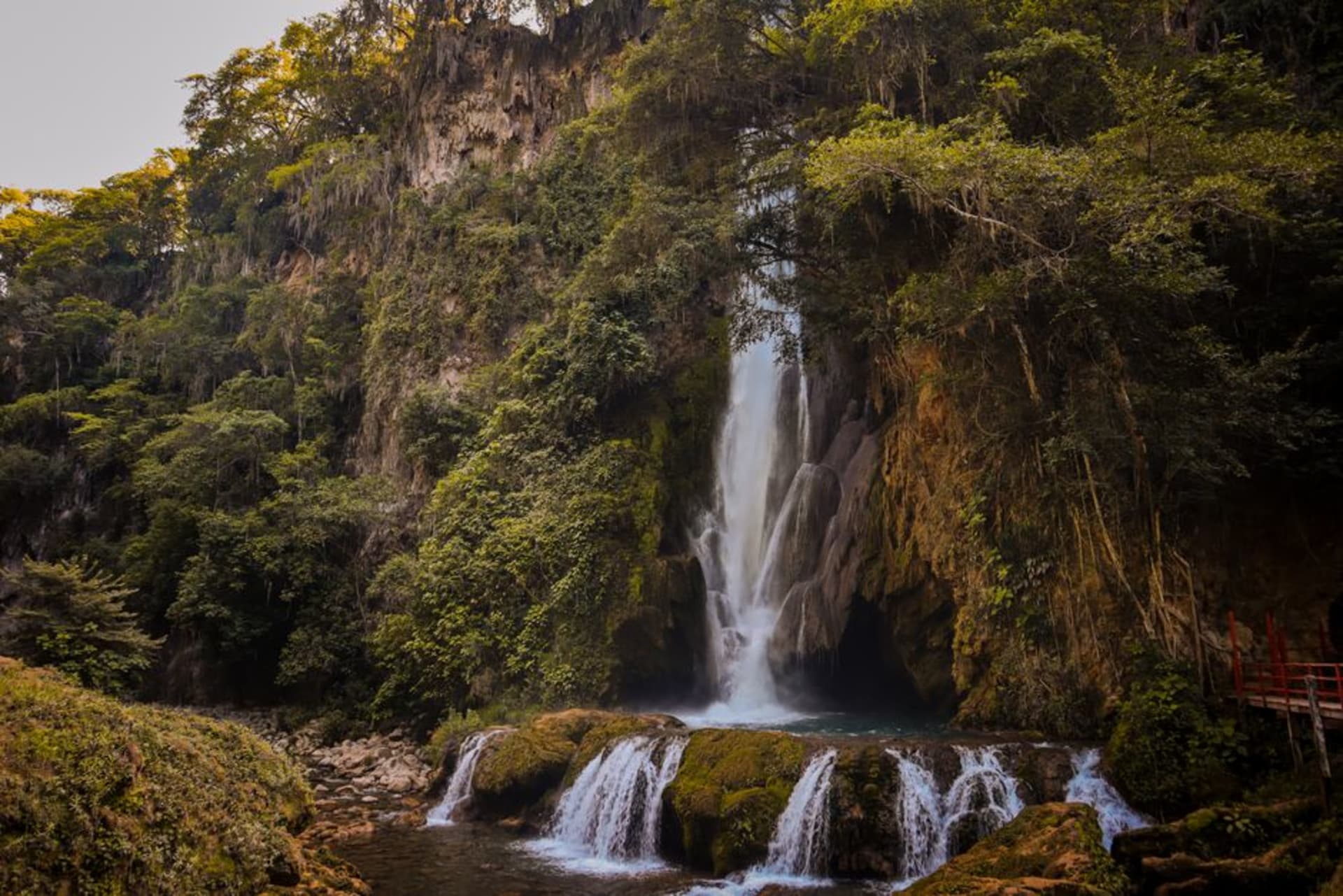
"El Aguacero falls into a canyon that makes you understand why rivers were once considered gods."
I took a colectivo from the central market in Tuxtla and was in Berriozábal before I had finished my coffee. That is roughly how it works here — you arrive not because you planned to but because the highway to San Cristóbal passes close enough that the detour costs you almost nothing, and then you spend the rest of the afternoon recalibrating what almost nothing means. The town center is quiet on a Tuesday: a jardín with plastic chairs pulled into irregular clusters, a few women selling pozol from plastic buckets near the church steps, the smell of something slow-cooking from a kitchen I never located.
El Aguacero
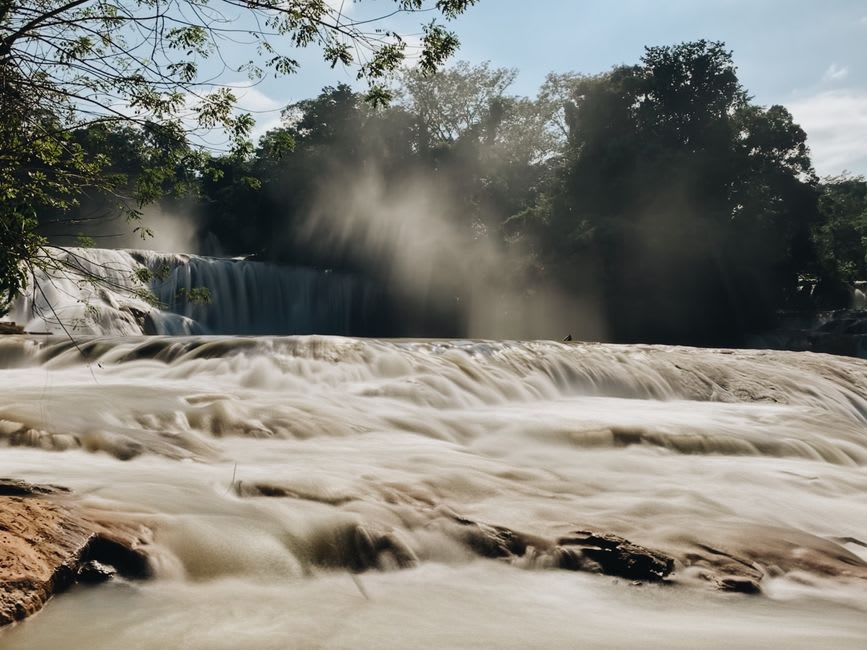
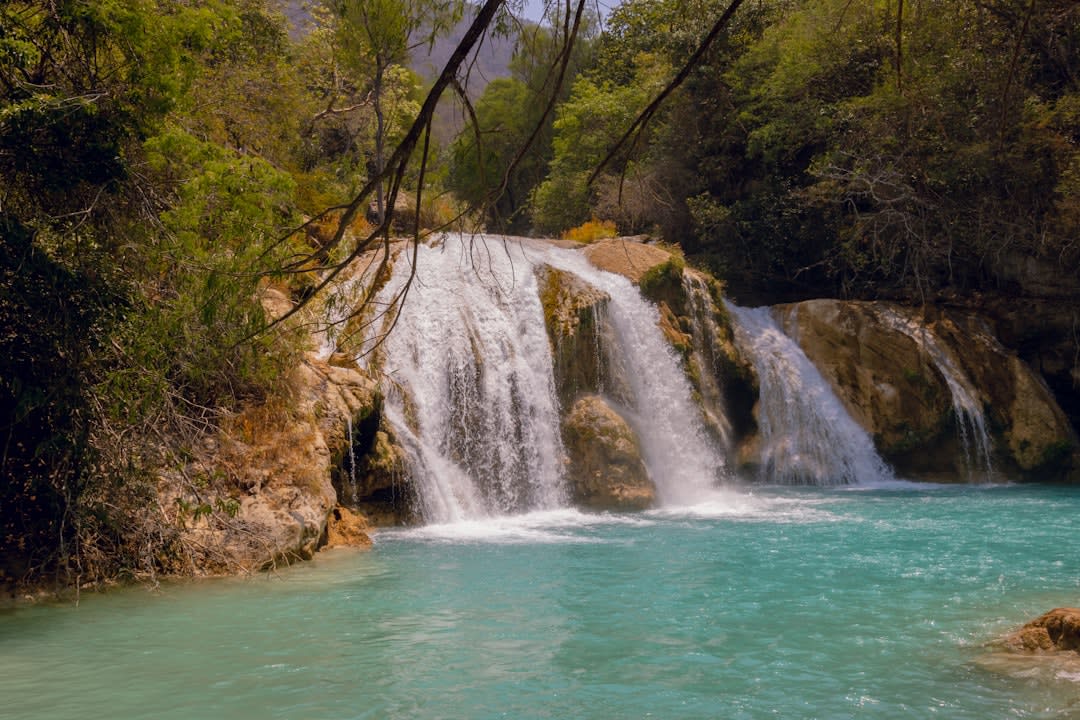
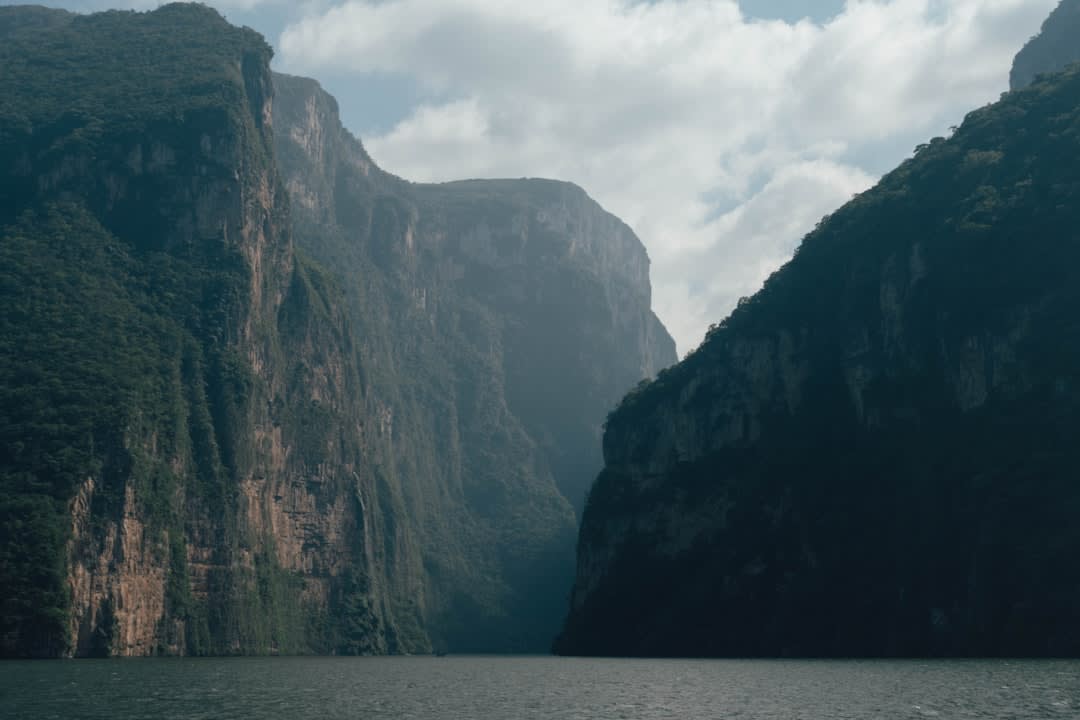
The walk from the edge of town takes about an hour if you go at a normal pace and stop pretending you are not winded by the last stretch. The path drops through secondary forest, and somewhere around the forty-minute mark you begin to hear the falls before you see them — a low frequency you feel in your chest more than your ears. El Aguacero drops forty meters into a canyon the Grijalva river has been excavating since before the concept of forty meters existed as a unit of measurement. The pool at the base is cold and very clear, and on the Wednesday I went there were exactly three other people: a family from Tuxtla with an inflatable ring and a grandfather who had brought his own folding chair. Nobody was performing the experience for anyone. The canyon walls rise on both sides in striated limestone — grey and ochre and, in a few places, a dark amber where the water has been touching them longest. I stayed two hours and felt no particular impulse to leave.
Piña and Pozol
Berriozábal’s pineapples are not incidental. The region around town produces a variety that is smaller and considerably sweeter than what moves through supermarket chains, and you find them everywhere in the Mercado Municipal — whole, sliced into wedges on carts outside, pressed into agua fresca at the corner of the jardín. I bought half of one from a vendor who looked faintly baffled by the transaction, as if selling fruit to strangers was an unexpected development in her morning. Lunch was at a comedor on the market’s second row: cochito horneado with rice and black beans, a stack of corn tortillas that arrived without being requested, and a small bowl of salsa verde that accumulated heat quietly and then became very much my problem. The pozol, served cold in a plastic cup, is something Chiapas does that I cannot fully explain to people who have not had it — masa and water and, in this version, a little cacao. It tastes like a civilization.
A Few Things Worth Knowing
Go in the morning. El Aguacero receives more visitors on weekends and the path becomes a different experience when there are twenty people on it versus three. I went on a Wednesday and had long stretches of trail entirely to myself. Bring water — the walk is not long but the descent is steeper than it looks on a phone map, and the return in afternoon heat is work. The town has no tourist infrastructure to speak of: no posted hiking times, no organized guides, no café catering to day-trippers from Tuxtla. Ask at the market for directions and expect three slightly different answers before a consensus forms. In 2026 this is still more feature than flaw.
Getting There
Colectivos to Berriozábal depart from the central market area in Tuxtla Gutiérrez roughly every twenty minutes during the day. The ride takes between twenty and thirty minutes and costs almost nothing. There is no public transport to El Aguacero itself — walk from the town center or arrange a taxi with a local. Tuxtla’s Ángel Albino Corzo airport is about forty minutes away by road.