
Agua Azul
"I had seen the photos and assumed they were filtered. They were not. The water is exactly that color — the blue of a swimming pool, but alive and falling."
Lia insisted on leaving Palenque at 5:30 in the morning and I resisted this, clearly and at length, in the way you resist things in the dark when your pillow is still cool. I wanted to leave at eight. We were on the road at 5:45, which was a compromise that satisfied neither of us, and by 7:15 we were at the entrance gate to Agua Azul with the mist still thick on the hills and the caretaker still drinking his first coffee.
I want to acknowledge, for the record, that she was right.
Before the Buses
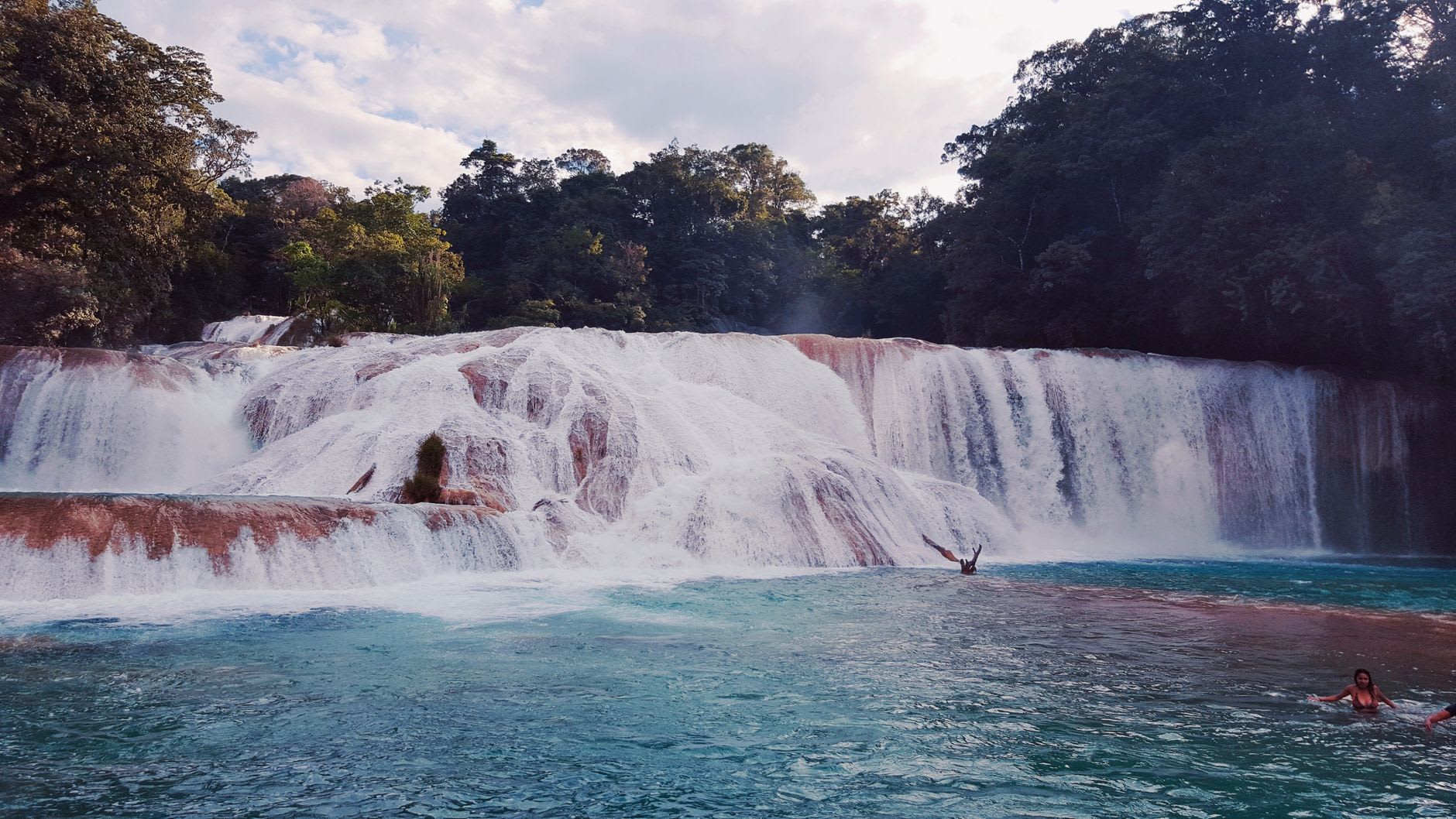
The path from the entrance to the main cascade is maybe five minutes on foot. We heard the falls before we saw them — a low, sustained thunder coming through the trees, growing louder with each turn in the path. And then the path opened up and the color stopped me cold.
I had seen photographs of Agua Azul. I had, frankly, been a little skeptical of them. The blue in those images looked filtered, the saturation cranked up by someone with a phone and too much ambition. It is not. The water is exactly that color — the particular turquoise of a swimming pool in full sun, but moving, alive, falling through tiers of limestone shelf in a series of cascades that stretch up the hillside as far as you can see. It is genuinely one of the strangest visual experiences I’ve had outdoors. My brain kept trying to read it as artificial.
The chemistry behind it is the same as at Hierve el Agua and at the Pamukkale pools in Turkey — calcium carbonate suspended in the water refracts the light in this specific way. Knowing this does not help. The water looks wrong. It looks like it’s been colored.
We were the only people there for the first hour. Lia waded in at the nearest pool and I sat on a rock and watched a hummingbird work the flowering vines along the bank. The bird was iridescent green, smaller than my fist, and it paused in front of me for a long moment — hovering at eye level, completely still except for the blur of its wings — before it decided I was uninteresting and moved on. The jungle above the falls was just waking up. Howler monkeys somewhere in the canopy. The light still low and gold, coming through the trees at an angle.
I got in the water around 7:30. It was cold — legitimately cold, the kind of cold that makes you gasp — which surprised me because the air by then was already warm and thick. It’s spring water, fed from the karst uplands, and it comes up cold regardless of what the jungle around it is doing. I swam to the base of the main cascade and felt the pressure of the water above me and looked up at the blue of it and felt genuinely, uncomplicated pleased to be alive.
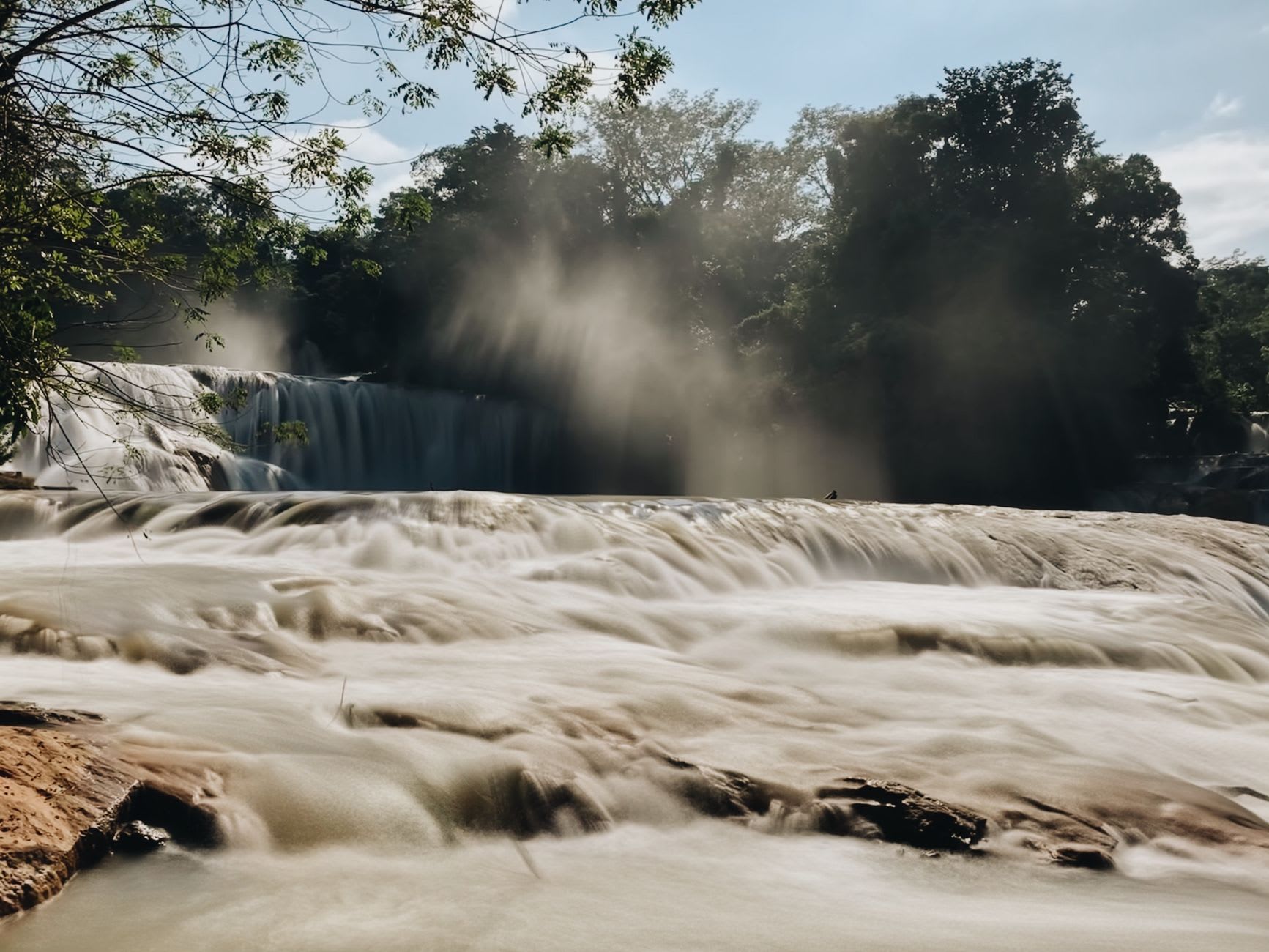
The Upper Cascades
This is what most visitors miss: Agua Azul is not one waterfall. It’s a series of cascades on the Agua Azul river, and you can follow a path upstream for a kilometer or more, each pool different — some wide and calm enough to swim in, some narrow and fast, some so loud you have to lean close to say anything. The first main cascade is where nearly everyone stops. The tour buses disgorge their passengers, they take photos, they eat elotes, they get back on the bus.
Walk upstream. The path is rough in places, sometimes slippery. The pools get wilder and wilder the further up you go. There’s one — I don’t know how far, maybe forty minutes upstream — where the water narrows to a chute and pours through a gap in the rock into a pool so deep it goes from turquoise to midnight blue in the center. No one was there. I sat on the bank for a while and ate the tamales we’d bought from a woman at the entrance.
The jungle around the upper cascades is different from the managed park area near the entrance — denser, louder. Macaws appeared above us at one point, four or five of them, and I heard them before I saw them, a harsh squawking-screech that came from the canopy and then suddenly there they were, red and blue, wheeling over the falls. Lia photographed them. I just watched. There is always a choice to make.
The smell of Agua Azul is specific and hard to describe — wet stone and something sweet in the water itself, almost like minerals have their own sweetness. The jungle adds its layer: decomposing leaves, flower pollen, something green and living. France has nothing that smells like this. The closest I can imagine is the Gorges du Hérault in summer, but with none of the color and a quarter of the humidity, which means it’s not the same at all.
By the time we walked back down, around 9:30, the first tour buses were arriving. I don’t want to be precious about this. The families coming off those buses were having a wonderful time — kids running for the water, grandmothers with full coolers, men carrying folding chairs. The vendors had set up and the smell of frying food was coming from the kiosks. It was loud and cheerful and very different from the place we’d had to ourselves two hours earlier. I bought a cup of fruit with chamoy and chile and ate it standing in the sun and watched a small boy try to convince his mother to let him jump from a higher rock than she was comfortable with. He got to jump from a slightly lower one. A reasonable compromise.
The Road Between Palenque and San Cristóbal
A note on getting there, which is part of the experience: Agua Azul lies on the older highway between Palenque and San Cristóbal de las Casas, not on the toll road. The older road passes through Tzeltal communities — Agua Azul itself is ejidal land, collectively managed — and takes considerably longer than the map suggests. It climbs into the highlands through a series of hairpin bends and passes through small towns where the road narrows to a single lane and you wait behind trucks going uphill.
We hired a driver from Palenque for the day, which included Agua Azul and Misol-Ha (a single waterfall twenty minutes before Agua Azul, worth the brief stop). The driver’s name was Cesar and he had strong opinions about soccer and about the correct temperature at which to drink horchata, and we talked about both for most of the journey. This is preferable, I find, to watching the road.
Getting There, Where to Stay, When to Go
Agua Azul is 60 kilometers from Palenque along the old highway. The drive takes 1.5 to 2 hours depending on traffic and road conditions. Options:
Hire a driver or take a small-group day tour from Palenque that leaves around 6am — this is by far the best approach for arriving early. Prices vary; negotiate the day before. A full-day driver will also include Misol-Ha. Tours through hostels tend to leave later (8am) which means arriving after the crowd, so check times before booking.
There is no accommodation at Agua Azul itself. Stay in Palenque (the closest base) or plan it as a stop on the Palenque–San Cristóbal drive.
Bring: swimsuit, water shoes or sandals with grip (the limestone is slippery), a dry bag for your phone, cash for the entrance fee and vendors, enough water for a full morning. Snacks are available at the entrance but overpriced; buy from Palenque before you go.
The dry season (November through April) is when the color is at its most intense — less suspended sediment, cleaner blue. The water level is lower, which makes the pools calmer for swimming. The rainy season (May–October) brings the water up and the falls are more dramatic but the color shifts toward green-brown in the highest flows. We went in November, which was ideal.
No staying overnight. The park closes at dusk and the caretakers are not flexible about this.