Champotón
"The pelicans had opinions about where the good fish were. Everyone else was eating and not paying attention to me. This was ideal."
Champotón does not appear on the usual Yucatán Peninsula itinerary. It is between Campeche City and the Tabasco state line, which puts it on the route south but not on the agenda of anyone moving between Campeche and Palenque at speed. I stopped because I had time and because a comedor owner in Campeche, when I asked what she would suggest seeing in the surrounding region, had said Champotón with a directness that suggested she wasn’t in the habit of recommending things she didn’t mean.
I arrived on a Wednesday morning, early enough that the riverside market was still in full operation. The market runs along the embankment of the Champotón River, and in the morning the boats are at the dock and the fishermen are selling directly — cazón, shrimp, various Gulf fish I didn’t know the names of — to the vendors who then sell to whoever shows up. I was the only person who looked like I had arrived by bus from somewhere else. Everyone else at the market appeared to be shopping for their restaurant or their house.
The Market and the Cazón
Cazón is small dogfish shark, and it is the foundation of Campeche’s most distinctive cuisine. The fish is mild and dense, with a flavor that is oceanic without being overpowering, and it responds well to the long, slow cooking and the layering techniques that Campeche cooking applies to it. You can smell the fresh cazón at the Champotón market — it has the clean, mineral smell of something pulled from the sea that morning rather than transported for a day.
I ate pan de cazón at a comedor on the street adjacent to the river, a place with six tables and a woman who brought a menu and then seemed mildly surprised when I used it. The pan de cazón here was made with blue corn tortillas that were slightly thicker than I had encountered in Campeche City, and the cazón filling was darker, more heavily seasoned with tomato and epazote, the layering more aggressively compressed. It arrived on a plate with a side of habanero salsa and a small bowl of black bean broth. I ate it standing over the plate in the way you do when the food is hot and good and the table is slightly too low, which is always the sign of a comedor that prioritizes cooking over ergonomics.
The comedor’s television was showing a morning telenovela at a volume calibrated for people who aren’t paying close attention to it. A man at the next table was paying close attention. This is the correct relationship to telenovelas.

The History That Nobody Mentions
In 1517, a Spanish expedition under Francisco Hernández de Córdoba landed on this coast and was comprehensively defeated by the Maya of Champotón. The battle killed a significant number of the Spanish force and wounded Hernández de Córdoba fatally — he died not long after returning to Cuba. The event was serious enough that when Hernán Cortés organized his expedition two years later, he specifically included Champotón on his reconnaissance route and took the earlier defeat as a strategic data point.
The town has a small monument to the battle, which is historically notable as one of the few early cases of a Spanish expedition being beaten badly enough to withdraw. The Maya defenders here were fighting for their city and appear to have been effective at it. The monument is near the colonial bridge and not prominently labeled. I walked past it twice before finding it, which is either evidence of inadequate signage or evidence that the town has more interesting things on its mind than tourism, or both.
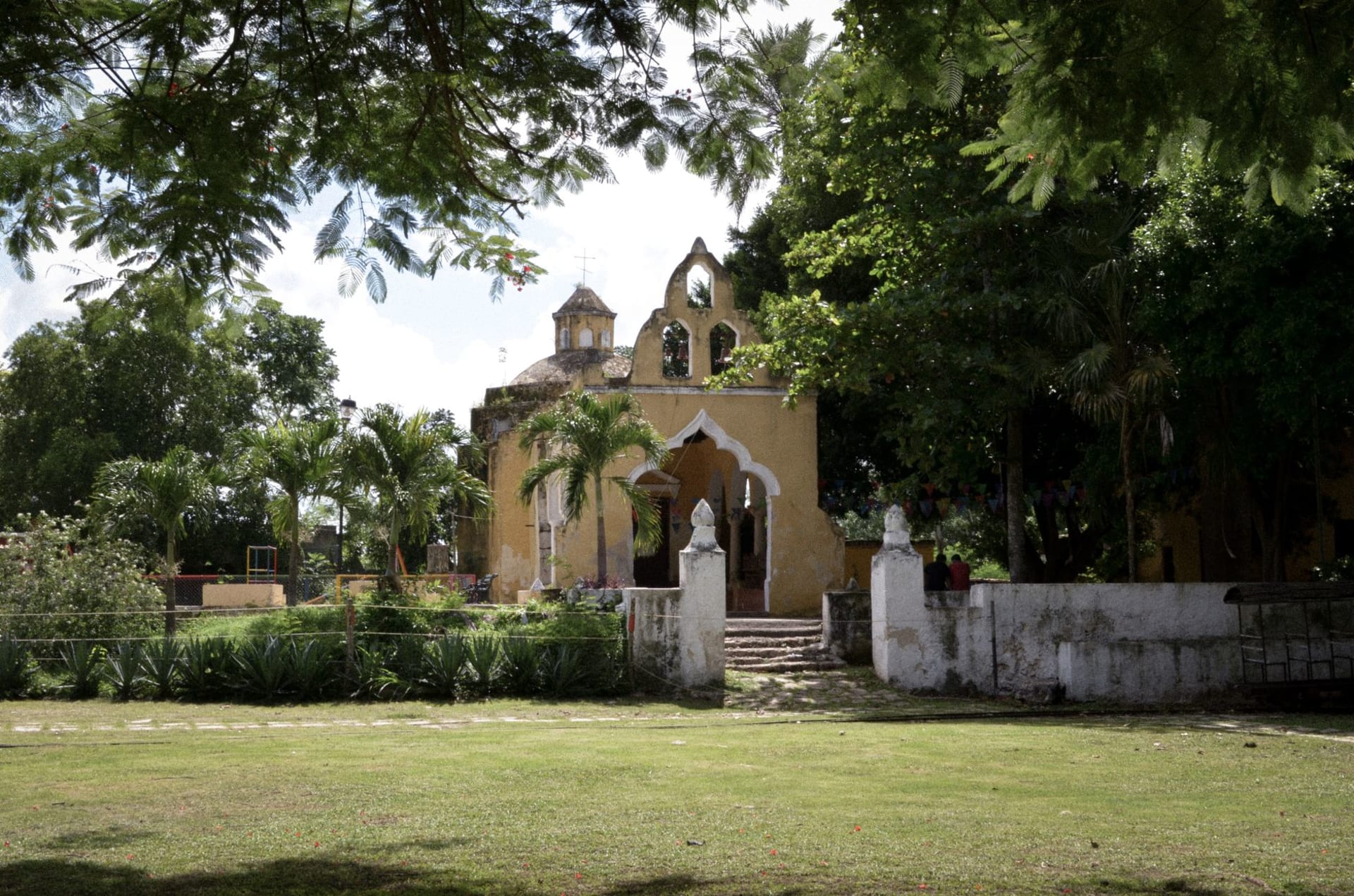
The church on the hill above town — Parroquia de Nuestra Señora de las Mercedes — is worth the climb, not so much for the church itself as for the view over the river mouth and the Gulf beyond. From up there the town’s relationship to the water is legible in a way it isn’t from the street: the river meeting the sea, the boats at various stages of their day, the pelicans working the shallows at the river mouth with the same focused efficiency as the fishermen.
The Pelicans
I want to say something about the pelicans because they were a consistent feature of my time in Champotón in a way that felt disproportionate. They were on the dock posts in the morning when the boats came in. They were at the river mouth in the afternoon. They were on the colonial bridge railing in the evening with the tolerant immobility of animals that have understood that the structure was built for them.
Brown pelicans are not rare. You see them throughout the Gulf coast and the Caribbean coast of Mexico, and they are part of the standard visual vocabulary of being near the water here. But the concentration in Champotón felt higher than elsewhere, or maybe the scale of the town is just small enough that the pelicans are more visible as individuals. There was one on a post near the comedor that appeared to be monitoring the fish deliveries with a professional interest. I sat on the riverbank and watched the river for an hour and the pelicans dove seven times in that hour. Five of seven resulted in fish. That is a respectable conversion rate.

Getting There
Champotón is 67 kilometers south of Campeche City on Highway 180, the Gulf coast road. Buses run regularly from the Campeche terminal — the journey takes about an hour — and the town is small enough to navigate entirely on foot once you’re there. Most visitors come as a day trip from Campeche City, which is the right approach; two nights in Campeche and a day in Champotón gives you the best of both places.
The town has a few small hotels if you want to stay, and the restaurants along the river are the reason to do so — dinner when the evening light is on the river and the boats are coming back in is a different experience from the midday market. But as a half-day from Campeche, or a stopping point on the drive south, Champotón is well worth the time.