Campeche City
"The bus pulled in just as the light was going golden, and the walls of Campeche turned the color of a candle flame. I had read about the painted buildings. I was not ready for them."
We arrived by ADO bus from Mérida in the late afternoon, which turns out to be the correct way to arrive in Campeche. The journey is about two and a half hours across flat Yucatán Peninsula countryside — cattle pastures, Maya villages, the occasional toll booth — and you pull into the terminal with the light already beginning to shift toward evening. Walking from the terminal toward the historic center, I turned a corner and saw the wall.
Not a wall in the metaphorical sense. The actual sea wall of the old city, a fortified structure built in the seventeenth century to defend the port against the pirates who kept sacking it — there were at least two serious pirate attacks before the city finally built proper defenses, and the second one in 1663 was bad enough that they apparently didn’t mess around afterward. The wall is several meters thick. The bastions, called baluartes, are positioned at intervals along the perimeter, and in the evening light they were going gold and rose in a way that made my phone come out reflexively even though I generally try not to be that person.
Inside the walls is where Campeche actually lives.
The Color and the Streets
The historic center of Campeche is small enough to walk in an hour, which creates a false impression of simplicity. It takes much longer than an hour if you’re paying attention.
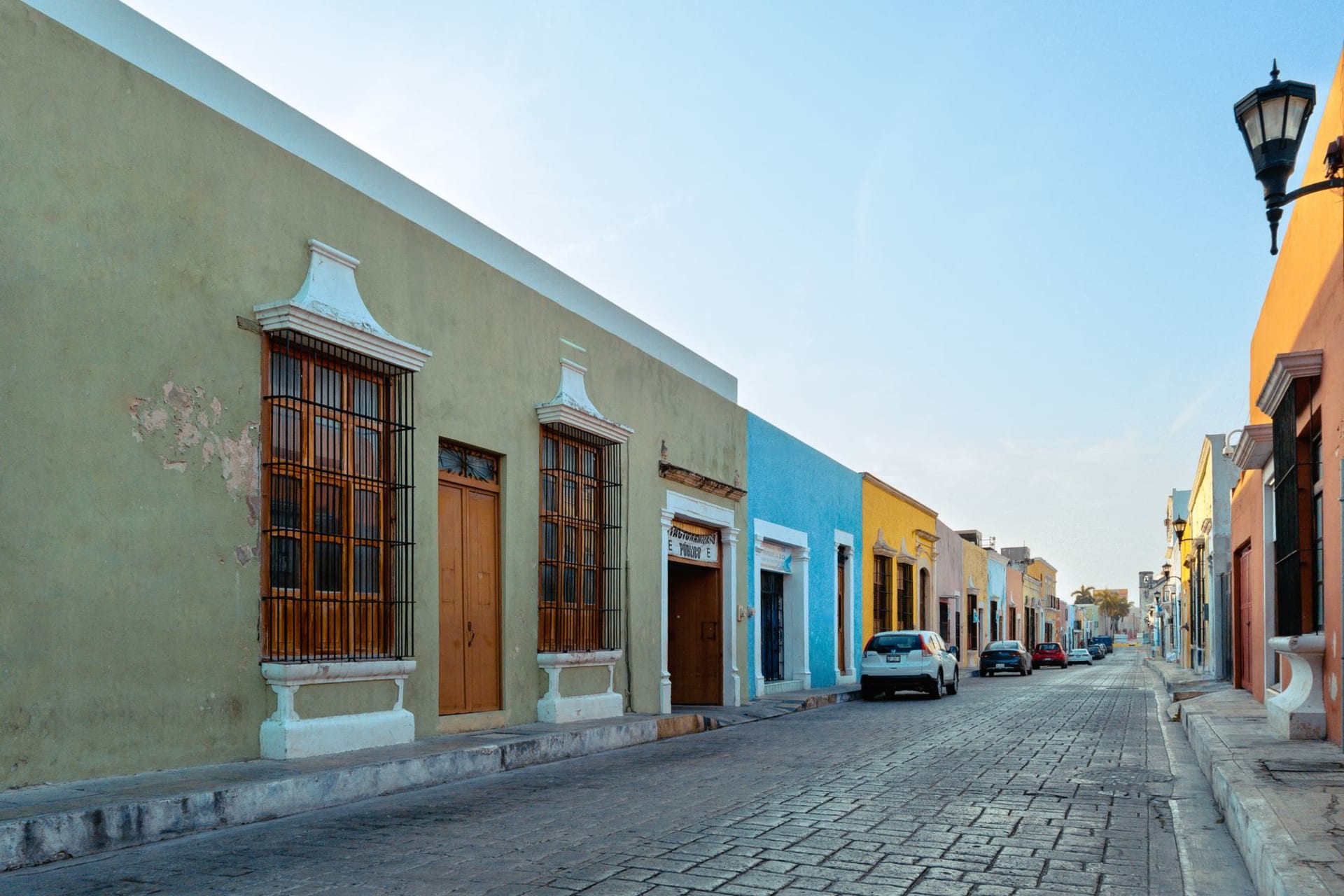
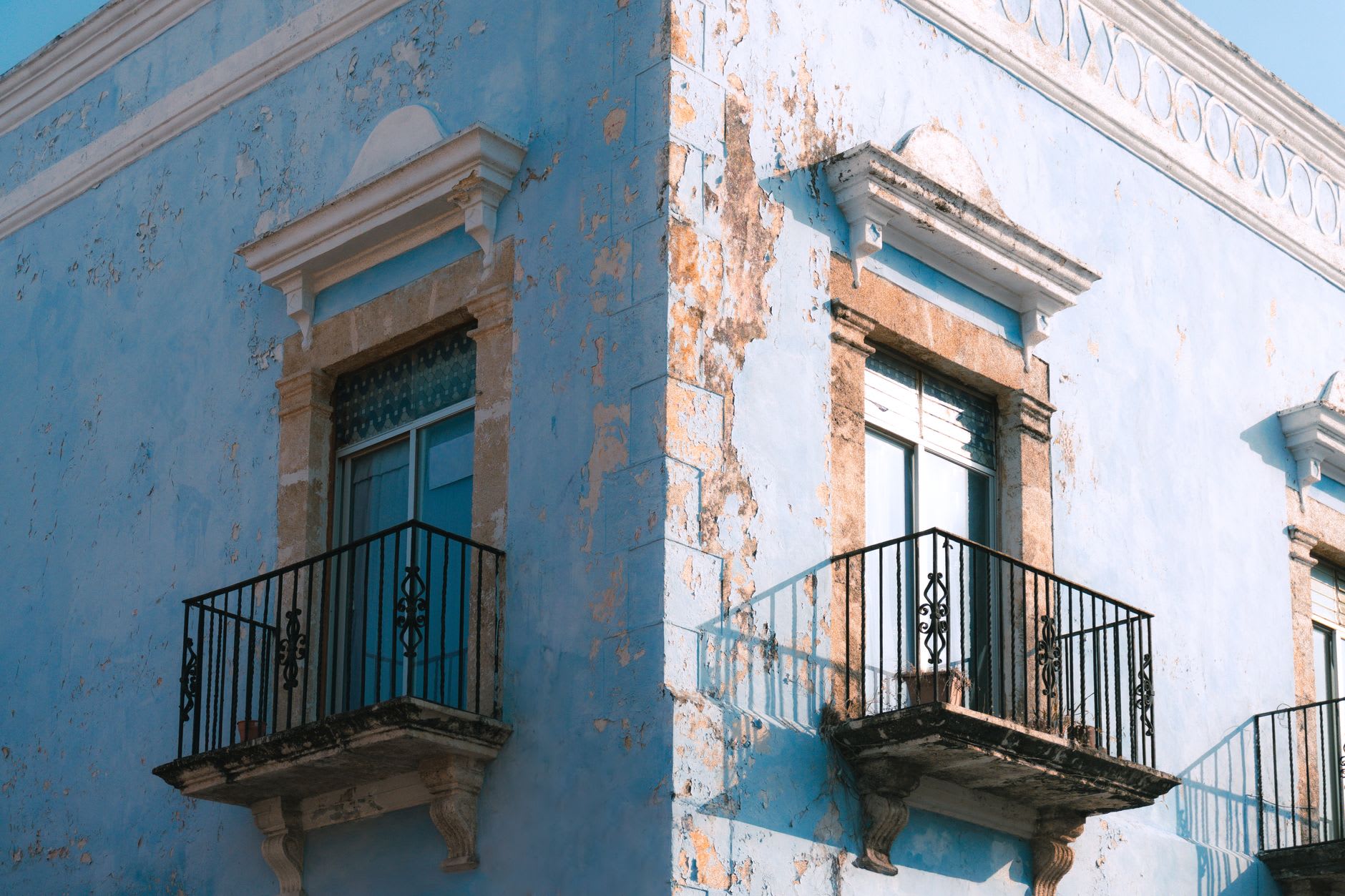
The color is the thing people mention, and they’re right to mention it, but the photographs flatten it. What makes Campeche’s color exceptional is not any single building but the way the colors are placed adjacently — a deep turquoise building next to a terracotta building next to an ochre one next to sage green, all on the same block, all with the same colonial proportions, and none of it feeling like a theme park because the buildings are occupied. There are families living behind those facades. There are offices. There are small stores selling phone accessories and school supplies. The painted walls of Campeche are not a preservation project — they’re just what the city looks like.
On Calle 59, which runs east-west through the center, Lia stopped in front of a turquoise doorway with bougainvillea growing over it. The bougainvillea was the specific magenta-pink that Mexico does better than anywhere, and it was overflowing its pot and trailing across the upper frame of the door and the contrast with the turquoise paint was frankly excessive in a way that felt entirely natural. She photographed it from about six different angles over half an hour. I went to find coffee and came back and she was still at it. The photographs are good. One of them is our desktop background.
The light in Campeche changes hour by hour in a way I associate with Mediterranean cities — the walls bounce it, concentrate it, and then exhaust it into something purple and soft at dusk. The city repays the effort of being there at different times of day, which is an argument for staying at least two nights.
Pan de Cazón, and Why It’s the Best Thing I’ve Eaten in Mexico
I am going to talk about the food at some length. I apologize in advance to anyone who is not interested in food, but I think pan de cazón is one of the great dishes of Mexico and it doesn’t get nearly the attention it deserves outside the state of Campeche.
Pan de cazón translates roughly as “dogfish bread,” which is not a great name for something this good. The cazón is small dogfish shark, shredded and seasoned. It gets layered between blue corn tortillas with black beans and tomato sauce and then, in some versions, baked until the whole thing coheres into something like a savory lasagne. It tastes like the sea and the earth at the same time — the fish gives it depth, the beans give it weight, the corn tortillas give it something slightly smoky and sweet underneath everything else.
I ate it on our first evening at a small comedor on Calle 59, a family place with wooden chairs and a menu written on a chalkboard and the television on in the corner with the sound low. The señora who ran it was perhaps seventy and moved between the kitchen and the tables with the efficiency of someone who had been doing this for decades without interruption. I ordered pan de cazón. It arrived on a plate that was more generous than I had expected, with a side of habanero salsa that was not optional — you just found it there.
I ate the whole thing. I asked for a second portion. The señora’s expression when I did this was not displeasure. It was more like mild satisfaction, the look of someone whose conviction about their food has been confirmed by an outside party. The second portion arrived. I ate that too.
I have since asked people who know Campeche well whether pan de cazón is as good everywhere or whether that particular comedor was exceptional. The consensus seems to be that the dish is reliably excellent throughout the city, which tells you something about the baseline quality of cooking in Campeche.
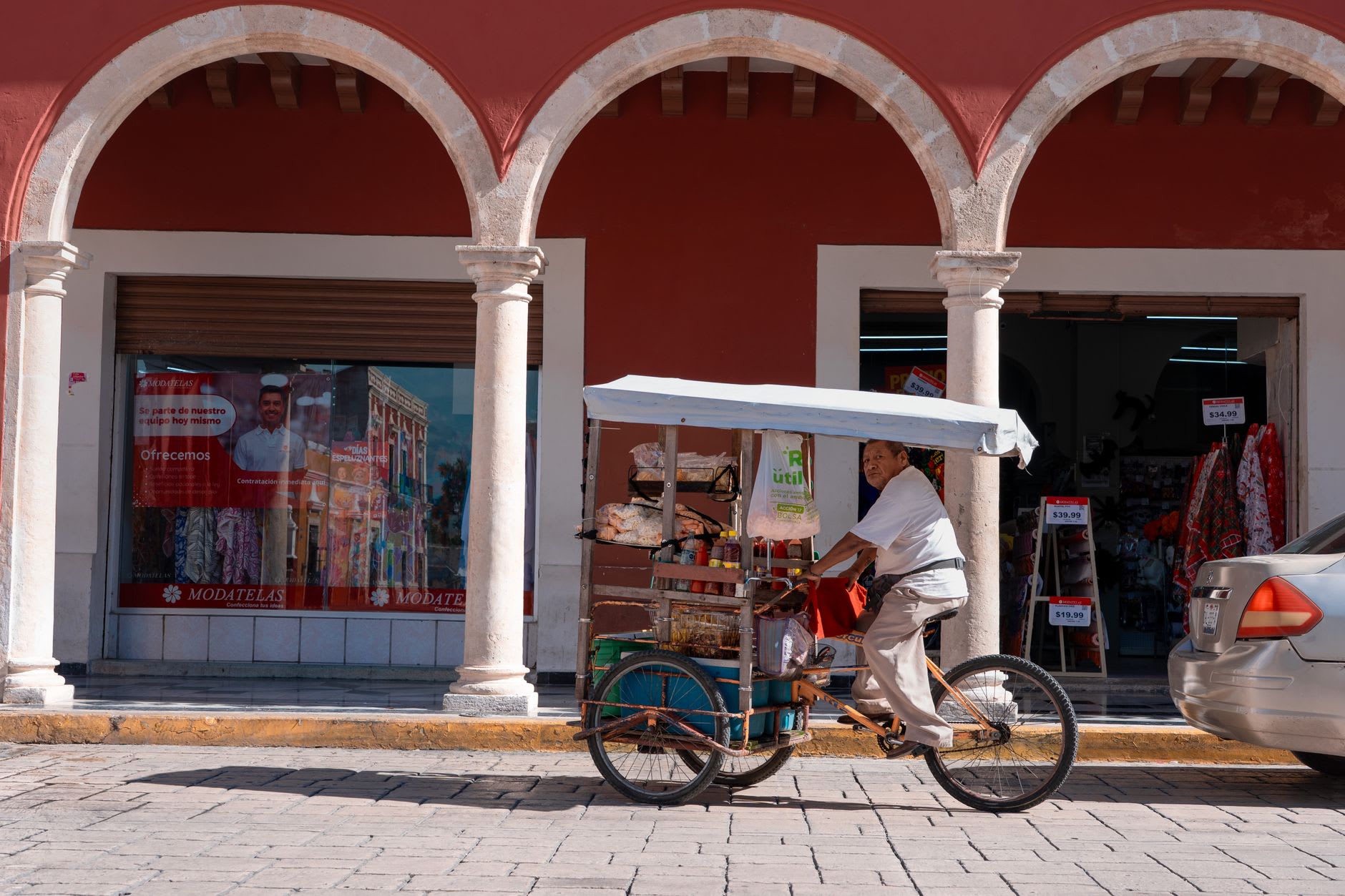
The municipal market is also worth a visit for the food alone. The market is a big covered hall near the center, and in the mornings it fills with produce vendors, chile vendors, and a section where women sell pepita-based sauces and pastes — pepita is pumpkin seed, ground and mixed with tomato and dried chiles into something rich and slightly grainy that you smear on tortillas or use as a dipping sauce. I bought a small container and ate it standing up in the market, which is the correct way to eat things in a market.
The Bastions, the Malecón, and the Pirate History
I mentioned the pirates. Campeche’s pirate history is not a cute marketing angle — it genuinely shaped the city. The buccaneers who raided the port in the sixteenth and seventeenth centuries were real pirates, including one notorious attack that combined English, French, and Dutch pirates in a joint venture, which is somehow both alarming and impressively multinational. After the 1663 sack, the Spanish colonial authorities funded one of the most substantial fortification projects in the Americas: a full circuit of walls, eight bastions, a sea fort on a reef offshore.
Walking the bastions in the evening is how I’d recommend spending your first hours in the city. You can enter several of them, and inside are small museums about the pirate history, the colonial period, and the Maya artifacts recovered from the surrounding region. The museums are not especially sophisticated but the baluartes themselves are extraordinary — the thickness of the walls, the scale of the cannon emplacements, the way the views open up over the Gulf.
France has walled cities that are also spectacular. Carcassonne, Saint-Malo. But Carcassonne in particular is a restored and curated medieval theme park — the tourists outnumber the residents by a ratio that makes genuine experience of the place difficult. Campeche’s walls are not a tourist site that happens to have a city inside them. The city is primary, and the walls are just the edges of it, and people walk their dogs along the malecón at night under the bastions exactly as they would walk them along any other street.
The malecón itself — the seafront promenade along the Gulf — is where the city comes in the evening. Families on bicycles, teenagers in groups, the older men who sit on the benches and watch the water. The Gulf of Mexico here is calm and warm and not particularly spectacular as bodies of water go, but the light over it at sunset is something.
Getting There, Where to Stay, When to Go
ADO buses run regularly from Mérida — the journey is about two and a half hours and the terminal in Campeche is a short taxi or walk from the historic center. There are also buses from Villahermosa if you’re coming from the Tabasco direction, and some services from Mexico City. Flying is possible but the airport is small and connections are limited; the bus is genuinely pleasant for this route.
Stay inside the walls. There are several small hotels in renovated colonial buildings within the historic center, and the difference between walking out of one of those and walking out of a hotel outside the walls is the difference between waking up somewhere and just passing through it. The options range from budget guesthouses to a few boutique hotels with rooftop views; none of them are particularly expensive by the standards of larger Mexican tourist cities.
Go between November and April. Campeche in summer is hot and humid — the Gulf side of the Yucatán Peninsula doesn’t get the relief that the Caribbean side sometimes does from sea breezes. In the dry season the heat is manageable and the light is extraordinary.
Beyond pan de cazón, eat the cochinita pibil if you see it on a comedor menu — the Yucatán Peninsula’s slow-cooked pork is excellent throughout the region — and try the regional tamales, which differ from central Mexican tamales in ways that are difficult to articulate but immediately obvious when you eat them. And if anyone offers you a fried plantain with black beans, take it.
Campeche is also a base for the Maya archaeological sites of the surrounding region. Edzná is 60km away and essentially required. The Puuc sites of the northern Yucatán are accessible from here as a day trip or a multi-night excursion. The city could hold you a week if you let it.