Valle de los Cirios
"There is no single thing to do in the Valle de los Cirios; you simply drive, slow down, pull over, and stand in a place where the vegetation has decided to become surrealist art."
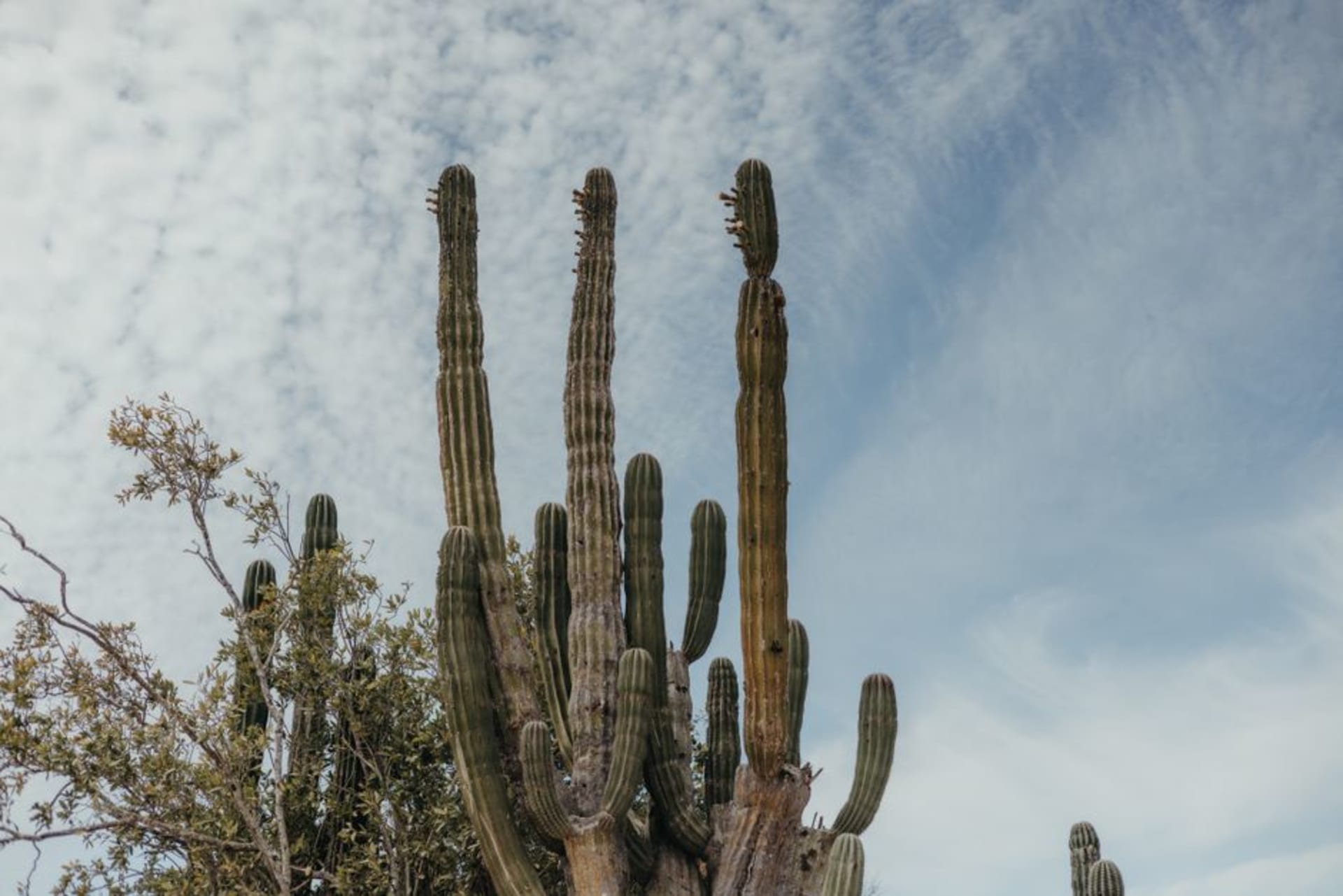
I drove into the Valle de los Cirios just before seven in the morning, heading south on Mexico 1 with bad coffee from a Cataviña PEMEX still warming my hand. The low light was doing something improbable to the landscape — turning the sand pale gold while the cirios cast shadows across the asphalt like punctuation in a script I couldn’t read. I had seen photographs. Nothing prepares you for the actual scale of it: a thousand boojum trees tilting out of ancient rock in every direction, each one growing according to its own private logic, indifferent to anything resembling symmetry.
The Cirio, Reconsidered
The boojum tree — cirio in Spanish, Fouquieria columnaris in the field guides — is not beautiful in any conventional sense. It is bizarre. A single tapering column of green that can reach fifteen meters, studded with short spiny branches along its entire length and occasionally sprouting a spray of small yellow flowers at its tip, as if someone forgot to finish the design. What stops you is the sheer density of them: the Reserva de la Biosfera Valle de los Cirios protects 2.5 million hectares of this, and the cirio’s range is almost entirely confined to this Baja corridor and a small patch of Sonora across the gulf. Standing among them at dawn, with no other car on the highway, you feel less like a tourist and more like an uninvited guest who has wandered into something very old and entirely self-sufficient.
The Road as the Thing
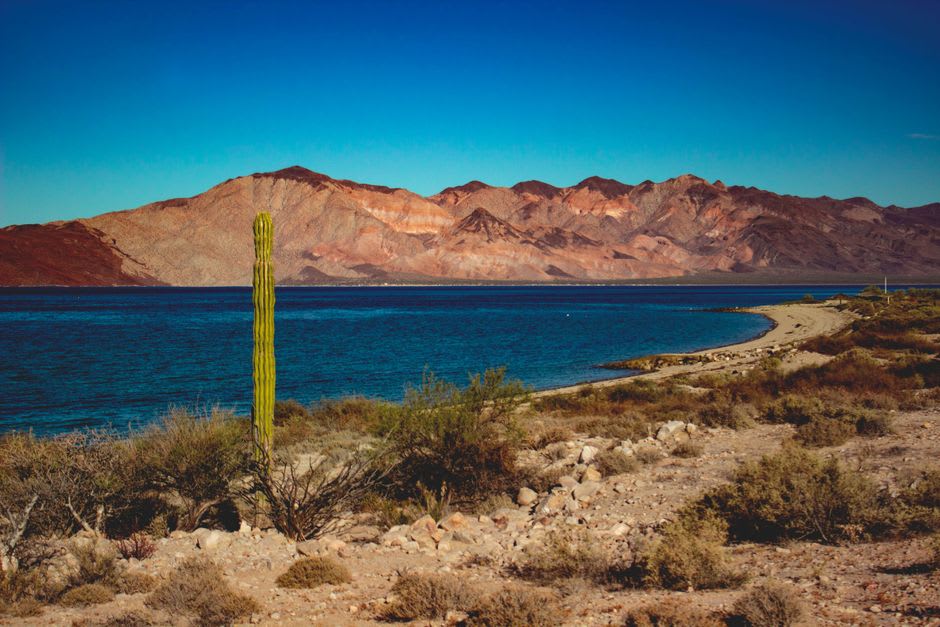
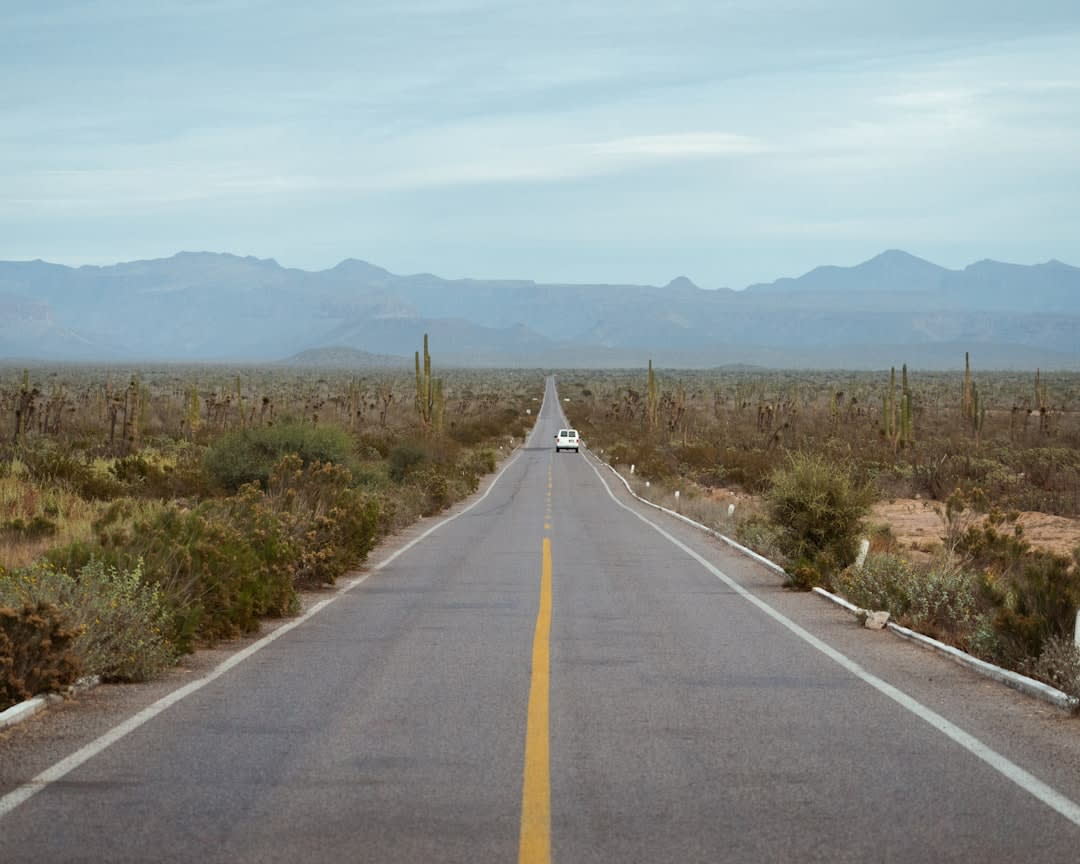
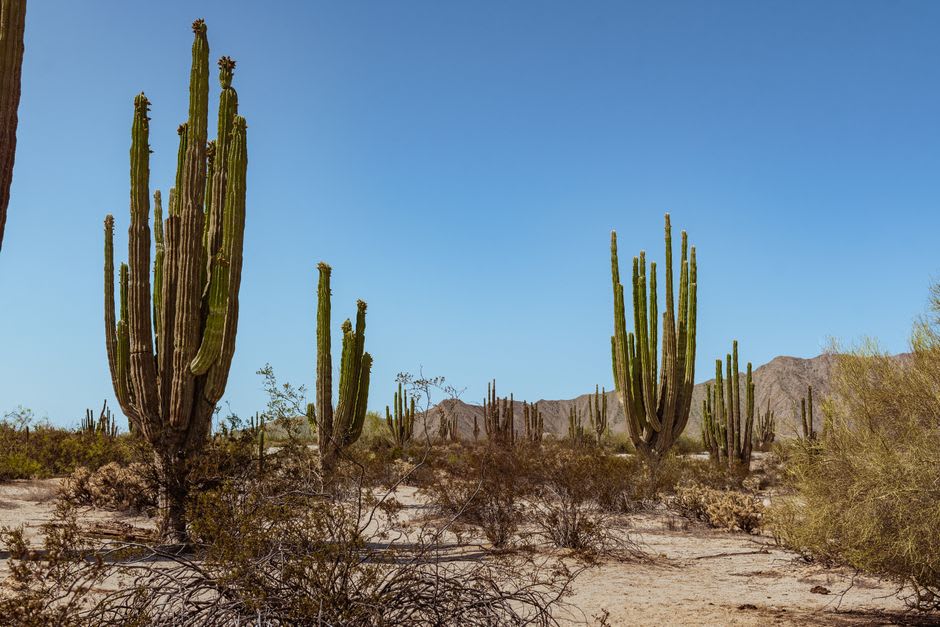
The standard advice is to stop at Cataviña, the small settlement roughly in the middle of the reserve, where a handful of places will sell you a meal and the Hotel La Pinta sits improbably beside a boulder field. That advice is not wrong. But I think the temptation to turn the reserve into a destination with proper stops misses what it actually is: a corridor, a long and slow passage through a desert that has had millions of years to get strange. Pull over anywhere. The cardón cacti stand shoulder-to-shoulder with the cirios in places, adding their own vertical grammar to the scene. The silence between cars — which can stretch to twenty or thirty minutes on a Tuesday morning in February — has a physical quality, like pressure in a room. I sat on the hood of my car for forty minutes and watched the light change and felt genuinely uncrowded for the first time in weeks.
What Stays With You
The reserve gives you no activities. There is no trail system worth speaking of, no entrance fee, no ranger station. What it gives you is perspective — the kind that comes from standing in an ecosystem so intact and remote that you stop reaching for your phone. The elephant tree, the palo verde, the ocotillo, the various chollas: the desert is not monotone up close, and the more slowly you drive, the more specific it becomes. I kept stopping for the same basic composition — sky, cirio, shadow — and kept finding it slightly different each time. That is the Valle de los Cirios: not an attraction but an argument, made in vegetation, for moving more slowly and looking at things longer than seems practical.
Getting There
The Valle de los Cirios straddles Mexico 1 between El Rosario to the north and the Guerrero Negro state line to the south — the reserve’s heart is roughly that four-to-five-hour stretch of highway, which is not really meant to be driven quickly. Fill up in El Rosario before heading south. The next reliable fuel is in Guerrero Negro, and the stations in between are not guaranteed.