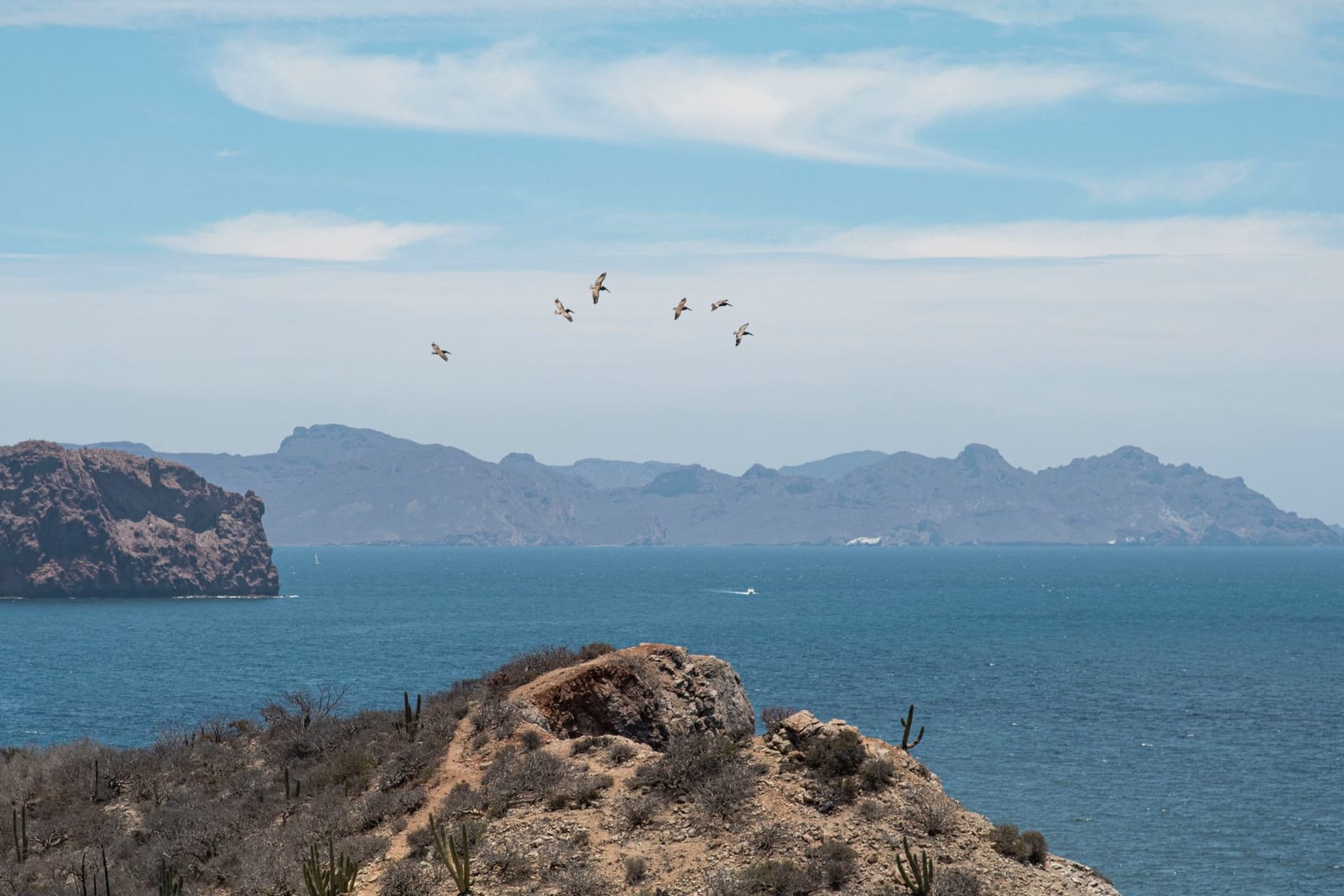
San Felipe
"The shrimp had been in the sea that morning. By noon it was on my tostada. That is the correct speed."
San Felipe appears in enough listings of Baja California beach destinations that I expected something developed — a malecón of smoothie bars and souvenir shops, the kind of seafront that exists in several registers simultaneously. What I found was different. The malecón has the fish market at one end and the fish market is the point.
I arrived midday, which was not a planned strategy but turned out to be the right time. The catch had come in that morning and the vendors at the market were at peak operation — large trays of shrimp and fish in various preparations, the smell of lime and frying oil, coolers of beer under the awnings. I ordered a tostada de camarón without knowing quite what I was ordering and received something that has reorganized my sense of what a tostada can be: a disc of fried corn tortilla that had gone through to a complete, structural crunch, topped with shrimp that had been cooked minutes ago, something creamy, shredded cabbage, a squeeze of lime from a segment that was already cut and waiting, and a small container of habanero salsa that arrived without any inquiry into whether I wanted it. You want it.
The Tides
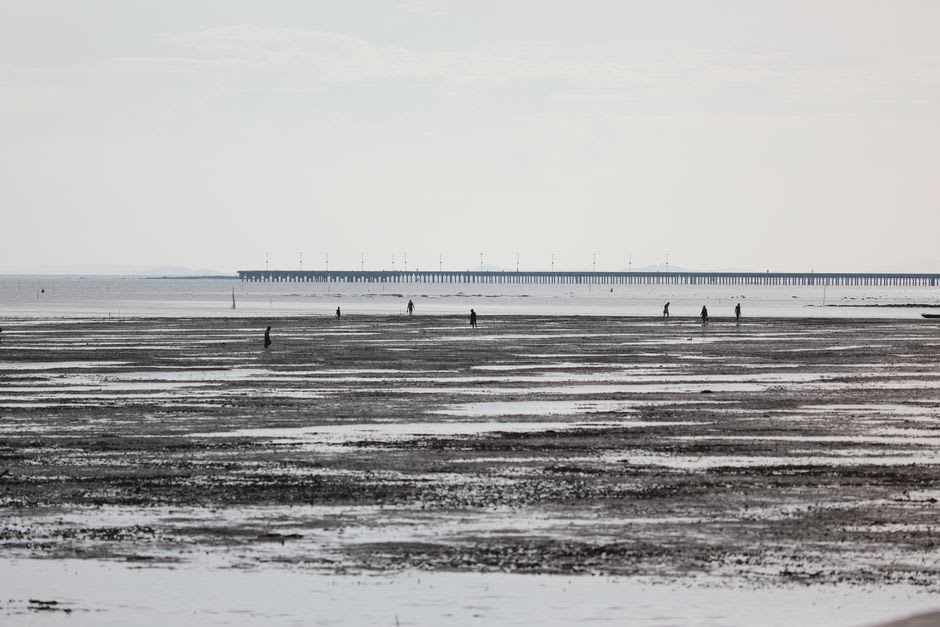
San Felipe has one of the most extreme tidal ranges on the Pacific coast of the Americas — seven to nine meters between high and low tide. In practice this means the beach changes category several times a day. At high tide, the sea is at the edge of the malecón and the boats float at a reasonable height against the dock. At low tide, you walk out into an expanse of flat, wet sand for hundreds of meters before reaching water, and the boats are resting at odd angles on the bottom.
The intertidal flat at low tide is not immediately beautiful — it’s more primordial than scenic, the exposed substrate of the sea bed looking like something that hasn’t decided what it wants to be. But the birdlife is extraordinary. Herons, egrets, godwits, and various sandpipers work the flat methodically. There were pelicans crash-diving into a channel of standing water fifty meters from the edge of the pavement when I walked out there, the thuddish drama of a pelican dive being one of nature’s more committed performances.
The Gulf and the Biosphere
The Upper Gulf of California and Colorado River Delta Biosphere Reserve begins north of town. This is one of the most ecologically unusual marine environments in the world — the northern end of the Sea of Cortez, where the Colorado River delta created an estuary system of extraordinary biological richness, though the Colorado’s water has largely been diverted since the mid-twentieth century and the delta is a fraction of its former size. What remains is still remarkable, and the protected waters support populations of species found nowhere else, including the vaquita marina, the world’s most endangered marine mammal, which is down to single-digit population estimates and is essentially already gone.
Whale sharks move through the upper Gulf waters in the months from September through November. They are not whales. They are the world’s largest fish, filter feeders that arrive in the Gulf’s warm waters following concentrations of plankton, and in season you can go out with the local panga operators to snorkel with them. I did not do this — I was there in April — but the fisherman who sold me my second tostada described it with the casual authority of someone who has seen something so many times that its wonder has not diminished but has become ordinary to him.
The Families from Mexicali
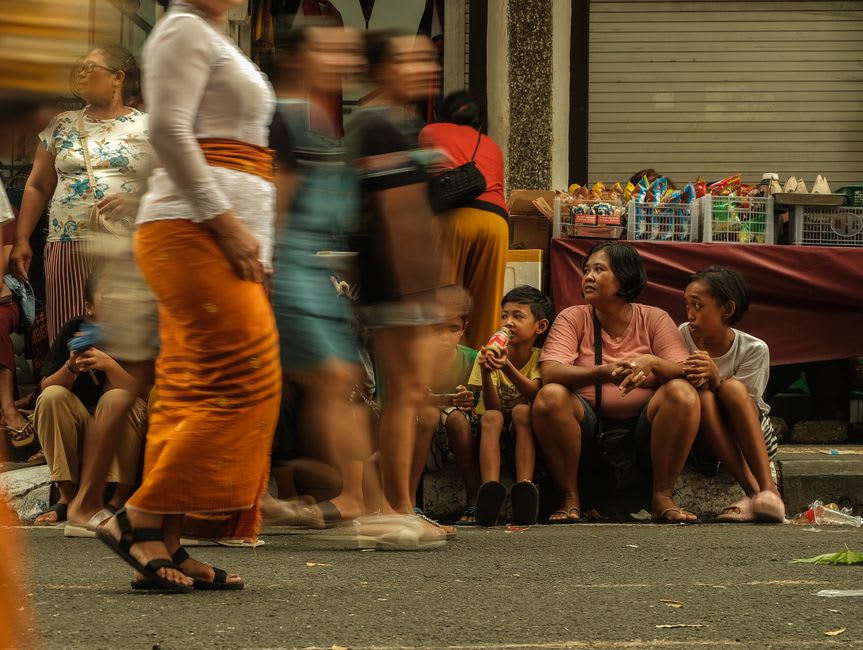
On the weekend I was in San Felipe, the town filled up in a specific way. The parking near the malecón became complicated with large trucks and SUVs bearing Mexicali plates. Families with elaborate cooler setups established positions on the beach. Children ran at the edge of the low tide flat. It had the quality of a place that serves a specific local function — the beach day for a large inland city — that happens to be open to anyone who passes through.
There is something I find reassuring about this. It is not organized around my being there. The weekend families are not performing beach for a camera; they are having a beach day in the same unself-conscious way they might have had it for twenty years. The vendors selling elotes and aguas frescas along the malecón know which families want what and bring it over without being flagged down. The economy of the malecón on a Saturday afternoon is a closed system that I could observe from the edges, and it was a pleasure to observe.
Getting There
San Felipe is 193 kilometers south of Mexicali on a paved highway through the Sonoran Desert — the drive is about two hours and the road is good. There is also a route from Ensenada on the Pacific side that crosses the peninsula through the Sierra Juárez; this road takes longer but goes through landscape that is worth seeing. There is no airport. Buses run from Mexicali but infrequently, and having a car makes the tidal flat and the biosphere reserve more accessible.
Come early in the day to catch the fish market in full operation. Come in September or October if you want whale shark season. Eat the tostadas. Accept the habanero salsa. Walk out on the flat when the tide is out and take note of the pelicans.