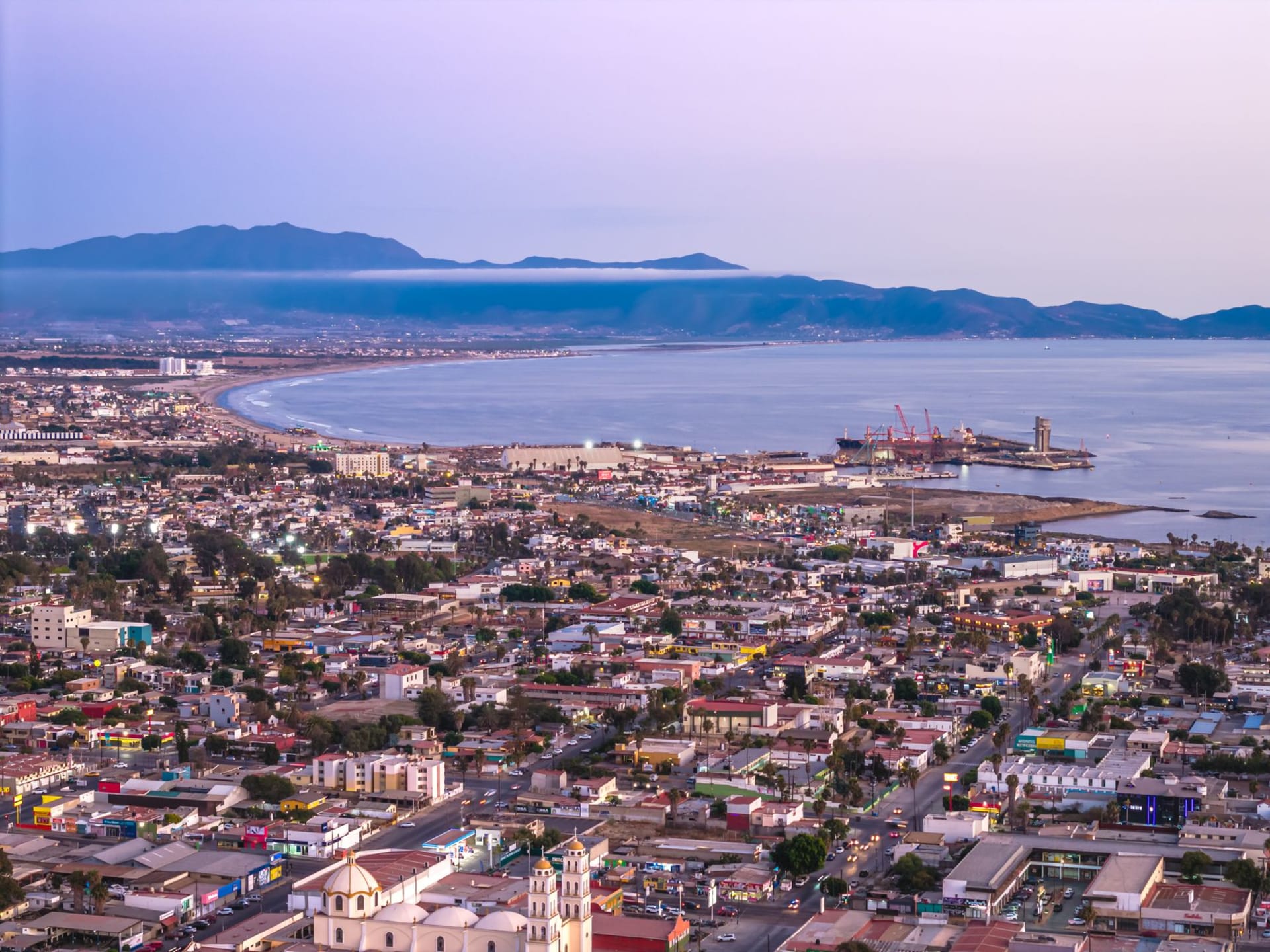
Ensenada
"I went for the wine. I stayed for the fish. The fog made the whole thing feel like a reasonable life decision."
The drive down from Tijuana takes you through a sequence of landscapes that feel slightly improbable. You leave the border city behind on the toll road — the cuota — and within twenty minutes you’re on a two-lane highway running along the Pacific coast with the ocean appearing and disappearing on your left between headlands. The water is the particular flat grey-blue of the Northern Pacific, not the turquoise of the Caribbean coast. It looks cold. It is cold. This is a different Mexico than the one most people picture, and I find it more interesting precisely because it doesn’t match the mental template.
Around El Sauzal, which is really just a few kilometers north of Ensenada proper, the vineyards start. They come down the dry hills in terrace rows and sit alongside the highway with the ocean behind them, and the combination of vine and fog and Pacific light looks enough like the Languedoc that I had to remind myself I was several thousand kilometers from where I grew up. The similarity isn’t superficial — Baja’s Mediterranean climate, the coastal wind, the rocky, well-drained hillsides — they’ve produced wine country with a real claim to the geography. The wine is not trying to be Bordeaux. It doesn’t taste like Bordeaux. But it has the same quality of tasting specifically like where it came from, which is the only thing that matters.
I arrived in Ensenada on a Sunday evening, checked into a small hotel two blocks from the malecon, and was told by the front desk that if I wanted to eat at the fish market the next morning I should set an alarm for seven.
The Fish Market at Dawn
I set the alarm. I am not someone who sets alarms on a Sunday night, and I am also not someone who typically wants to eat at seven in the morning. Ensenada converted me on both counts.
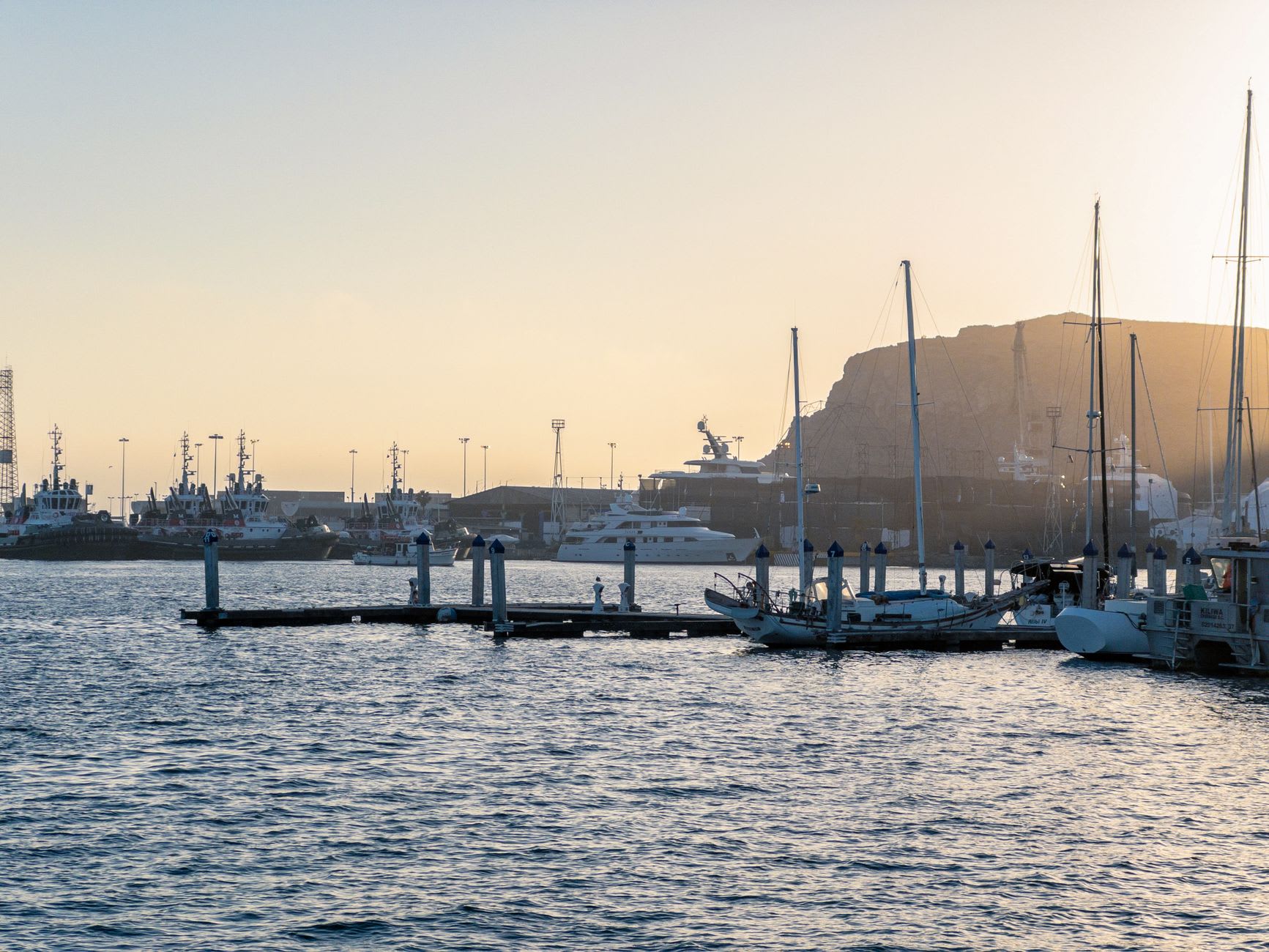
The Mercado de Mariscos is a covered market near the water where the fishing boats unload, and in the early morning it smells exactly as you would expect a fish market to smell — which is to say, intensely of the ocean, of salt and iodine and something faintly metallic. The vendors are already in full operation by seven. Inside there are stalls selling whole fish on ice and shrimp and octopus and sea urchin and things I couldn’t identify. Outside the market building, along the sidewalk, is a row of small stands selling prepared food to the people who’ve just finished or are about to start their shifts, and this is the part I was there for.
Tostadas de mariscos. A crispy corn tostada layered with ceviche, or marlin smoked and mixed with mayonnaise and jalapeño and served cold, or shrimp cooked in butter and piled on top still warm — the permutations vary by vendor. I ate two standing at a plastic counter with a view through a gap in the market stalls to the harbor, where the morning fog had not yet lifted. A fisherman next to me was eating the same thing with a small coffee, efficiently, without looking up. We acknowledged each other with the mutual respect of two people eating breakfast at seven in the morning at a fish market.
The smoked marlin tostada in particular — I want to be precise about this — has a texture somewhere between a good tinned fish and a ceviche, smoky and rich but cut by the lime and the heat of the salsa. I have been in search of a way to replicate it since I got back, and I have not found one. These are the failures that make travel feel like a project.
What the market does to your appetite for the rest of the day is significant. By nine I was back at the hotel, sat on the small terrace with a coffee, watching the fog burn slowly off the harbor hills, and I felt the particular satisfaction of someone who has already done something good before most tourists have opened their curtains. There is a modest smugness to this that I don’t apologize for.
La Bufadora and the Wine Road
Twenty kilometers south of Ensenada, down a winding peninsula road, is La Bufadora — a marine blowhole in a sea cave where the incoming Pacific swells compress through a narrow channel and shoot a column of water into the air. In the right conditions the sound is remarkable: a deep pressurized boom followed by a rush and a spray that catches the wind and drifts back over you. Lia, who had come with me from Mexico City for this particular trip, stood at the railing with a face that conveyed genuine pleasure, which is not the face she makes at things that are merely fine.
The honest note is this: to get to the blowhole you walk six hundred meters down a tourist corridor of stalls selling identical sets of fridge magnets and cheap serapes and embroidered tablecloths and things made of shells. It is relentless and the vendors are persistent and the smoked tuna tacos at the end of the corridor are notably less good than the tostadas you had that morning. I mention this not to be discouraging but because I think it’s useful information. The blowhole is worth it. The corridor is simply the toll you pay.
On the drive back north, we turned east at a sign that said Valle de Guadalupe and followed it for twenty minutes into the hills. The valley opens up gradually — first some ranches and a couple of roadside stands, then suddenly rows of vines, a winery with a patio, another, a restaurant with an outdoor kitchen and the smell of wood smoke. We stopped at a place whose name I’ve since half-forgotten — a small terrace, a few tables under a shade structure, a view down the valley to where the hills went brown and dry in the distance.
The wine I had was a blend, some proportion of Nebbiolo and Tempranillo with, I was told, a little Grenache, aged in French oak. This was made to sound familiar to me, which it did and didn’t. It was rounder than I expected, with the kind of warmth that comes from dry heat and volcanic soil, and it sat well with a plate of local cheese and some olives from the valley floor. I thought about the Languedoc comparison again. The Languedoc has better roads and more appellations and considerably more institutional prestige, but on that terrace in the late afternoon, with a glass of this specific wine and the pelicans wheeling over the Ensenada harbor visible in the very far distance, the Languedoc felt like a slightly rigid older sibling.
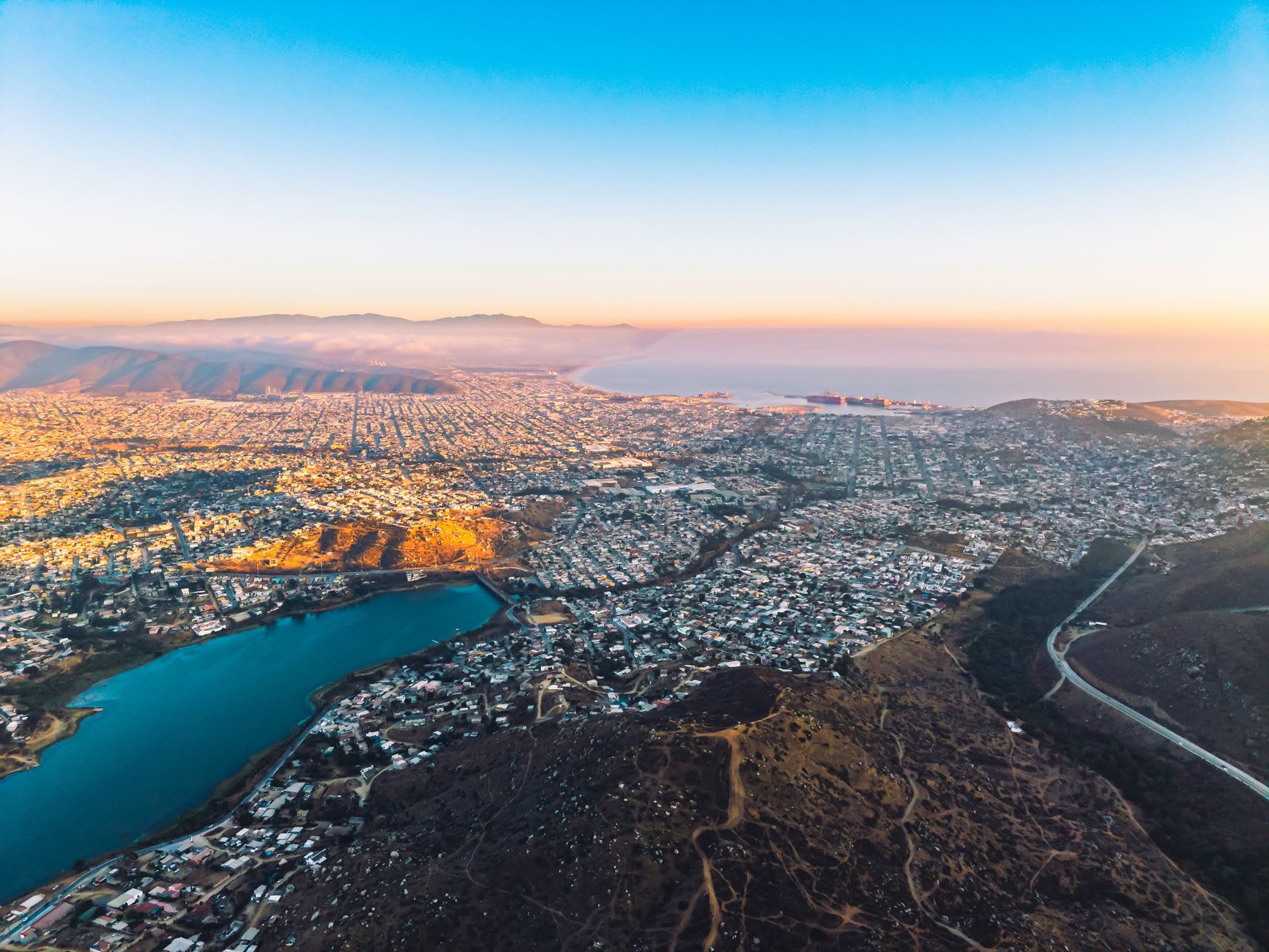
The harvest festival (Vendimia) happens every August, and the valley fills with visitors and special menus and winemaker dinners. I’ve not been during Vendimia specifically but several people have told me independently that it is a particular kind of joy, the kind involving large outdoor tables and bottles passed between strangers, so I intend to go.
Getting There, Where to Stay, When to Go
Getting there: Ensenada is approximately 110 kilometers south of Tijuana via the Ruta 1D toll road (cuota). The drive is scenic and the tolls are modest — budget around 200 pesos for the round trip. There are also ADO bus services from Tijuana’s Central de Autobuses and some cross-border shuttle options from San Diego that continue to Ensenada. If coming from San Diego without crossing into Tijuana first, the Baja Shuttle or similar services run direct.
Where to stay: The area around the Malecon and the blocks east of it is the most convenient base — walkable to the fish market and close to the Avenida López Mateos restaurant strip. There are a few proper hotels in the mid-range; the Hotel Coral & Marina is a reliable choice with harbor views. For wine country immersion, several of the Valle de Guadalupe wineries now have small accommodations, which is the better option if you’re specifically there for the wine.
When to go: The climate is mild year-round — cool Pacific fog in the mornings, warm afternoons. August brings the Vendimia harvest festival in Valle de Guadalupe, which justifies a special trip. Spring (March to May) offers the clearest skies and manageable crowds. Avoid US Thanksgiving and Easter weekend if you prefer the city to yourself.
Practical note: At the fish market, arrive before nine for the best selection and the most authentic atmosphere. The tostada stands outside are the priority; the sit-down restaurants inside cater more to tourists and the quality drops accordingly. Bring cash.