Pak Beng
"The generator cut at nine. I sat in the dark listening to the river and felt completely fine about it."
The slow boat pulls into Pak Beng around four in the afternoon, when the river light is going gold and the children on the bank have been watching for boats since midday. You have been on the water for eight hours. Your back aches. You smell like diesel and the kind of dried fruit people bring on long boat journeys. And then you step onto the muddy bank and a tuk-tuk driver says “guesthouse?” and you follow him up a red clay path between wooden houses and suddenly you are in a village so small, so genuinely unhurried, that the journey you just finished already feels like a previous life.
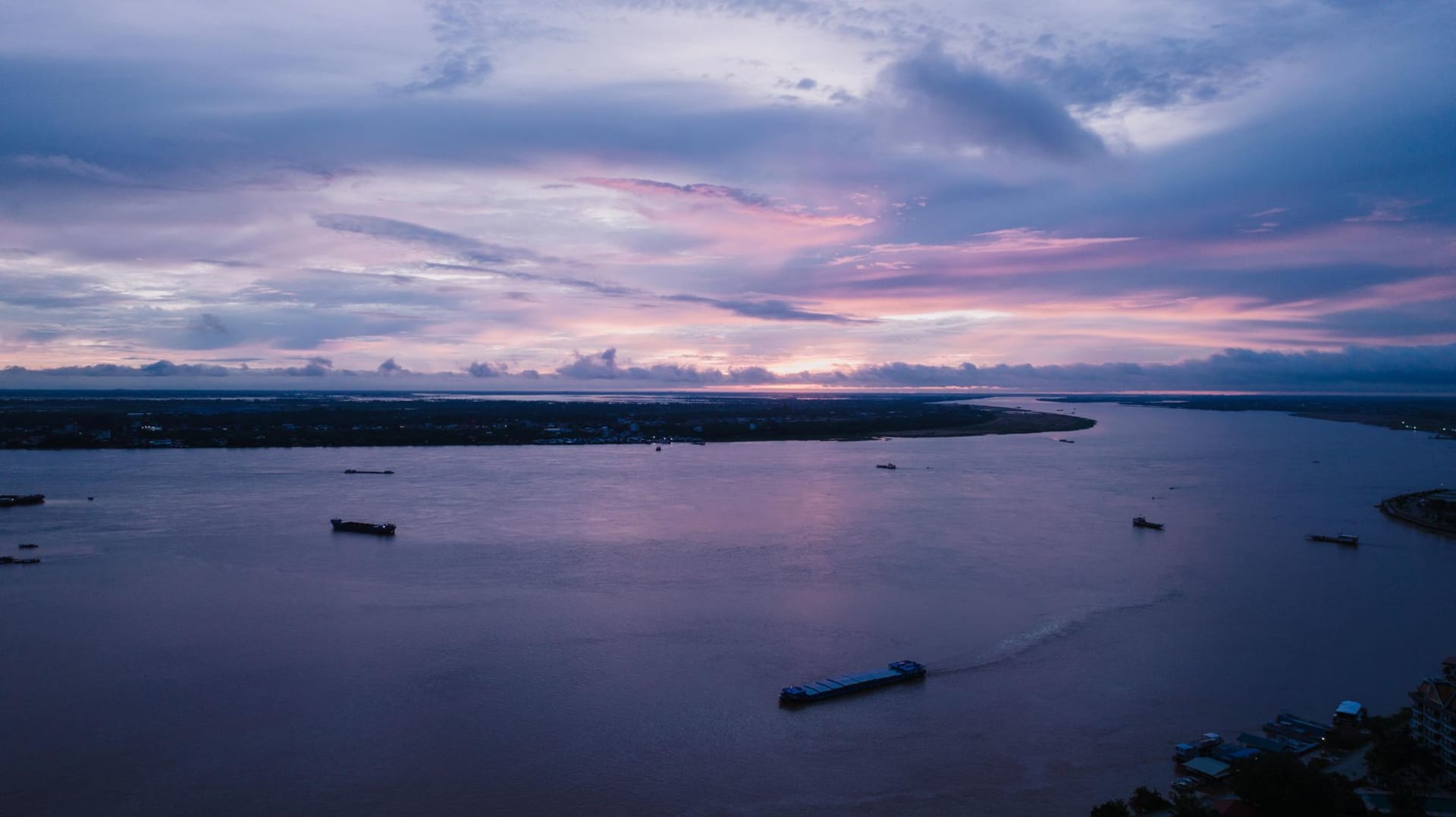
I walked Pak Beng’s one main road the evening I arrived. It took eleven minutes at a slow pace. There were guesthouses, a few restaurants with plastic chairs facing the river, a temple, a woman selling fried bananas from a cart, and at the end, a viewpoint where three other slow-boat travellers were sitting in silence watching the Mekong go dark. Nobody said much. The river did all the talking it needed to.

The noodles I had that night changed how I thought about broth. Khao piak sen — fat, hand-pulled rice noodles in a pork stock that had been going since morning — arrived in a bowl the size of a mixing bowl, topped with a cloud of fresh herbs and a lime wedge balanced on the edge. The restaurant had three tables. The owner’s daughter did homework at the fourth. There was a dog under my chair who was hoping for something and received nothing but my appreciation for his optimism. The electricity, I had been warned, would cut at nine. It did. The cook lit a candle without interruption. We finished eating by its light.
Pak Beng has a temple, Wat Pak Beng, on the hill above the guesthouses — worth the climb at dawn when mist still sits on the river and the monks are going about their morning in the courtyard below. The village is Lao Loum and the rhythms here are agricultural: people wake early, the market runs from six to seven, and by eight it has packed up entirely. There is almost nothing to do here in the conventional sense. You can walk to a waterfall about an hour into the jungle (ask at your guesthouse for a guide, and go). You can rent a bicycle and discover within minutes that the surrounding terrain is not built for cycling. Mostly you sit and watch the river and become briefly, genuinely bored in the way that eventually flips into something resembling peace.

The other slow-boat passengers gather in the evening, usually at the restaurant closest to the water, and the conversation has a quality I have rarely found elsewhere: everyone has spent the same day doing nothing, and everyone is quietly glad about it. I talked to a Dutch woman who had been travelling for six months, a retired teacher from New Zealand, a young Lao man returning to his family in Luang Prabang who had studied in Thailand. By the time the generator cut we had been talking for two hours and nobody had introduced themselves.
When to go: The dry season from November to February makes Pak Beng most comfortable — the paths are not mud, the insects are manageable, and the river runs clear. Rainy season (June through October) turns everything deeply green and the river runs so high and fast that the slow boat journey itself becomes more challenging. The village is small enough that its character doesn’t change much with seasons.