
Don Khong
"I asked a man fixing his net what there was to do on the island. He thought about it, smiled, and said nothing. I came to understand this was the answer, not a failure to give one."
Everyone going to Si Phan Don — the Four Thousand Islands, where the Mekong swells to fourteen kilometres wide before throwing itself off the edge of Laos into Cambodia — seems to end up on Don Det or Don Khon, the backpacker islands, with their hammock bars and tubing and the cheerful low hum of people doing very little, loudly. Don Khong is the largest island of the lot and almost nobody stops there, which is precisely why we did. It is a working agricultural island, broad and flat and green, where the visitors are few and the rhythm is set by rice, fish, and the river itself.
The island that does nothing on purpose
We stayed in a French-era shophouse turned guesthouse in Muang Khong, the main village, where the colonial bones of the place — shuttered windows, deep verandas, a crumbling church — sit comfortably alongside Lao temples and a riverfront promenade that sees perhaps a dozen people an evening. The first afternoon I asked, with the reflexive anxiety of someone raised to optimise his holidays, what there was to do. The answer, delivered repeatedly and without apology, was essentially nothing, and it took me about a day to recognise this as the island’s entire and considerable charm.
So we did what one does on Don Khong: we rented two terrible bicycles and rode the flat road that loops the island, perhaps forty kilometres of rice paddy, water buffalo, sugar palms, and villages where children ran out to shout hello with an enthusiasm wildly disproportionate to the event of two sweating foreigners pedalling past. Lia, who is a far better cyclist than I am, kept stopping to wait for me at temple gates and under trees, and we made the full circuit in an unhurried afternoon, stopping for warm Beerlao at a shack where the proprietor seemed genuinely surprised and pleased to have customers.
River, fish, and the long evening
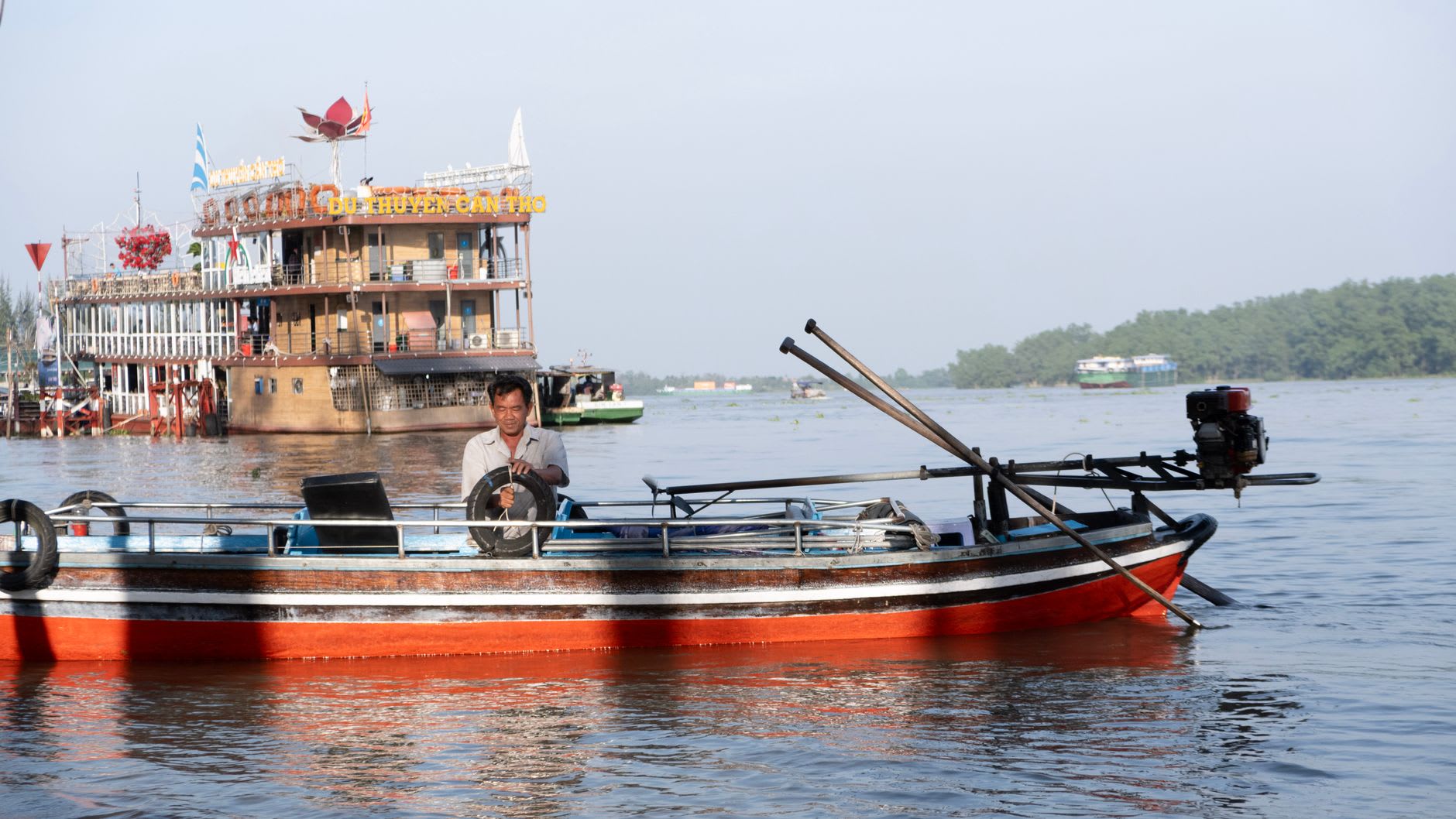
The Mekong here is enormous and slow, braided around countless wooded islets, and the island’s life runs along its edge. At dawn the fishermen are out in long pirogues setting nets; by mid-morning the catch is at the market; in the evening the same fish comes back to you grilled whole over coals at a riverside table while the sun does something operatic to the water. We ate mok pa — fish steamed in banana leaf with lemongrass and chilli — three nights running and I regret nothing.
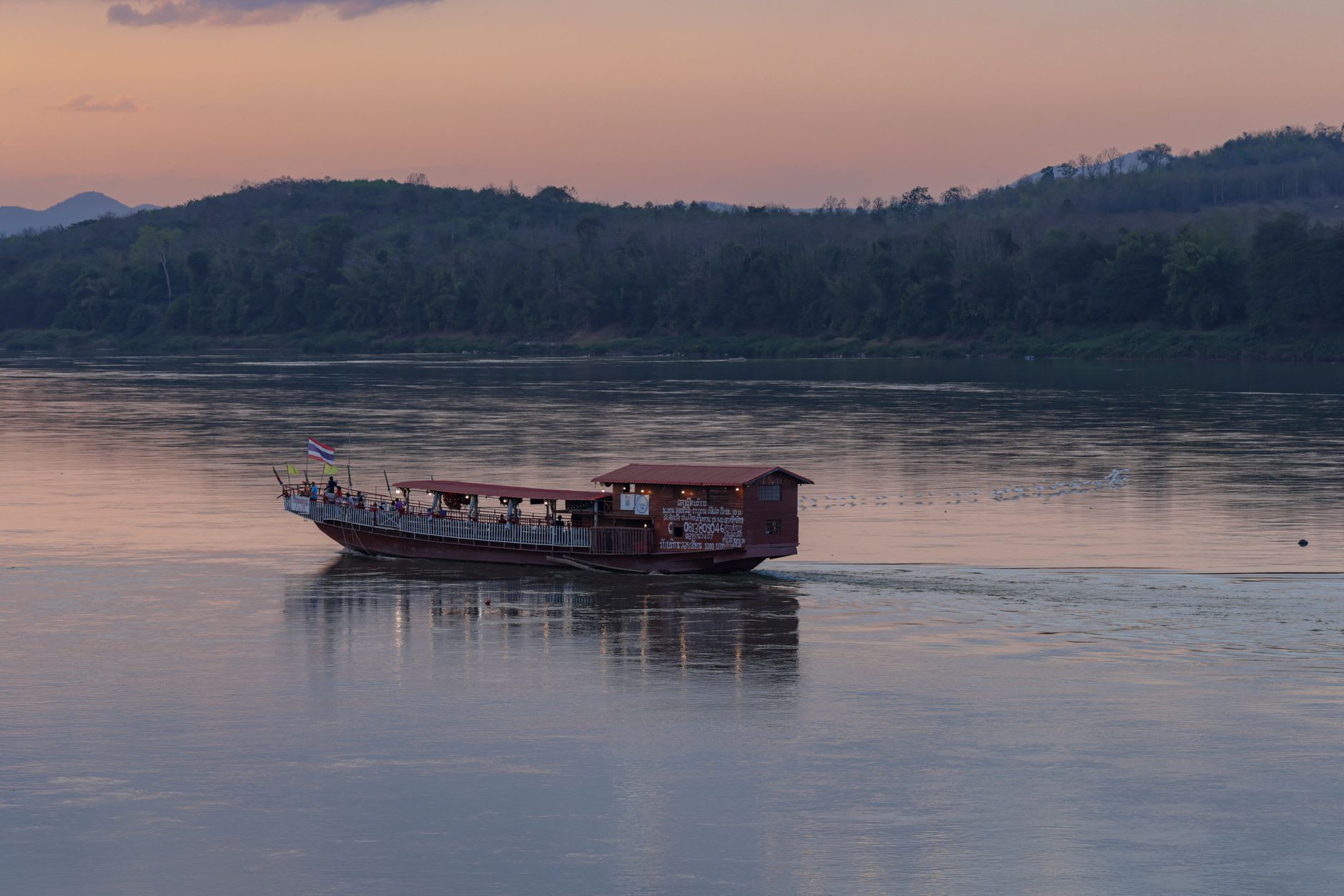
Don Khong is also the sensible, quiet base for day trips to the more dramatic southern islands — the Khone Phapheng falls, the colonial railway relics, the slim chance of an Irrawaddy dolphin in the deep pools near the border. But I found I kept postponing those. There is a particular pleasure in being on an island that asks nothing of you, and Don Khong asks less than anywhere I have been. We left a day later than planned, which on Don Khong counts as decisive action.
When to go
November to February is the cool, dry, golden window — comfortable cycling, full but receding river, and the best light over the water. March to May gets fiercely hot. The green season brings a swollen, powerful Mekong and emerald paddies but also heat and sudden downpours; bring a poncho and a relaxed attitude toward schedules, which Don Khong will impose on you anyway.