
Don Det
"The Mekong here is so wide it looks less like a river than a decision it made about itself."
Si Phan Don — Four Thousand Islands — is the section of the Mekong where the river, compressed through Laos for a thousand kilometers, suddenly exhales. It fans out into a braided delta of channels and sandbars and islands that in the dry season number in the thousands. From above it would look like the river couldn’t make up its mind. From within, on a bicycle on Don Det, it looks like the most serene geography in Southeast Asia, which is saying something.
Don Det is the most accessible of the islands — a ten-minute boat from the transport hub at Ban Nakasang, itself a forty-five-minute tuk-tuk from the nearest town, Muang Khong. It is flat. Entirely flat, which is its own luxury in a country where everything else rises dramatically. A path circles the island and another bisects it, and on a bicycle you can do the whole circuit in under an hour. Most people take two or three, stopping to watch the river, to eat at a riverside shack, to lie in a hammock strung between two palm trees that overhangs the current.
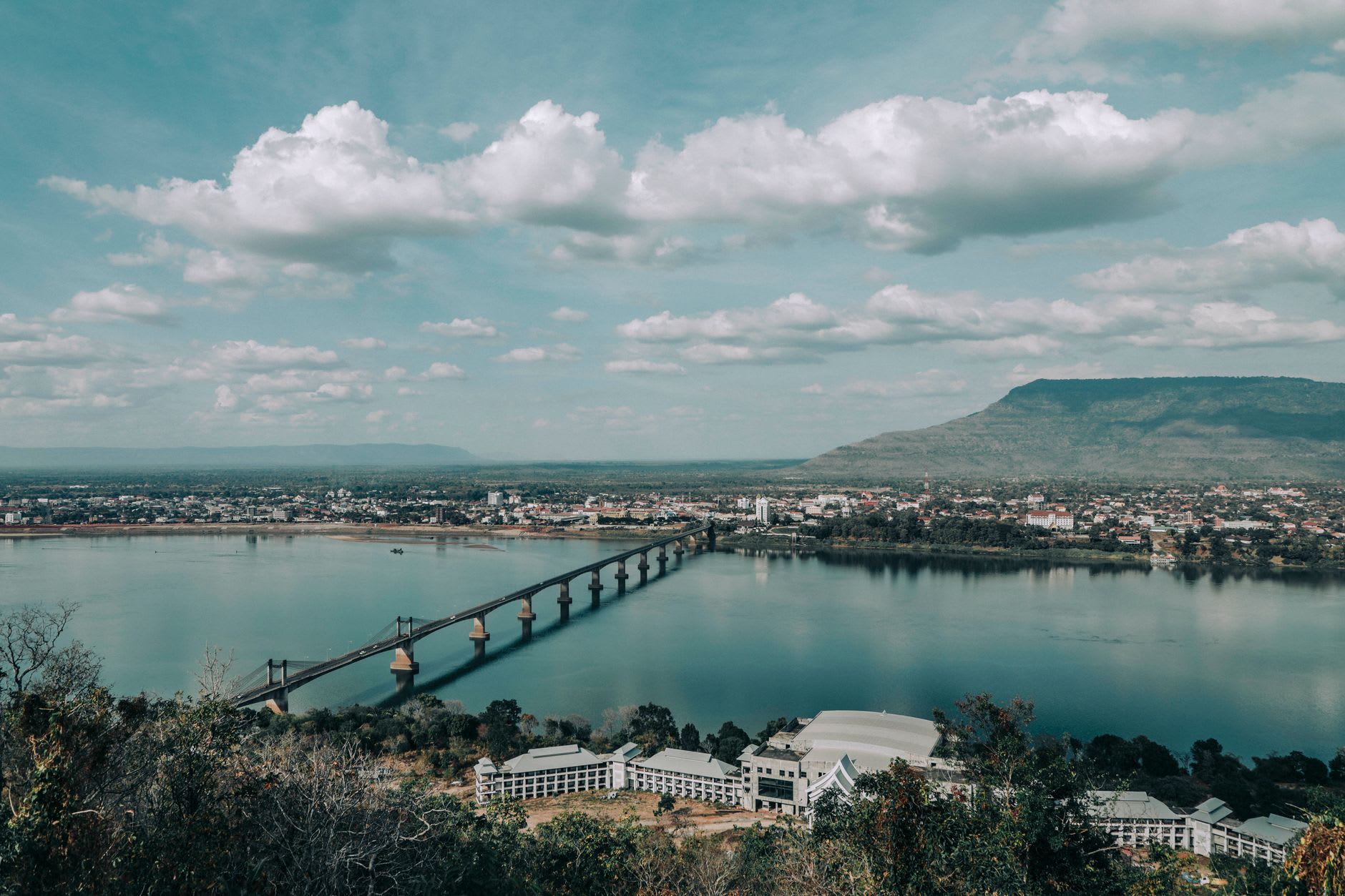
The guesthouses here are almost uniformly bamboo-and-wood structures on stilts at the water’s edge, with hammocks on their terraces and menus that have not changed substantially in years. This is not a criticism. The food — fried Mekong fish with sticky rice, a green papaya salad that arrives genuinely spicy unless you specify otherwise, Beerlao poured cold from a shared bottle — is calibrated exactly to the pace of the place. You eat slowly. You don’t really know what time it is. There are dogs. Roosters perform at four in the morning with complete indifference to the schedule of their human neighbours.
The reason to come south rather than staying in Luang Prabang is this: the Irrawaddy river dolphins. A small and critically endangered population of Orcaella brevirostris lives in the pools below Don Khon island, a short bike ride south across the French colonial-era rail bridge from Don Det. You get there at dawn, hire a small boat, and a fisherman takes you out to where the dolphins surface. They are grey and rounded and come up slowly to breathe, and their dorsal fin is barely perceptible. They are nothing like the bottlenose performances of marine parks, and they are extraordinary. The population here has dwindled to fewer than a dozen. You watch them in the knowledge that this is rare in a way that the word rare does not adequately contain.
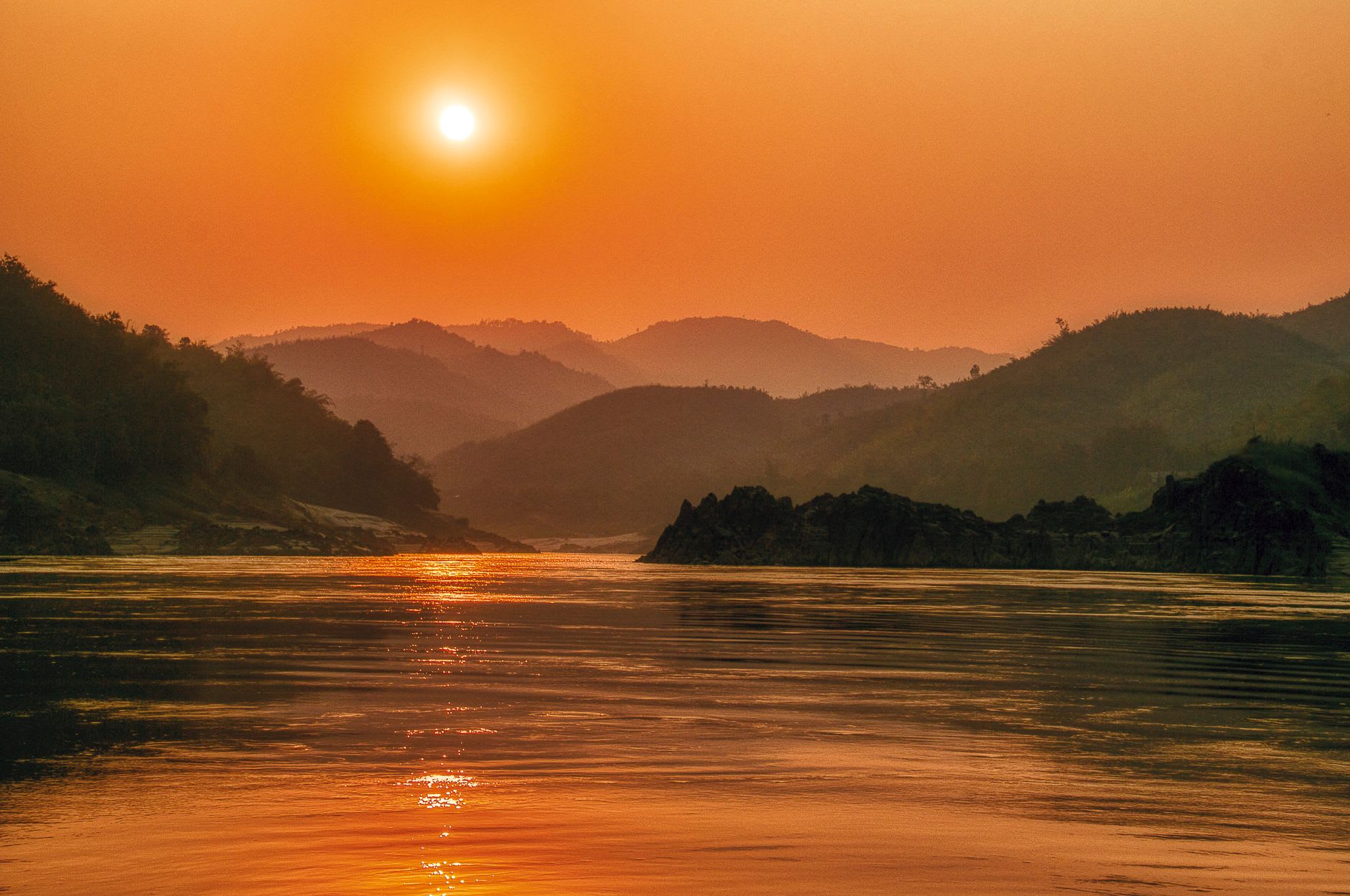
The Khone Phapheng falls, the largest waterfall in Southeast Asia by volume, is a motorbike ride from the southern tip of the island network. But on Don Det itself, the afternoons are governed by the river and the hammock, and by the light that comes late in the day from the west and turns everything amber. I spent three days here doing almost nothing measurable and left feeling as if I had accomplished something significant.
When to go: November through May is when the islands are accessible and the swimming safe. The dry season peaks (January to March) see the sandbars and beaches at their most extensive — you can walk between some islands at low water. The rainy season (June through October) floods everything: many guesthouses close, the dolphins relocate, and the islands shrink to their wet-season shape.