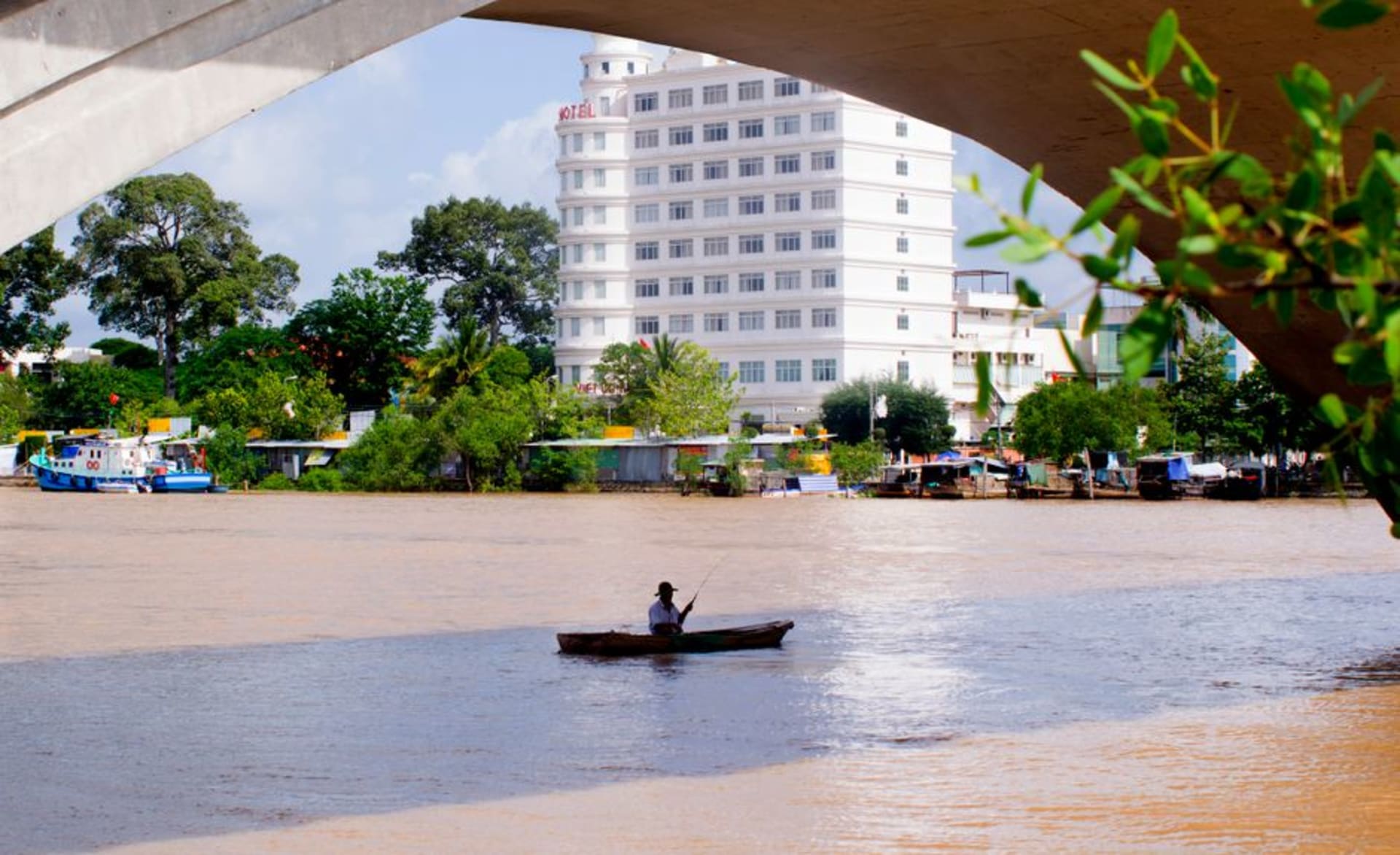
A quiet riverside silk town near the Cambodian border, where French-era shophouses and wooden looms still hum with the Mekong's slow rhythm.
We almost skipped Tan Chau. Lia found it on a map while we were still in Chau Doc, a small dot pressed up against the Cambodian border, and the only reason to go seemed to be catching a ferry across the water. But something about the name kept nagging at her — Lanh My A, a black silk she’d read about, dyed not with chemicals but with the crushed fruit of the mac nua tree, worn shiny after years of being pounded and polished by hand. So we took the slow boat up from Chau Doc instead of the bus, and I’m glad we did, because the river itself became the introduction to the place.
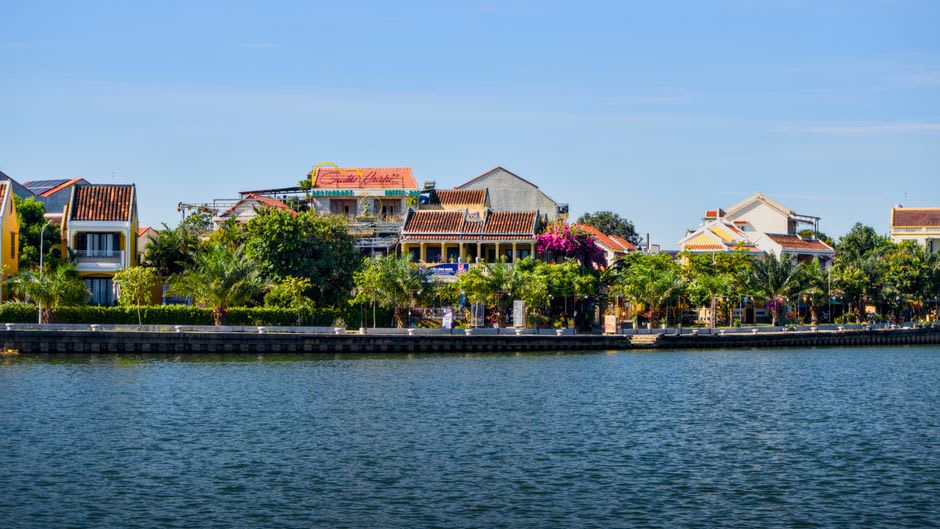
The town announces itself the way a lot of Mekong towns do, with a market street running along the water, except here the shophouses have a particular sag to them, a French colonial posture from the early 1900s that nobody has bothered to straighten out. I liked that nobody had. We wandered the strip in the late afternoon, past stalls of dried fish and betel leaf, and I kept catching glimpses down narrow alleys where the real town seemed to continue, quieter, unphotographed.
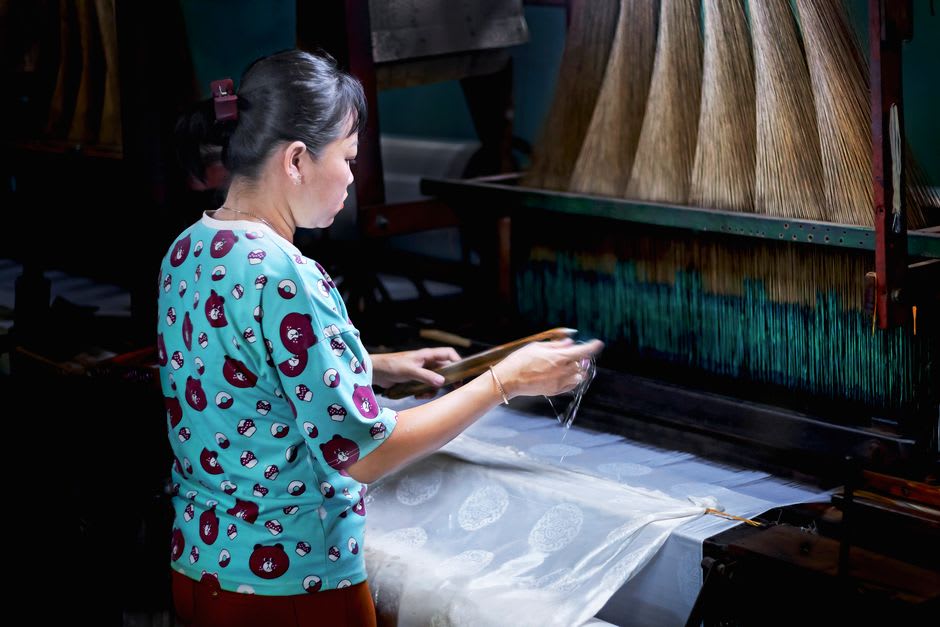
The silk is what we’d actually come for, though, and finding it took some asking around. A tea-shop owner pointed us toward a household a few streets back where an older woman still worked a wooden loom that looked older than her. She didn’t speak much English and we didn’t speak much Vietnamese, but she let us stand and watch the shuttle go back and forth for a good twenty minutes, and at one point she held up a length of the finished black silk against the light so we could see the sheen move across it like oil on water. Lia bought a small scarf. The woman told us, through gestures and the tea-shop owner’s patchy translation, that when she was young the whole street did this work, and now she thinks she might be one of the last three or four.
We ended the day back on the riverbank, watching one of the small ferries load up for the crossing toward Cambodia, motorbikes and sacks of rice wedged in next to a few backpackers heading for Phnom Penh. We didn’t get on it — that was a trip for another time — but I remember thinking that Tan Chau felt less like a destination than a hinge, a point where the river, the border, and a fading craft all happened to meet, and where nobody was in any hurry to explain themselves to us.
When to go: aim for December to April, when the dry season keeps the river route steady and makes the market street and ferry crossings easier to navigate.