Sa Đéc
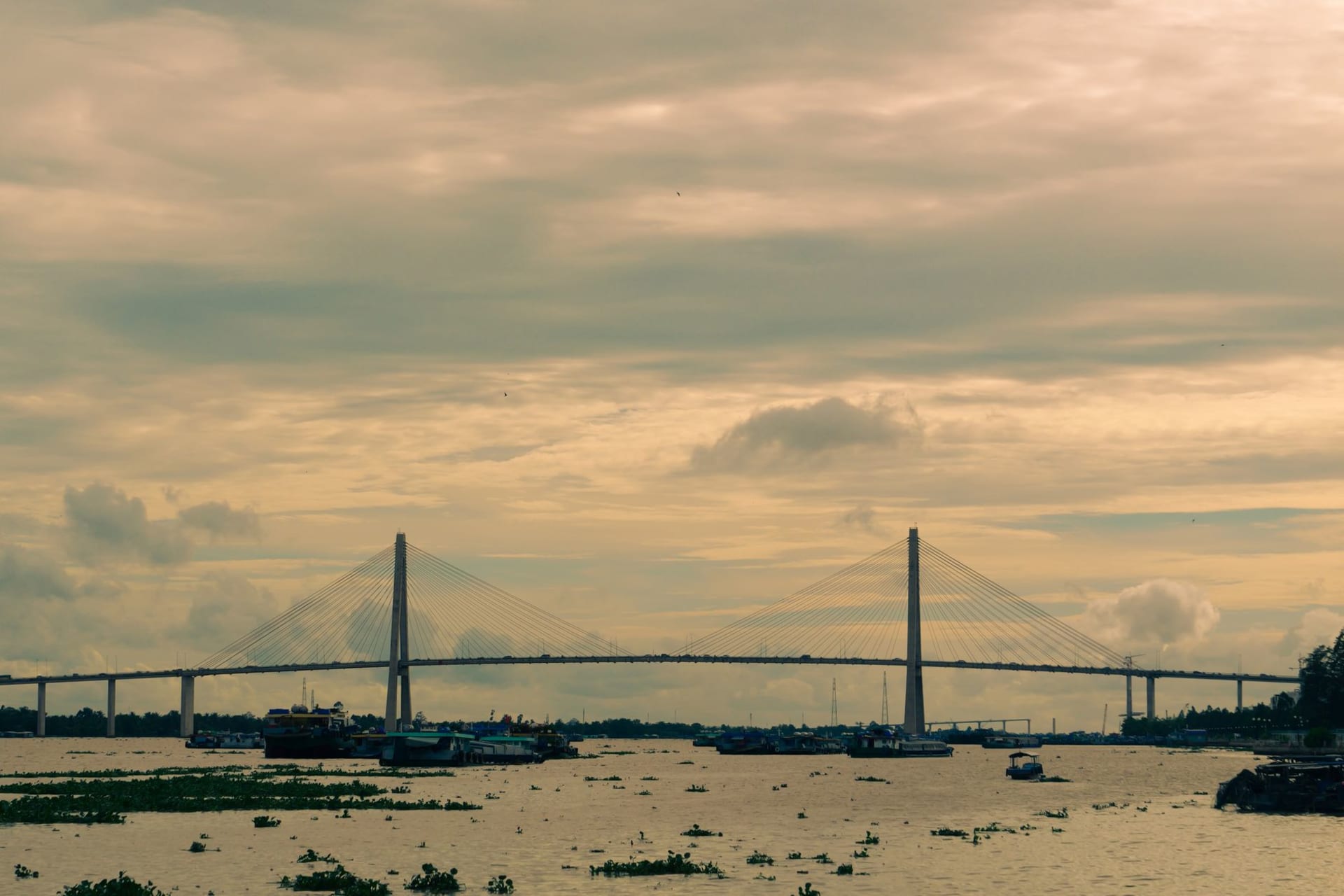
"Duras was right about this light — it has a quality I've never been able to explain."
I arrived from Vĩnh Long by motorbike, following the river road through a suburb of nurseries — orchids in hanging baskets, chrysanthemums in crates, roses trained up bamboo stakes in rows that stretched back from the road further than I could see. Sa Đéc is the flower-growing capital of the Mekong Delta, and in the weeks before Tết the town ships millions of plants across the region for the festival’s display. At dawn, before the heat arrives, the nursery district has the quality of a dream: the flowers in their hundreds of thousands catching the first light, dew still on the petals, the canal beside the road perfectly still and mirroring the colour back upward.
Marguerite Duras lived in Sa Đéc as a teenager — her mother was a schoolteacher here — and it was here she met the Chinese-Vietnamese merchant Huỳnh Thủy Lê, whose family owned much of the town, and who became the subject of her 1984 novel L’Amant, The Lover. The house of the Huỳnh family still stands on the main street: a two-story Chinese-colonial confection of green and yellow tiles, carved wooden screens, and an interior courtyard that feels suspended in time. The family’s furniture is still in place, the altar still carries offerings, and a room upstairs has been arranged as a small museum to the novel and the film it became. I stood in the room where Duras spent time as a young woman and tried to imagine the quality of the heat in a town like this before electric fans, before the bridge that now connects the bank to the road, when the river was the only way in or out.

The market near the river is large and unhurried — a provincial market with all the delta’s produce concentrated in one place. I found herbs I couldn’t identify, fish presented in categories I couldn’t follow, and at the edge of the market, a stall selling bánh bò — spongy rice-flour cakes steamed in small bowls, their surfaces honeycombed with tiny holes — in three flavors: pandan, coconut, and a deep purple taro. The pandan one was the best, bright with the grassy sweetness of the leaf, the texture somewhere between a sponge and a cloud.
The French colonial architecture of the town center — a covered market in cast iron, a few villas with louvered shutters and bougainvillea walls, a church on a corner that looks borrowed from the Languedoc — has the particular quality of colonial structures in the tropics that have been maintained but not restored: still standing, somewhat faded, wearing their age as a kind of dignity. It reminded me of certain towns in the Mexican interior where the colonial layer sits beneath the present life without contradiction.

When to go: Tết season (January–February) is when the flower nurseries are at their peak production and the town moves at an almost surreal intensity. The weather is ideal during the whole dry season (November–April). Come at dawn for the nurseries — the light is extraordinary before eight in the morning and the heat hasn’t yet made outdoor exploration uncomfortable.