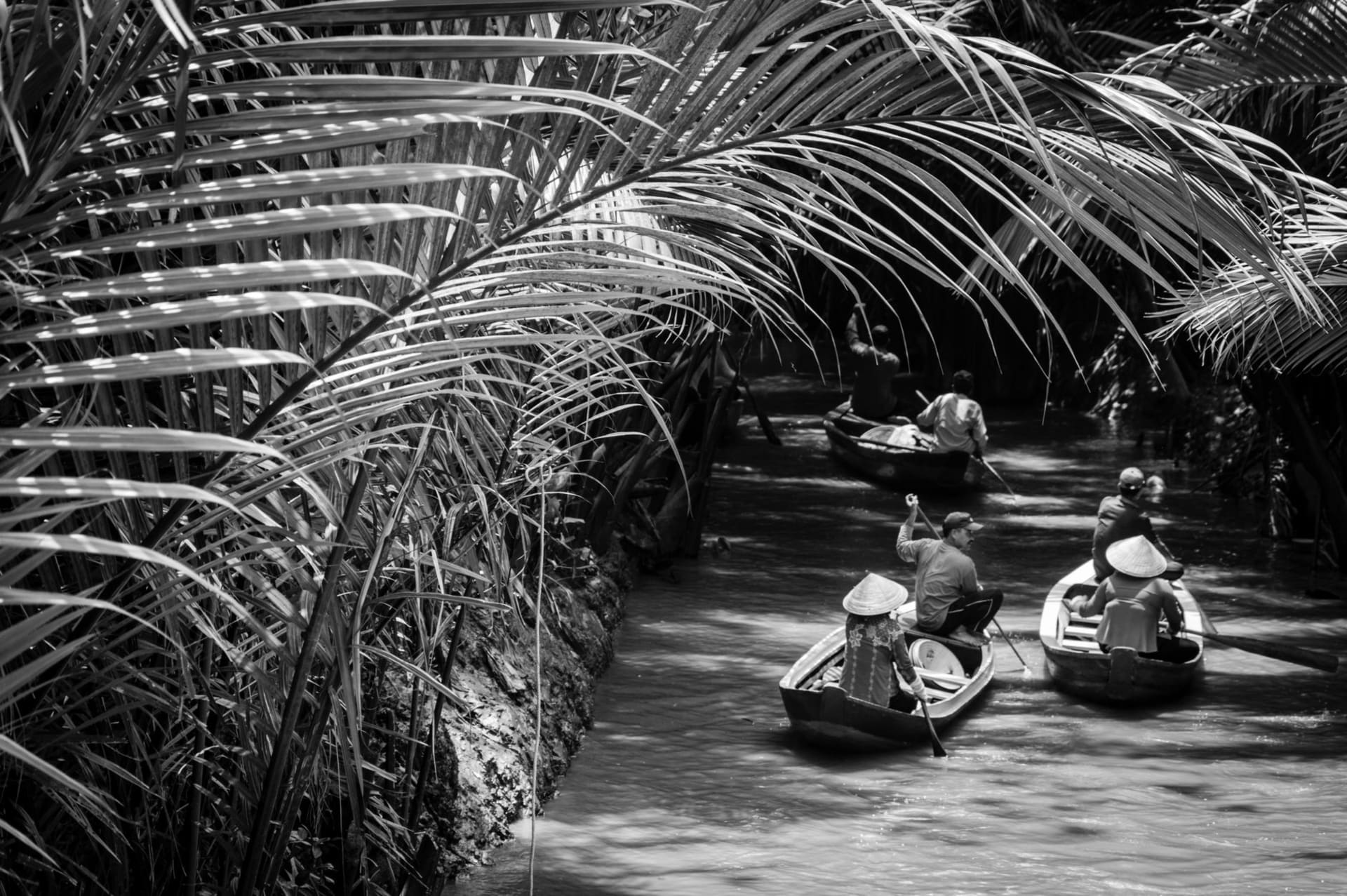
I came to Hà Tiên by bus from Châu Đốc, a two-hour ride through rice paddies and canals that slowly gave way to hills as the land began to rise toward the limestone formations of the Cambodian border. The town appears around a bend: a small grid of streets on a peninsula between two channels, the Gulf of Thailand visible at the end of the main street, and everywhere the abrupt verticality of the karst landscape — grey limestone pillars rising from otherwise flat ground like something deposited by accident.
The market runs along the waterfront and in the mornings it’s a serious affair: fresh squid still iridescent, shrimp in buckets, whole fish on ice with eyes that still look surprised by events. The town has a seafood culture that bears no resemblance to what you’ll find further inland, and a bowl of bún mắm — the thick, pungently flavored noodle soup of the border region — eaten at a table looking out toward the Cambodian hills is one of the more disorienting pleasant meals I’ve had anywhere. The mắm, fermented fish paste, makes the broth something close to umami in its purest, most assertive form.
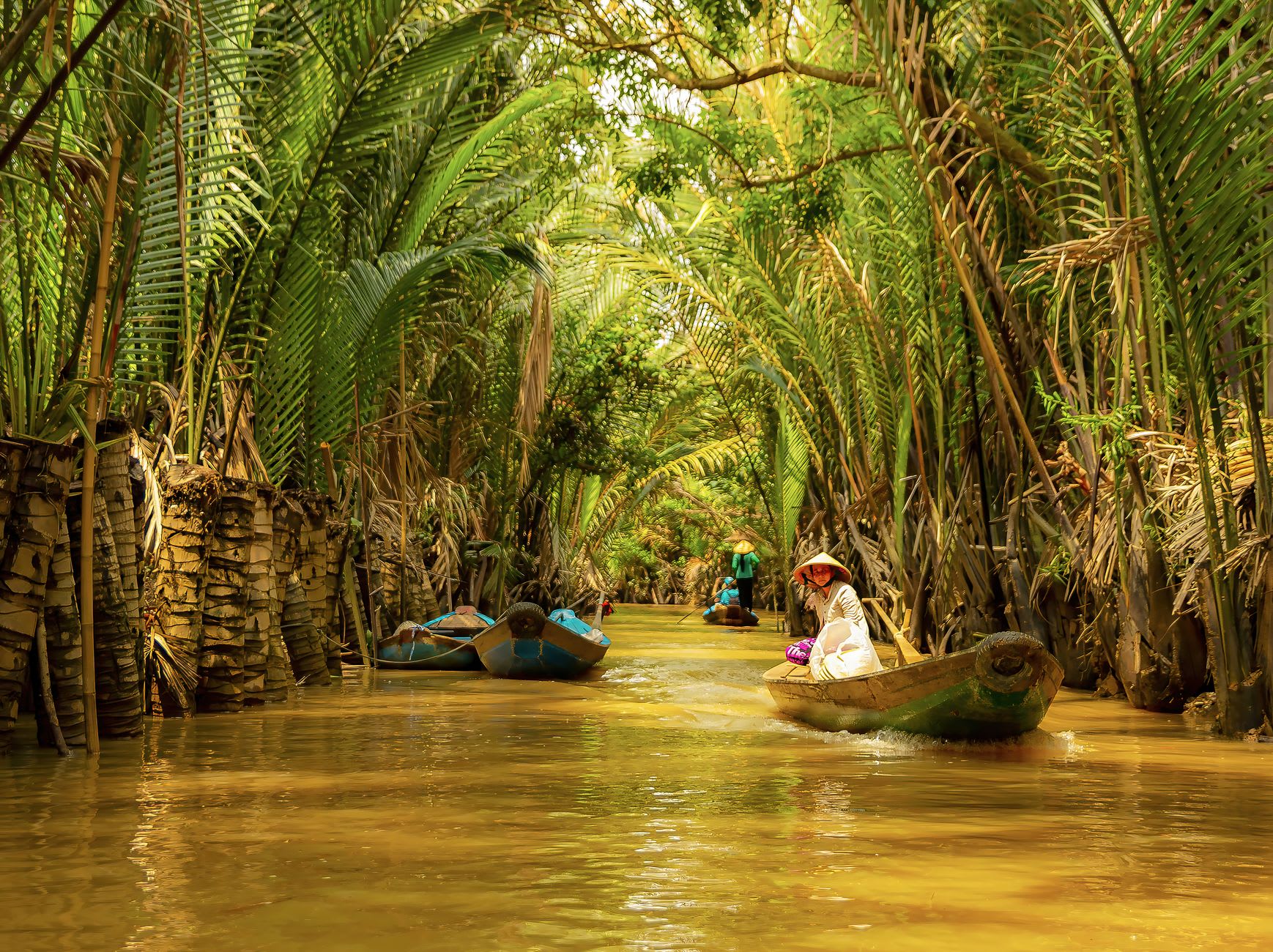
The limestone caves of the area are worth a morning. Mũi Nai, a small headland fifteen minutes by motorbike from town, has a beach at the base of a karst cliff where the water is shallow and calm and the angle of the afternoon light through the rock formations produces effects that seem improbable. Thạch Động cave is a temple built inside a cavern, dimly lit by candles and by light filtering through a hole in the ceiling, with a back passage that opens unexpectedly onto Cambodian territory — or very nearly. The monks who maintain it seemed unbothered by this geographic ambiguity.
The Đông Hồ lagoon, separating the town from the mainland, is best seen at dusk when the water turns the colour of old copper and the birds come in to roost in the casuarina trees along the bank. Hà Tiên also serves as the departure point for boats to Phú Quốc — a fast ferry takes forty-five minutes — and as a crossing point into Cambodia for those heading to Kampot. The border here is one of the more pleasant in Southeast Asia: low-key, functional, and not yet overwhelmed by the tourist bus infrastructure that characterizes some other crossings.
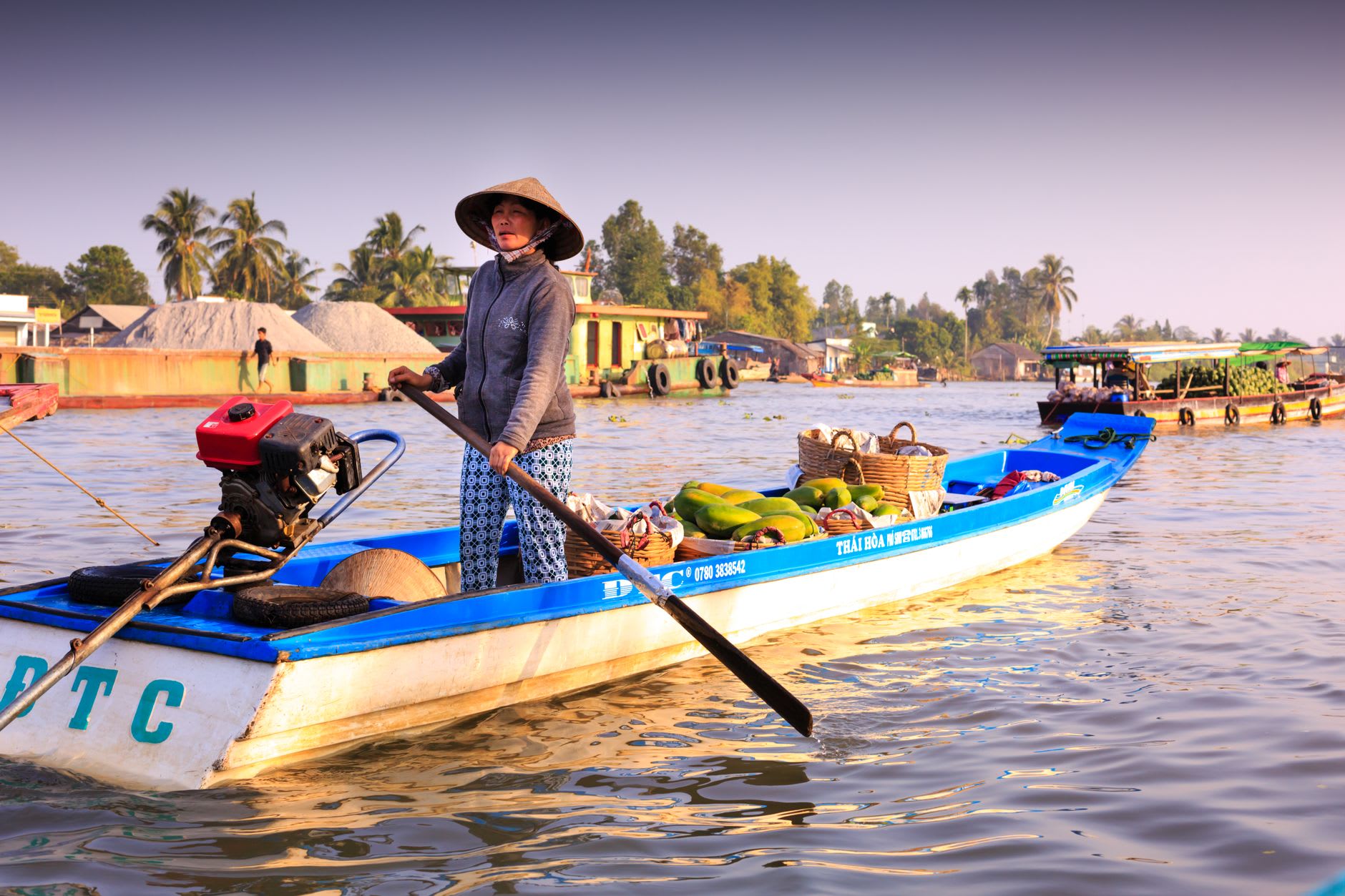
The guesthouses are mostly family-run and mostly excellent value. I stayed in a room with a balcony over the water and watched the fishing boats come in at four in the morning, their navigation lights moving through the dark like slow fireflies.
When to go: November through April for dry weather and calm sea crossings to Phú Quốc and Kampot. The town is at its most alive in the early morning regardless of season — the market, the light on the water, the fishing boats returning. Come for the morning and you’ll find a reason to stay for several days.