I arrived on an overnight bus from Ho Chi Minh City and the city was already moving. It was five in the morning, still dark, and a woman was selling bánh mì from a cart under a flickering fluorescent tube while two men at a plastic table argued quietly over a pot of tea. I found a coffee shop with the lights on three streets back from the river and sat down to a cà phê sữa đá so thick and sweet it felt more like a dessert than a drink. Cần Thơ does not ease you into consciousness. It assumes you’re ready.
The city sits on the Hậu River, the largest of the Mekong’s branches, and the waterfront — Ninh Kiều Wharf — is the axis around which daily life turns. In the evenings, it fills with locals sitting on the low stone walls watching the river traffic: passenger ferries, cargo barges, the occasional longboat pushing upstream against the current. There are flower sellers and corn-on-the-cob carts and a night market that spills along the bank for several blocks. It’s not designed for tourism — it happens to contain some of it, which is a different thing entirely.

The market behind the waterfront runs all night and into the morning. I found it around two a.m. on my first night: stalls heaped with rambutan, mangosteen, and dragon fruit, women in conical hats sorting through mounds of fresh herbs by lamplight. The smell was overwhelming — ripe tropical fruit and raw fish and something frying nearby — and completely intoxicating. I bought a bag of longan and ate it at the edge of the market while a man repaired a motorbike engine on the pavement beside me with the focused calm of a surgeon.
The French left their mark on Cần Thơ more visibly than in most of the delta — there’s a covered market with colonial-era iron framework, a few villas behind bougainvillea walls, and wide boulevards in the commercial district that have a different scale from the rest of the city. The city absorbed all of it and moved on. What matters more is the coffee, which is exceptional across the board, and the phở bò eaten at street-level tables at seven in the morning, and the sense that the city has its own momentum that has nothing to do with visitors.

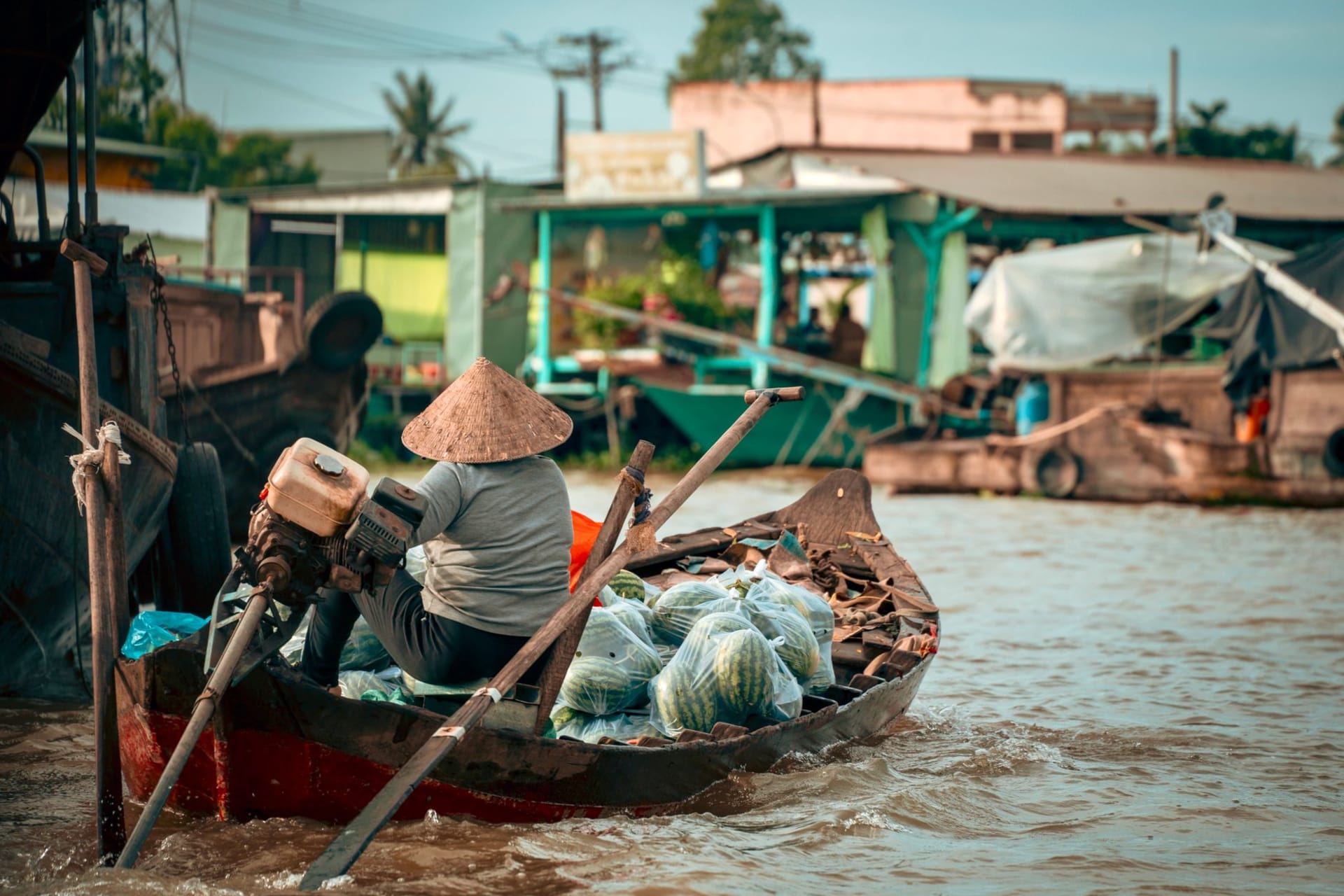
Cần Thơ also serves as the best base for a dawn visit to the Cái Răng floating market, twenty minutes upriver by motorboat. The city fills the time before and after the market beautifully. Two nights here is the minimum that makes sense.
When to go: November through April, during the dry season. The riverside is especially pleasant in February and March when the air is drier and the morning mist off the Hậu River creates extraordinary light at dawn.