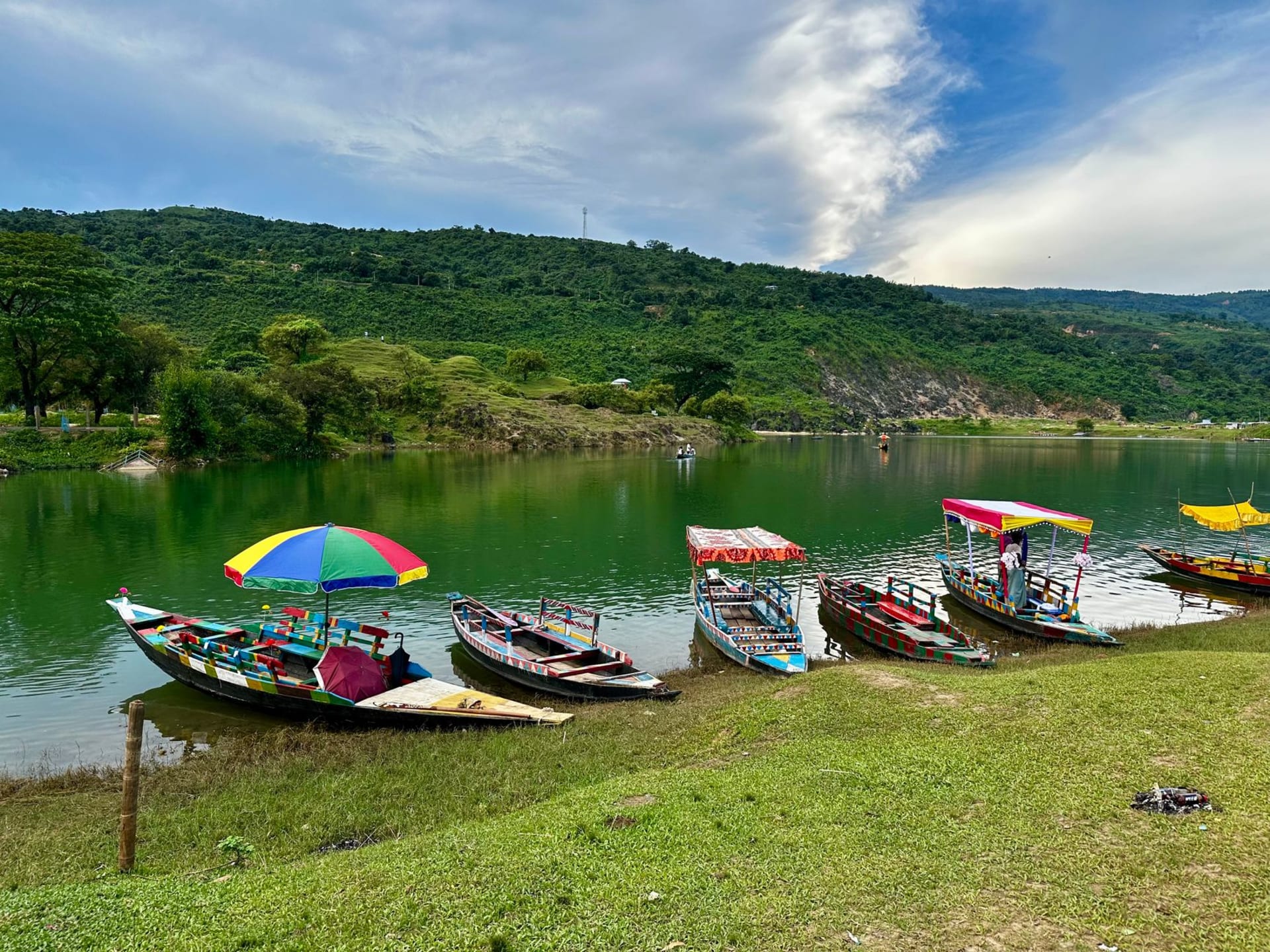
Shillong
"Shillong is the only city I've been to where the chai stall next door is playing Metallica and nobody looks up."
I arrived in Shillong from Guwahati on a shared sumo — one of those seven-seater Toyota Land Cruisers that carry Meghalaya’s population between every conceivable point — and the drive through the Brahmaputra plain giving way to the Khasi Hills felt like watching the world compress and lift at the same time. The air changed at elevation. It went cool and pine-scented in a way that reminded me of the Vosges in October, except that the roadside stalls were selling coal-smoked pork and nobody was French. By the time we dropped into the bowl where Shillong sits, the clouds had already come down to meet us.
Shillong is Meghalaya’s capital and its only real city, and it carries that status with a particular kind of Highland town confidence — slightly manic, deeply musical, and completely unbothered by what anyone else thinks of it. The British called it the “Scotland of the East” and planted pine trees everywhere and built a lake in the middle of it, and those pines and that lake are still there, Ward’s Lake ringed by a walking path where elderly Khasi couples do their morning circuits and children rent paddleboats shaped like swans. Colonial names, colonial forms — but the substance inside is entirely Khasi, which means matrilineal, which means property and identity flow through women, and it shows in how the markets work and who occupies space with authority.
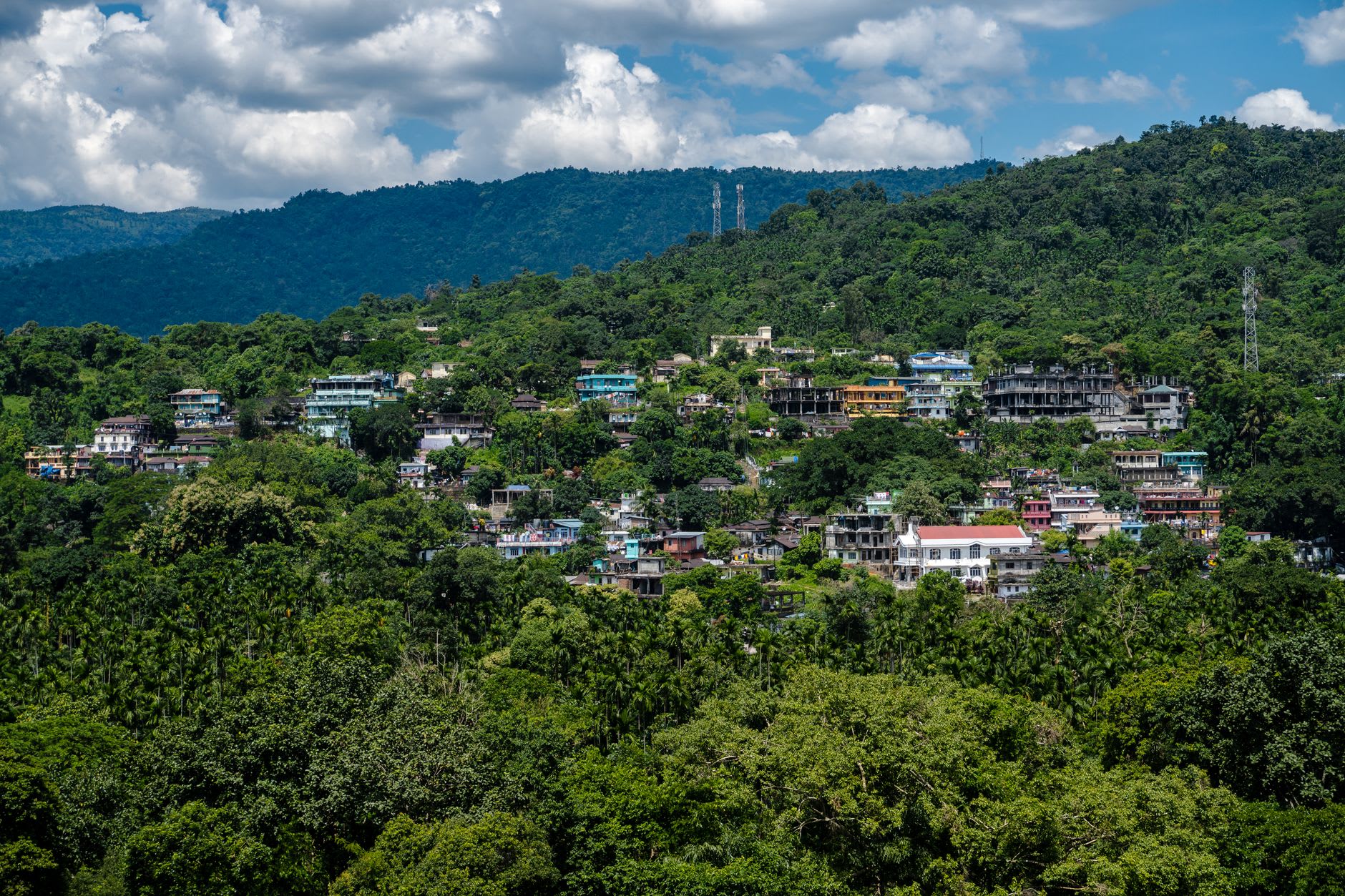
Police Bazaar is the city’s commercial heart, a dense intersection of shops and stalls where the smell of fish mingles with incense and two-stroke exhaust. The Khasi women who run the stalls sit behind their goods with absolute composure, bargaining efficiently and without theatre. I bought a woven shawl there — deep crimson with geometric black borders, the kind of thing a Khasi grandmother would wear to church on Sunday — and spent a long time watching the transactions around me. The economy here has a different texture than what I’d encountered elsewhere in the northeast. It feels run by women in a way that isn’t performative or declared, just factual.
The music scene in Shillong is the thing that surprises most people who come expecting India’s usual soundtrack. This city has produced more rock musicians per capita than anywhere else in the country — possibly in Asia. There is a local explanation for it, something about American missionaries bringing guitars in the nineteenth century, and then a generation growing up on bootleg cassettes, and then the thing becoming cultural DNA. Whatever the origin, the result is that on a Thursday night in Laitumkhrah, the neighbourhood just uphill from the main bazaar, you can hear live bands playing in venues that would look at home in any mid-size European city. I spent three nights in a row at the same bar, eating pork ribs and drinking local beer, watching a band work through originals that sounded like Joy Division filtered through fog.
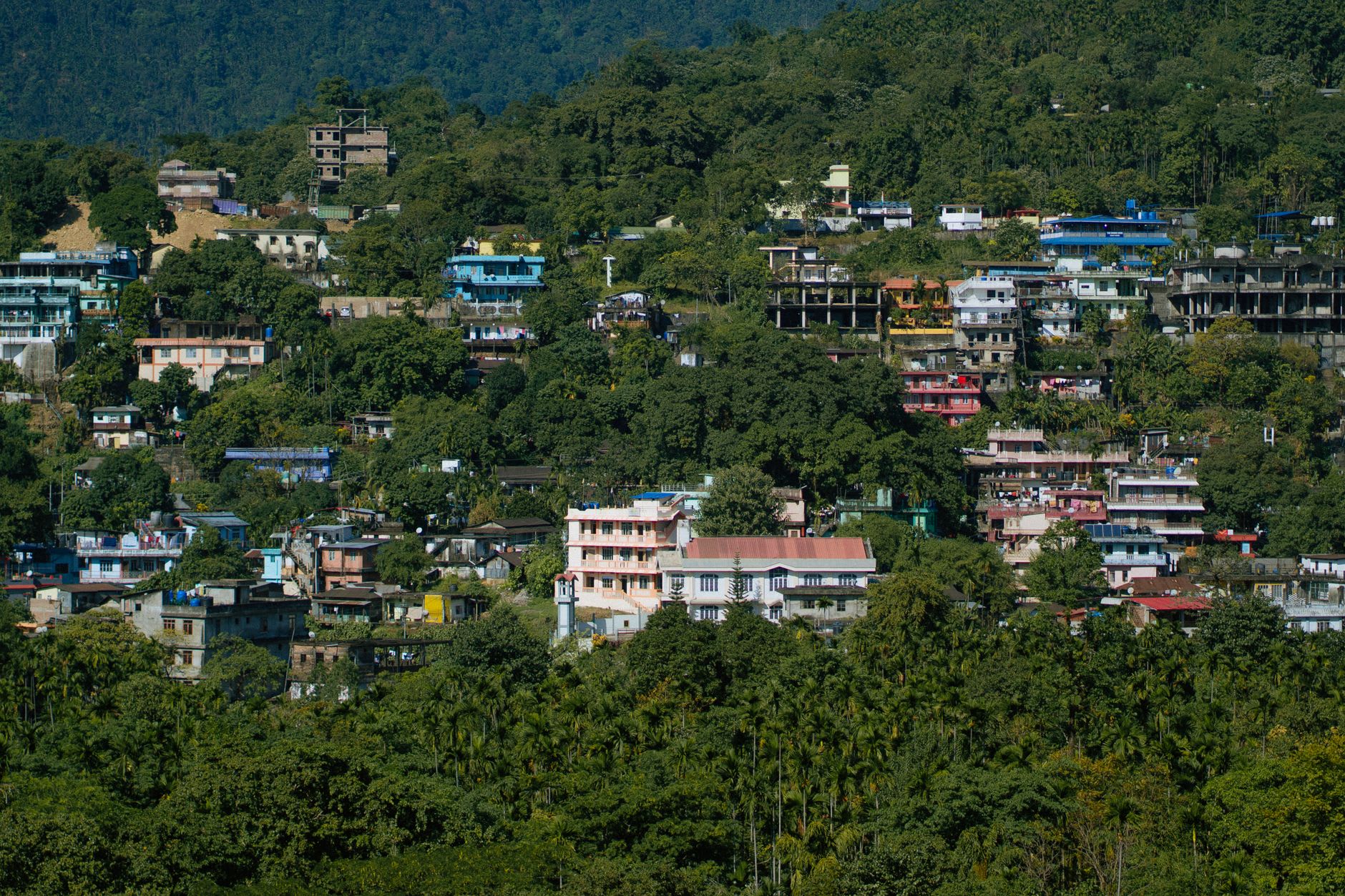
The Don Bosco Museum, out on the eastern edge of the city near Mawlai, is quietly one of the better ethnographic museums I’ve seen anywhere — seven floors documenting the cultures and material lives of northeast India’s many peoples, with particular depth on the Khasi, Jaintia, and Garo communities that make up Meghalaya. I went on a Tuesday afternoon when the schoolgroups had left and spent two hours alone with the exhibits: textiles, hunting implements, cooking tools, photographs of festivals from the 1920s. The stairwell winds up through the centre of the building and at the top is a glass-floored lookout over the surrounding hills, clouds moving through the pine valleys below.
When to go: October through April keeps the rains to a minimum and the skies clear enough to see the hills. November and December are peak cool season — temperatures drop to single digits at night, which in a Shillong where central heating doesn’t exist means bringing proper layers. Avoid the June-to-September monsoon for city exploration, though the hills turn an almost violent shade of green and the rivers run full and fast.