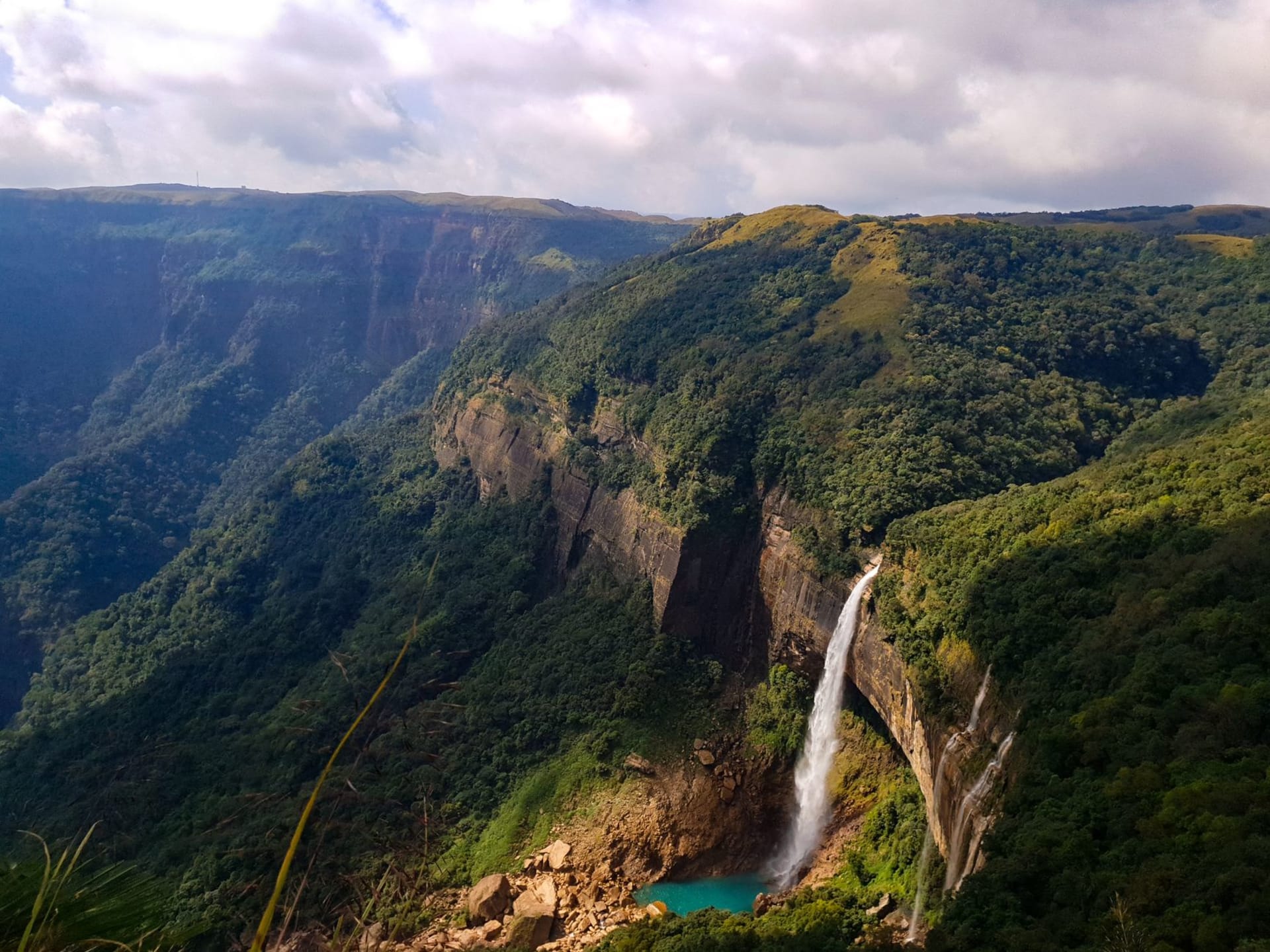
Nohkalikai Falls
"Three hundred and forty metres. The water doesn't hit the pool — it arrives."
There is a story behind the name. Ka Likai was a Khasi woman who worked carrying loads up and down the valley to support herself and her young daughter after her first husband died. She remarried, but her new husband resented the child. One day she came home from work to find her daughter gone, her husband unusually attentive, and a meal prepared. She ate. Later she found her daughter’s fingers in a betel nut basket. She went mad with grief, ran to the edge of the plateau, and jumped. Nohkalikai means, in Khasi, “the jump of Ka Likai.” This is a falls with a proper name, a particular history, and a grief embedded in the landscape.
I knew the story before I arrived, which meant I stood at the viewpoint with different weight than I might have otherwise. The falls are at the southern edge of the Sohra plateau, a few kilometres from Cherrapunji’s main market, and the drop is three hundred and forty metres — enough that the single white column of water atomises into mist before the bottom, catching whatever light there is in a permanent rainbow that hovers above the pool. The pool itself is a shade of green so saturated it looks artificial: green from the algae and minerals in the water, green from the reflection of the jungle walls, green from some quality of depth that intensifies colour downward.
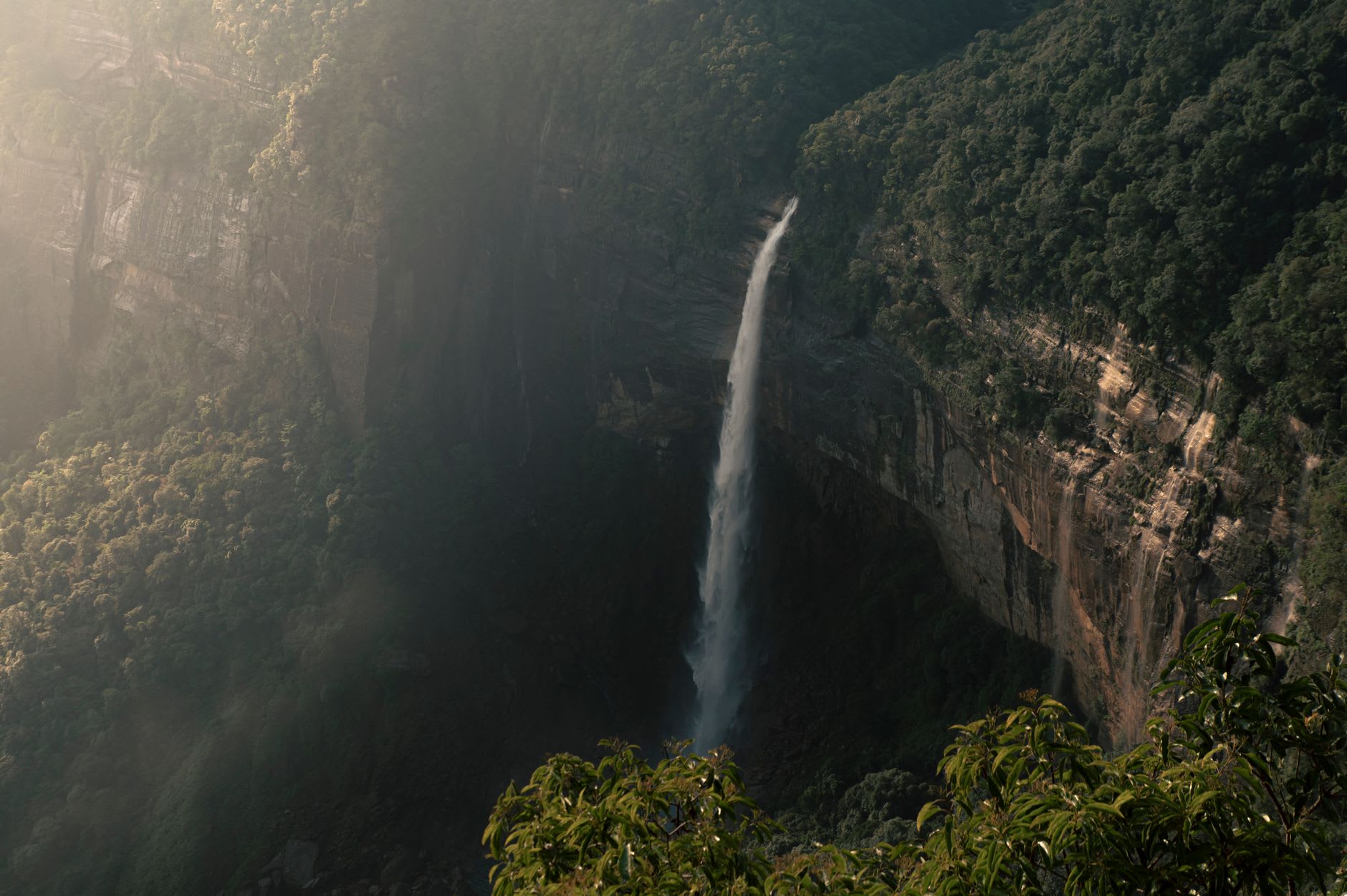
I visited in November. In the monsoon months — June through September — the falls run at full volume and the column is enormous, the sound audible from half a kilometre away, the mist cloud rising high enough to wet you at the viewpoint. In November the water was reduced to something more elegant: a single thread, precise and vertical, falling in absolute silence until you heard it strike the pool far below as a distant, continuous percussion. Both experiences are worth having, I suspect, but the November version lets you see the cliff face clearly, the jungle growing from every ledge and crack in the rock, the scale becoming legible in the dryness.
The viewpoint is fenced and paved and has the usual tea stalls selling Maggi noodles and fried snacks. This is fine. All the great viewpoints in India have Maggi stalls, and that continuity is its own kind of comfort. I stood at the railing and ate noodles from a styrofoam cup and looked at three hundred and forty metres of falling water and thought about Ka Likai, who had nothing to protect her from the knowledge of what had been done, and chose this particular edge. The cliff was here before the British came and named the falls and before the tourists came to photograph it. The cliff was here for Ka Likai and the cliff is simply itself — a rock face of a certain height, over which water falls.
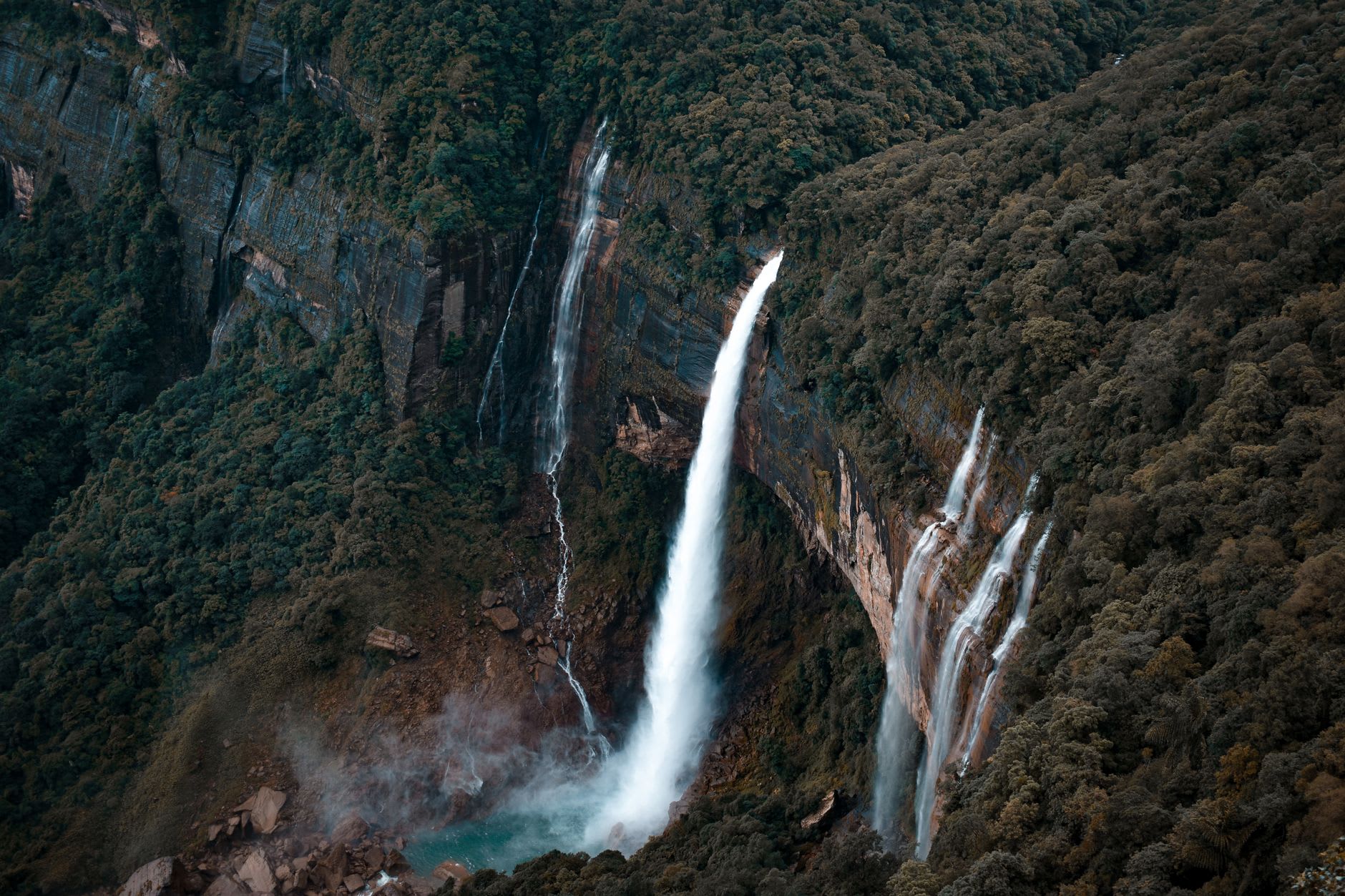
There is no way down to the pool — the cliff face is vertical and the jungle below is not navigable without serious equipment. The falls can only be seen from above, which means you are always at a remove, always watching from safety, always seeing the whole thing at once rather than from within it. This might be appropriate for a place with this particular legend. Some things should be witnessed from a respectful distance.
When to go: Monsoon — June through September — for maximum water volume and the full drama of the falls at their most powerful. October and November for clear skies, visible cliff faces, and the falls reduced to a precise, elegant thread. December through February is cold but clear. Avoid visiting only Nohkalikai — combine it with Mawsmai Caves and the Seven Sisters Falls viewpoint for a full day on the Sohra plateau.