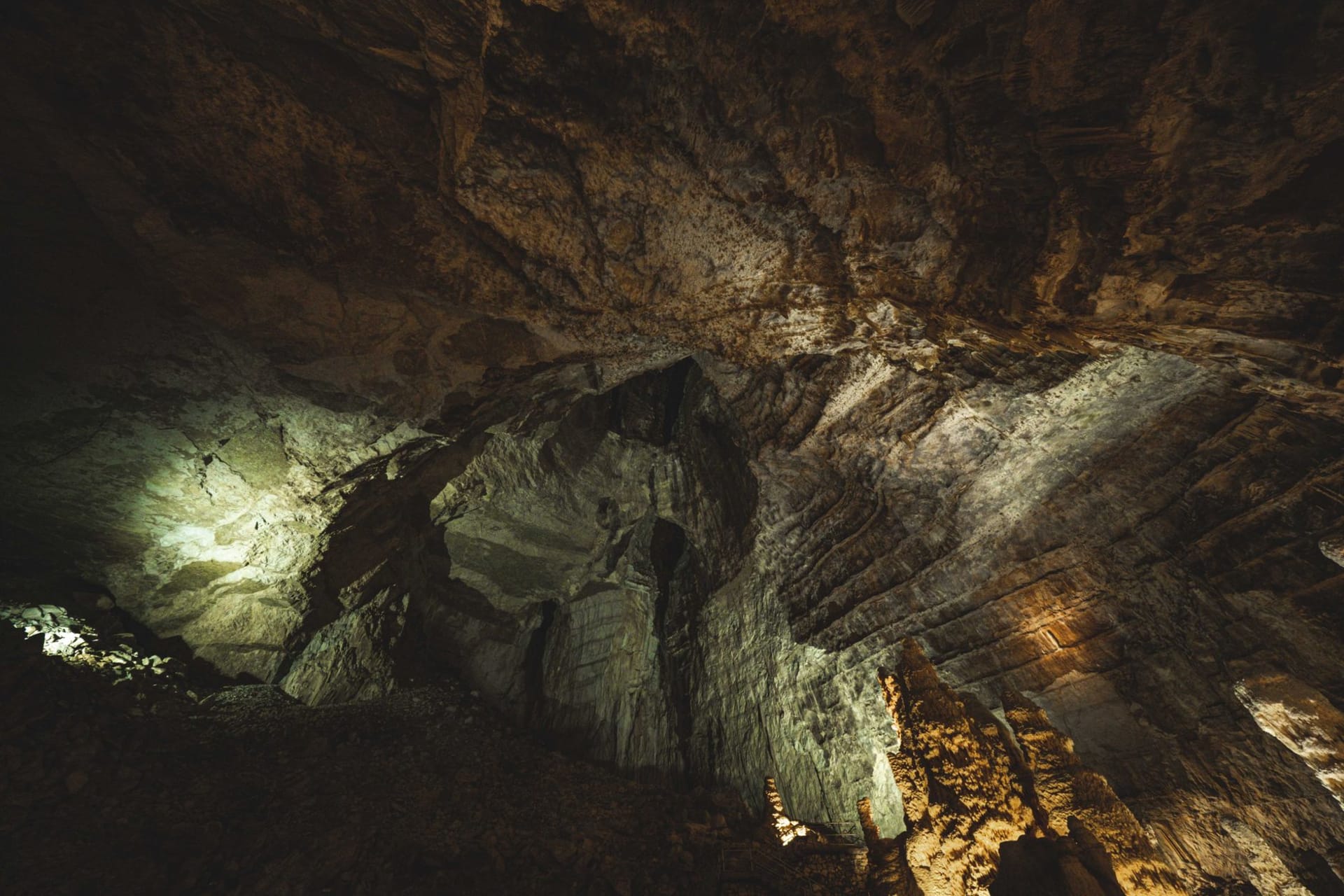
Mawsmai Caves
"Underground, the rain that makes Meghalaya what it is has been at work for ten million years."
I came to Mawsmai because everything above ground in Cherrapunji was grey and streaming — a light but persistent rain, the kind that doesn’t feel serious until you realize you’ve been wet for four hours. The cave seemed like the logical alternative, and I had low expectations, having been to many tourist caves where the formations are lit in garish colours and a recorded voice tells you to watch your step. Mawsmai dismantled those expectations within the first fifty metres.
The entrance is a gap in a limestone hillside a few kilometres east of Cherrapunji’s main market, reached by a concrete path through a car park with tea stalls and a ticket booth. It looks unpromising. You stoop to enter, and then the world inverts. The noise of the rain above disappears, replaced by the drip and echo of the same water working through stone, and the smell changes to something mineral and cold, a smell with no organic component at all — just rock and water and dark. The temperature drops immediately to something cool enough that the sweat from the walk dries on you.
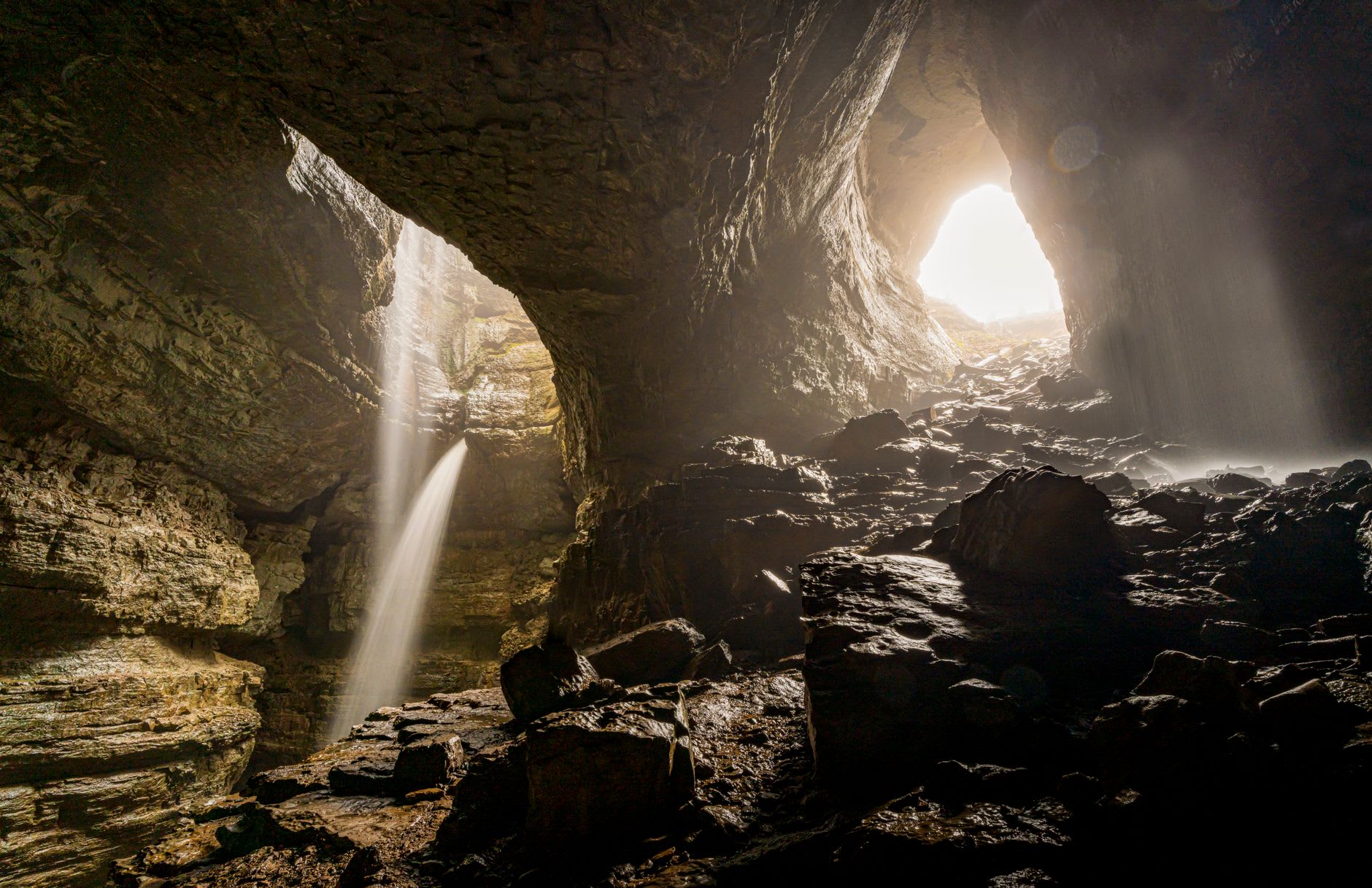
The cave is about one hundred and fifty metres long — the walk-through takes twenty minutes if you go straight, longer if you stop, which you will. The limestone formations are stained orange, black, and chalky white by millennia of mineral-rich water seeping through the rock, and they accumulate overhead and underfoot in shapes that don’t look designed but achieve the effect of design anyway: columns that emerge from ceiling and floor reaching toward each other, curtains of calcite thin enough to be translucent, formations that look like frozen waterfalls or melted candles or something that has no earthly analogue. At the narrow sections you turn sideways and the rock is cold and wet against your back and there’s a brief second where you think: this is inside the earth.
The lighting is reasonable by cave standards — actual illumination rather than novelty colour, which lets you see the natural mineral tones of the formations rather than a disco version of them. A few of the stalactites overhead have been lit from below to show their translucency, and the effect is impressive rather than tacky. Children ahead of me ran through the squeezes laughing, ducking dramatically under formations they didn’t need to duck under, having the best time of anyone in the place.
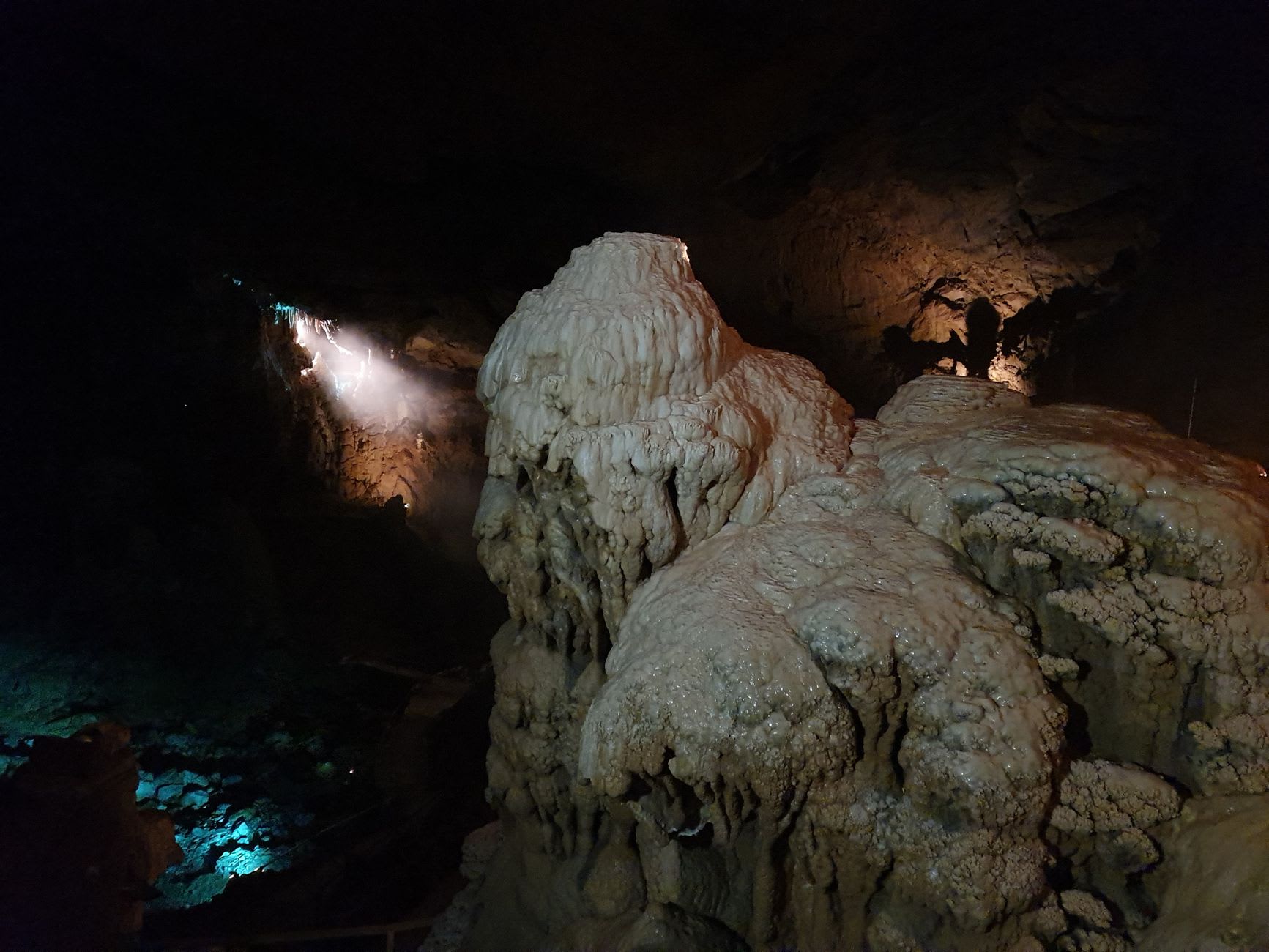
What Mawsmai doesn’t tell you — and what I found out from the guesthouse owner that evening — is that it’s part of a much larger cave network running through the Khasi Hills limestone. Krem Phyllut and Krem Mawpun connect beneath the same ridge, and the full system is mapped to something like three kilometres. Most of it is inaccessible without equipment and guides; some of it is still being mapped. The tourist cave is the digestible entry point to an underground geography that continues far beyond where the path ends and the lights run out, and knowing that as you exit into the grey Cherrapunji afternoon changes the quality of what you just walked through. You were in the beginning of something much larger.
When to go: Mawsmai can be visited year-round — the cave maintains a constant internal temperature regardless of season, and rain above ground doesn’t affect the experience inside. It’s a genuinely good wet-season option when trails and viewpoints are miserable. That said, the surrounding Cherrapunji viewpoints that make logical companions for a cave visit are better in October through April. Go in the morning to beat the tour groups that arrive from Shillong around noon.