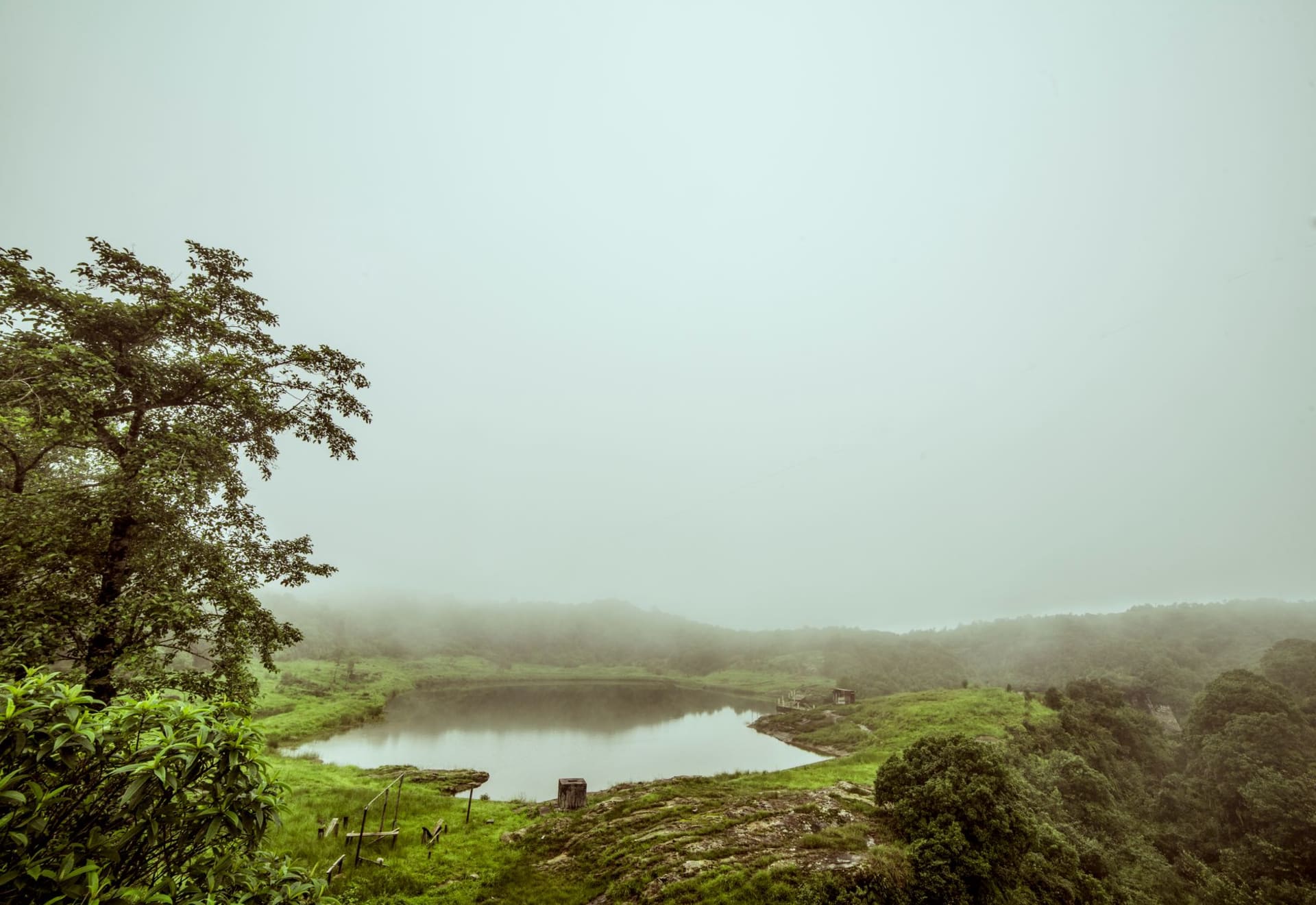
Mawlynnong
"The cleanliness here isn't performed for visitors. It predates them by several generations."
The designation came from a travel magazine in 2003 — “Asia’s Cleanest Village” — and Mawlynnong has been managing the consequences of that label ever since. When I arrived on a weekday morning the village was calm and the tourists were elsewhere, and I spent a few hours walking its paths without the self-consciousness that descends when a place knows it is being watched. The bamboo rubbish bins hung from posts at every corner, the swept-earth paths ran between orchid-bordered flower beds, and children cycled past on bicycles that were, yes, very clean. But the cleanliness was not the thing that struck me. The thing that struck me was the quiet organizational intelligence behind it.
Mawlynnong sits near Meghalaya’s southern border with Bangladesh, in a stretch of the Khasi Hills where the land begins to flatten and the vegetation thickens. It’s about ninety minutes from Shillong by road, a drive that passes through several smaller villages and gives you a sense of how the Khasi maintain their settlements generally — the communal work ethic of Mawlynnong is an intensification of something that runs more broadly through the culture. The Khasi are, among many things, fastidious. Property is managed carefully. Public space is considered a shared responsibility. Mawlynnong has just optimized this to a point where it became legible to outsiders.
At the southern edge of the village there’s a bamboo watchtower, a handmade structure four or five storeys tall that you can climb via an enclosed bamboo staircase. I went up at midday when the light was flat, which was wrong, and then came down and waited for evening and climbed again. From the top platform you can see the plains of Bangladesh beginning perhaps twenty kilometres south — flat and river-braided, catching the low light in strips of silver and gold. The hill ends sharply here. Meghalaya is a plateau; below its edges is another country and another world.
The village also has a single-tier living root bridge — younger and less famous than the double-decker at Nongriat, but quieter and easier to reach, about ten minutes’ walk from the main path through a patch of dripping jungle. On the morning I visited it, I had the bridge entirely to myself for perhaps half an hour. The roots were thicker at the base than my arm span and the water below ran green and fast. I sat on the bridge and dangled my feet over the current and ate a banana I’d bought at the village entrance from a woman who’d made no effort to overcharge me for it.

Lunch was at a small family restaurant — three tables, a tin roof, a handwritten menu that didn’t need to be longer than it was. I ate rice with black sesame pork and a side of fermented bamboo shoots and drank tea that arrived in a steel cup. The woman who ran it asked where I was from and when I said France she nodded with the particular nod of someone who has answered this exchange several thousand times and is nevertheless still asking. Her daughter, maybe seven years old, sat at the table beside me doing homework and occasionally looked up to study me with frank, unhurried assessment.
When to go: October through April, with October and November particularly good — post-monsoon freshness, full rivers, and the jungle at its most intense green. The village is at its quietest on weekdays; weekends and Indian public holidays bring domestic tourist crowds that tip the place from “peaceful” to “managed.” The living root bridge here is easily combined with a day trip to Dawki’s river, forty minutes further south by road.