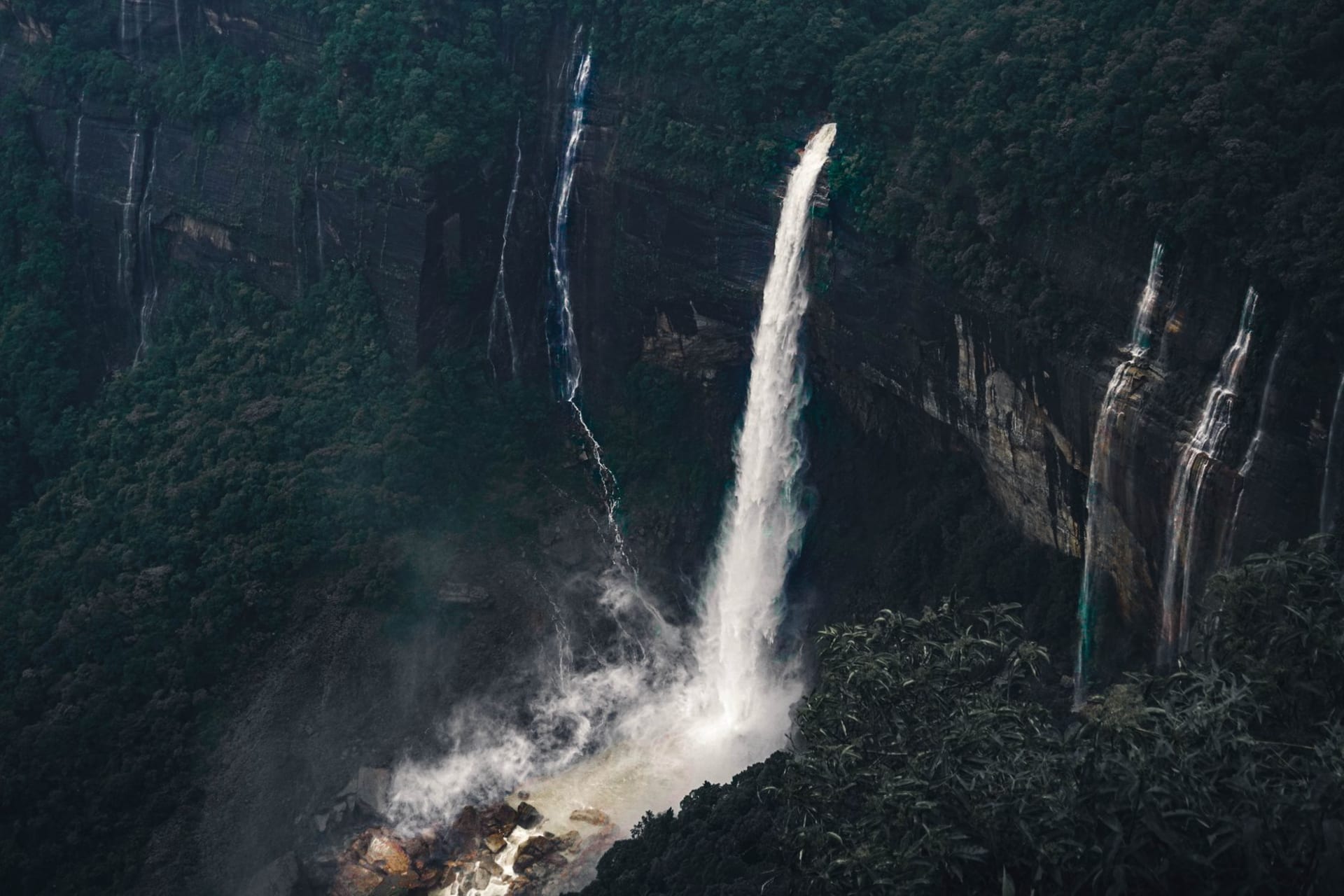
Laitlum Canyon
"Laitlum means 'end of hills.' Standing at the edge, you understand why they named it that and stopped."
I left Shillong before five in the morning, which felt excessive until I arrived at the canyon rim and understood. Laitlum is twenty-five kilometres east of the city, and in Meghalaya’s hill traffic that’s about forty minutes, and I got there at six-fifteen to find the valleys below still completely full of cloud. Not mist at the edges — full cloud, a white sea below the ridge, the canyon walls dropping into it like islands dissolving at their waterline. Two other people were there: a Khasi man from the local village who watched me arrive without surprise, and a stray dog who attached himself to me immediately and remained attached for the duration of my stay.
The name means “end of the hills” in Khasi, and it earns this in every direction. The plateau drops away dramatically on three sides into a series of deep, V-shaped valleys — the Umiam River drainage, pushing south toward the plains. On a clear morning the ridges stack into the distance in fading bands of green and blue, and the scale of the thing is difficult to process because there is nothing familiar to calibrate against. No road, no building, no human scale marker in the valley — just the ridges themselves, running into haze.
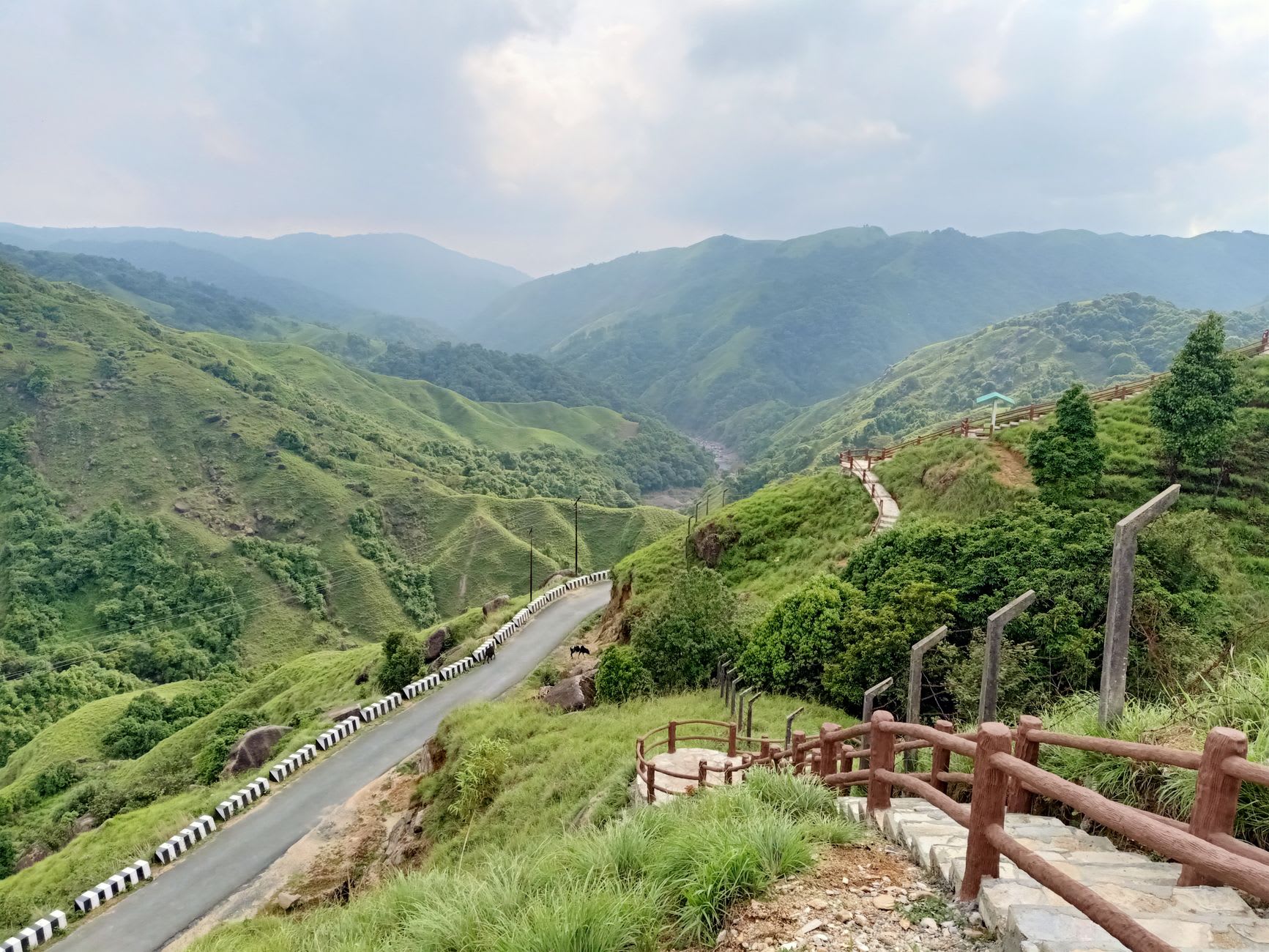
By seven-thirty the cloud was burning off. I could watch it happening in real time — the tops of the lowest ridges emerging from the white like a slow-motion sunrise in reverse, the valleys appearing incrementally as the cloud thinned and dropped. The stray dog sat beside me and observed this process with what I could only characterize as contentment. A local family arrived with thermoses and set up a small informal tea operation on the rim, which was exactly right. I paid twenty rupees for a glass of tea so sweet it was almost dessert and stood at the edge drinking it while the last of the cloud cleared.
The canyon itself has hiking trails that descend into the valley — serious trails, steep and muddy, the kind that require attention and proper footwear and more time than a morning. I didn’t go down; I’d come for the view and for the quality of quiet at the rim. Laitlum is one of those places where the silence isn’t empty but full — full of wind and distant birdsong and the sound of the Umiam somewhere far below, and the specific resonance of a large space with nothing in it to absorb sound. I’ve heard this quality in the Alps and in the Sonoran Desert and in the empty middle of the Atacama, and it’s recognizably the same thing: the natural reverb of scale.
On the drive back toward Shillong I stopped at a roadside stall selling pork sausages smoked over a low coal fire — fat and dark and perfumed with wood smoke, eaten standing up with mustard that was more heat than flavour — and thought about what Meghalaya does consistently: it keeps showing you landscape at a scale that makes your usual frame of reference irrelevant, and then around the next bend there’s a woman selling something delicious from a coal fire and the scale collapses back to human and both things feel equally true about the place.
When to go: Arrive at or before sunrise for the cloud-sea effect — this is not optional if you want the defining experience of Laitlum. October through April for clear post-dawn visibility; monsoon mornings can be beautiful but unpredictable, and trails become dangerous in heavy rain. The canyon is at its most atmospheric in November and December when temperature inversions are frequent and the cloud fills the valleys reliably each morning. A weekday visit avoids the weekend crowd from Shillong.