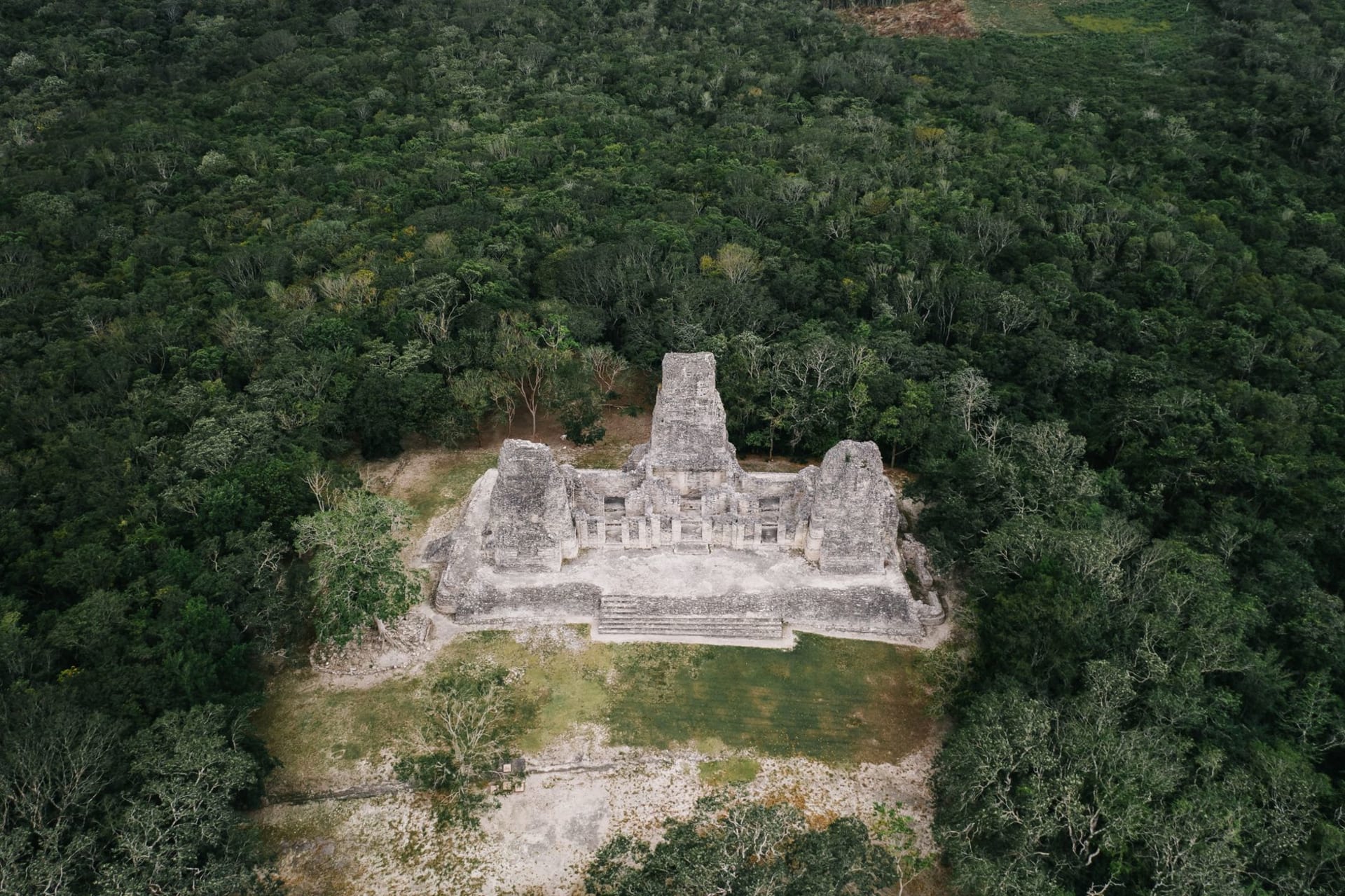
I was on the path to Temple IV at four-thirty in the morning, following a guide named Marcos who moved through the dark like he’d done this a thousand times, which he had. The flashlight beam caught roots and stones and once, briefly, the red eye-shine of something watching from the undergrowth. Howler monkeys were already making their noise — a sound that sits somewhere between a lion’s roar and a pipe organ — and by the time we reached the wooden stairs of Temple IV and began the climb, my heart rate had nothing to do with the exertion.
The temple platform sits sixty-five meters above the jungle floor, above the canopy. When the sun came up, other pyramids appeared below me, surfacing through the mist like the tips of drowned buildings. Temple I. Temple II. The sound layer shifted — the howlers went quiet, spider monkeys took over, and then toucans started calling, that hollow tok-tok that sounds like someone knocking on a wooden door. I sat on the platform for forty minutes without moving. Nobody spoke. Someone’s phone buzzed and they silenced it immediately, which felt like the correct instinct.
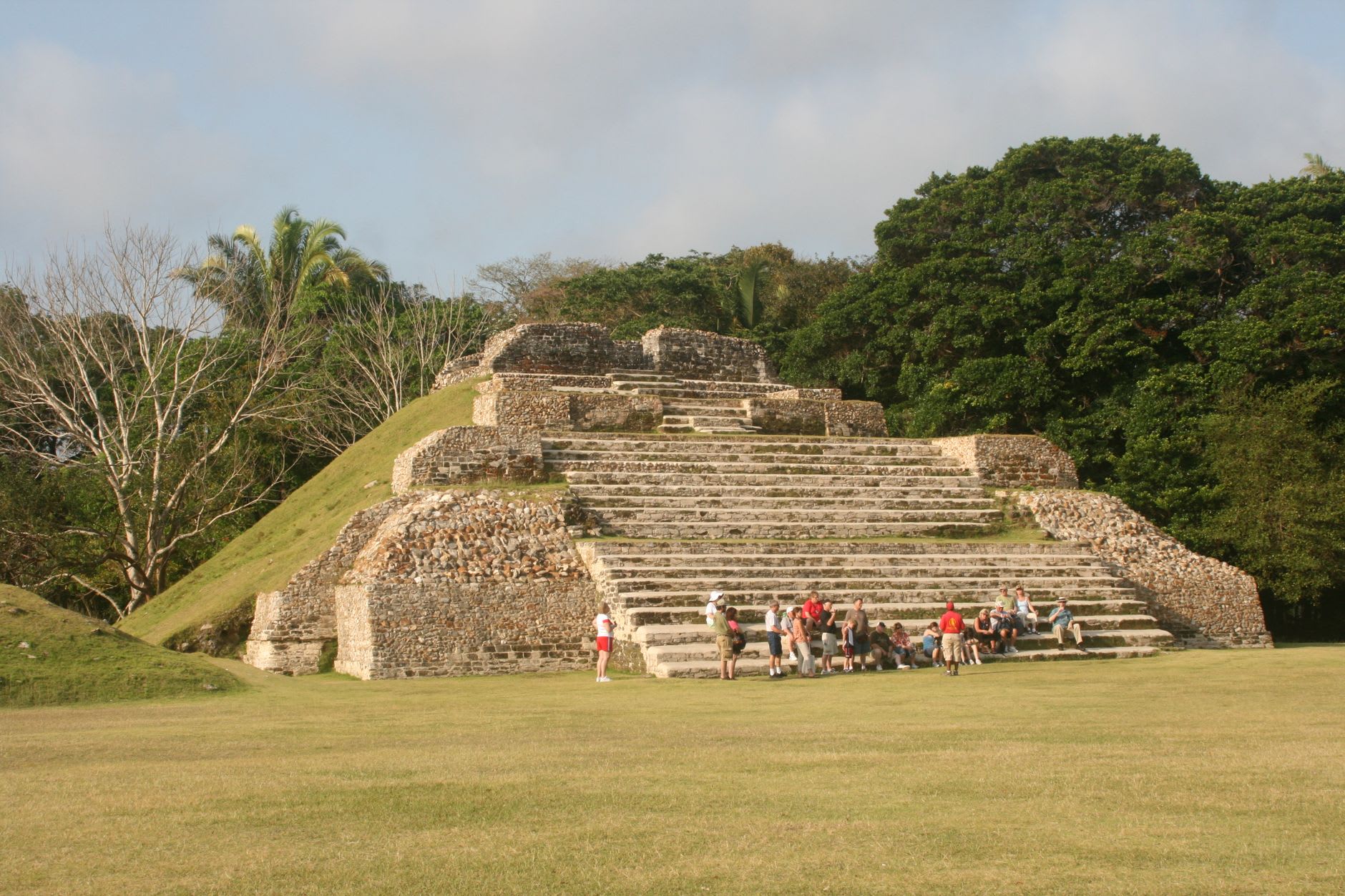
The Gran Plaza later in the morning has a different quality. You can walk among the temples and the stelae and feel the scale of what was built here — the broad limestone plazas, the precision of the corbeled arches, the way the structures orient to each other and to astronomical alignments that the builders tracked with a precision that still astonishes researchers. Tikal at its peak, around 700 CE, held perhaps a hundred thousand people. Walking the site, moving between palaces and administrative complexes and ball courts that still carry the acoustic properties they were designed with, you understand that this was not a ceremonial center with a few priests tending fires. This was a city, and the people who lived here cooked food and raised children and had political disagreements and probably complained about the heat.
What gets me every time is the sound. Tikal is never quiet — the jungle is too alive for that — but it is never loud in a human way. No traffic, no music, no machinery. The noise is entirely biological. In the late afternoon, when the day-trippers from Flores have gone, the birds dominate completely. Ocellated turkeys strut across the plazas with an air of proprietorship that feels earned. Black vultures wheel overhead on thermals. A troupe of spider monkeys crashed through the canopy above the North Acropolis while I stood below them, and the sheer exuberance of their movement — limbs splayed, tails gripping, nothing held in reserve — felt like a comment on the seriousness of what surrounded them.

Stay inside the park. The on-site lodges — Jungle Lodge, Tikal Inn, Jaguar Inn — are not luxurious, but sleeping within the park boundaries means you get the site before and after the day-trip crowds arrive. That four-thirty alarm is easier when there’s no forty-five-minute bus ride before it. Eat dinner on the porch of whichever lodge you’re in, watching the stars emerge above the canopy, and listen to what the jungle does when it thinks no one is recording it.
When to go: November through March for dry season. February is ideal — the jungle paths stay passable, the morning mist is reliable, and the howler concerts at dawn are at full volume. Avoid Semana Santa entirely unless sharing Temple IV with five hundred other people sounds appealing.