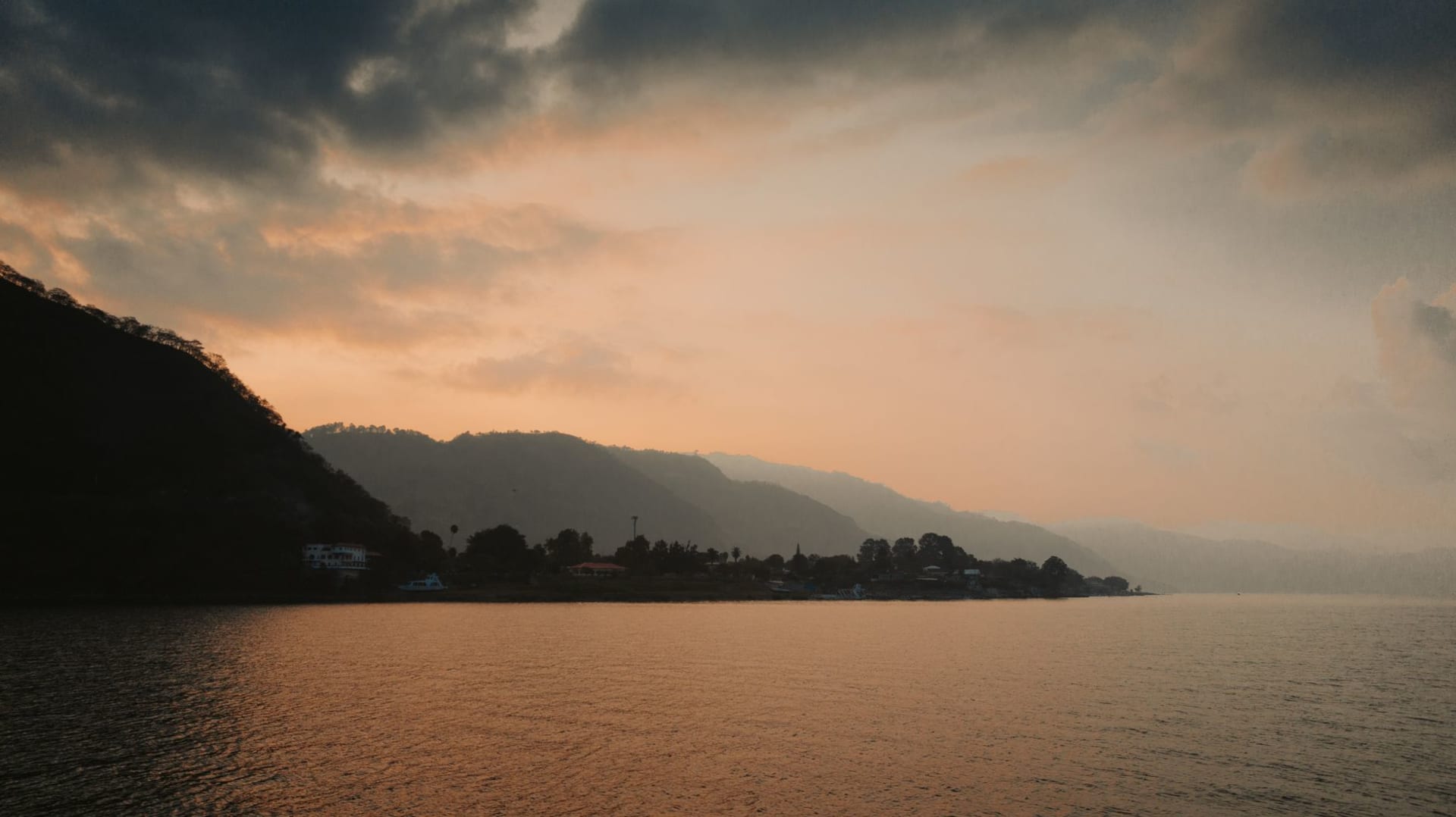
Lago Atitlán
"Every time I think I've understood Atitlán, the afternoon wind picks up and starts the day over."
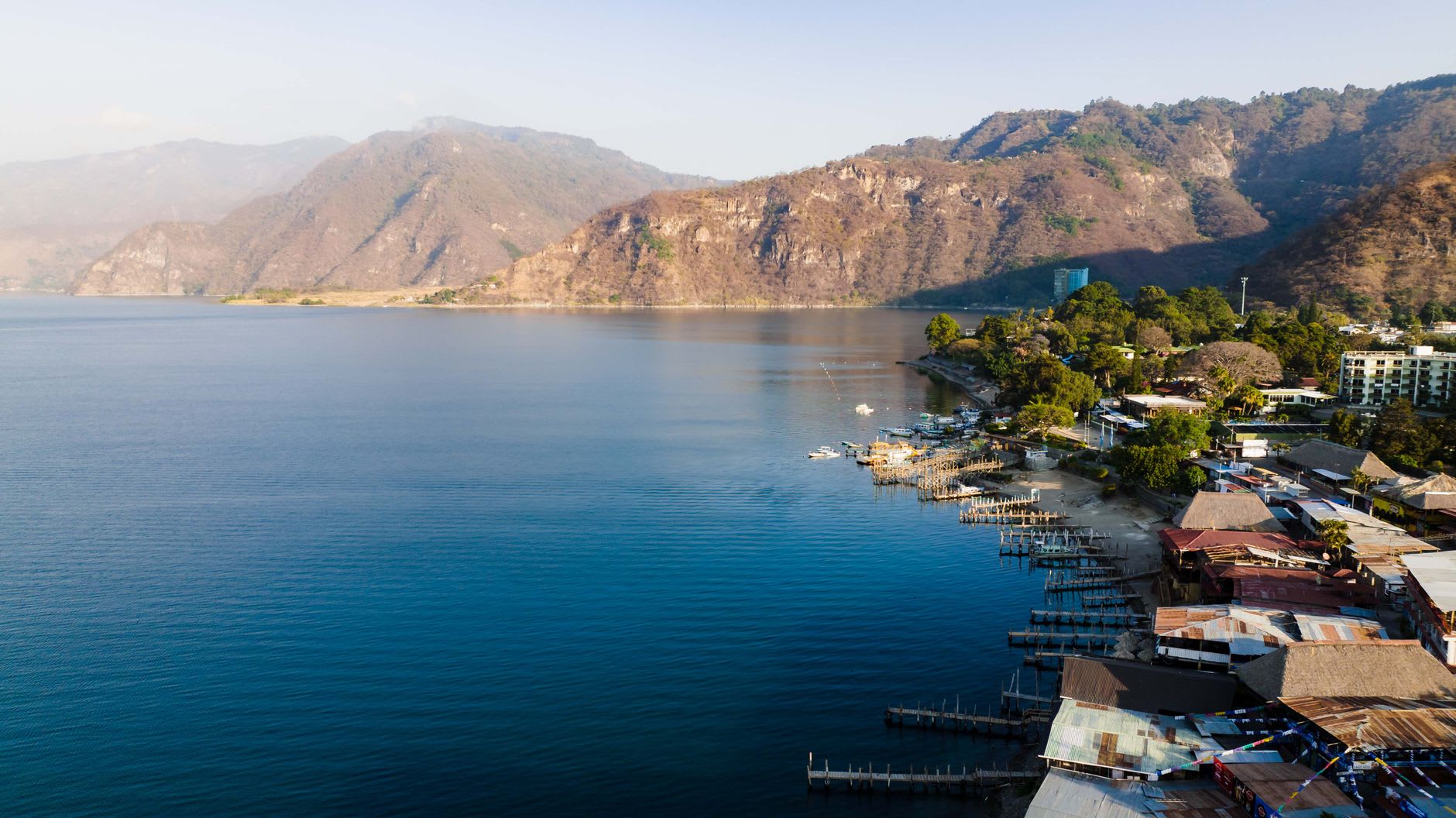
I took the lancha from Panajachel to Santiago Atitlán on a Thursday morning, a forty-minute crossing on water so blue it looked impossible. The three volcanoes — Tolimán, Atitlán, San Pedro — arranged themselves along the southern shore like a geological argument for the existence of beauty, their upper slopes in cloud, their lower flanks running down to the water through cornfields and coffee groves. From the middle of the lake the villages on the shore are barely visible, small clusters of color against the dark green of the hills. It is one of those views that makes you briefly embarrassed about photography, because no camera setting resolves the problem of scale.
Santiago Atitlán is the largest settlement on the lake, a Tz’utujil Maya town of thirty thousand people where the market runs most mornings and the main street leading down from the dock is lined with women selling textiles that are specific to this town — a deep purple and red weaving tradition that has been continuous here for centuries. The women wear traditional dress daily, not for tourists but because this is what women in Santiago wear, and the density of pattern and color on the street on a market morning, women in their thirties in traditional huipiles talking on smartphones, is one of those calibrating moments that makes you aware of how rudimentary your categories are.
In a narrow lane between two houses in Santiago, behind a door that any visitor can enter, lives Maximón — the saint that is not a saint, the deity assembled from bundles of cloth and rope, wearing a hat and holding a cigar, surrounded by liquor and candles and the prayers of people who have come asking for things the official church cannot help with. Maximón is a syncretist figure in the truest sense, simultaneously pre-Columbian deity and San Simón the folk Catholic, and the cofradía (brotherhood) that houses him moves him to a new location each year. You can find where by asking the first person you see. The room where he is kept smells of cigar smoke and copal and rum, and the people who come to pray do not acknowledge visitors unless you are also there to pray, in which case the cofradía members treat you with the same serious attention they give anyone who comes with a genuine request.
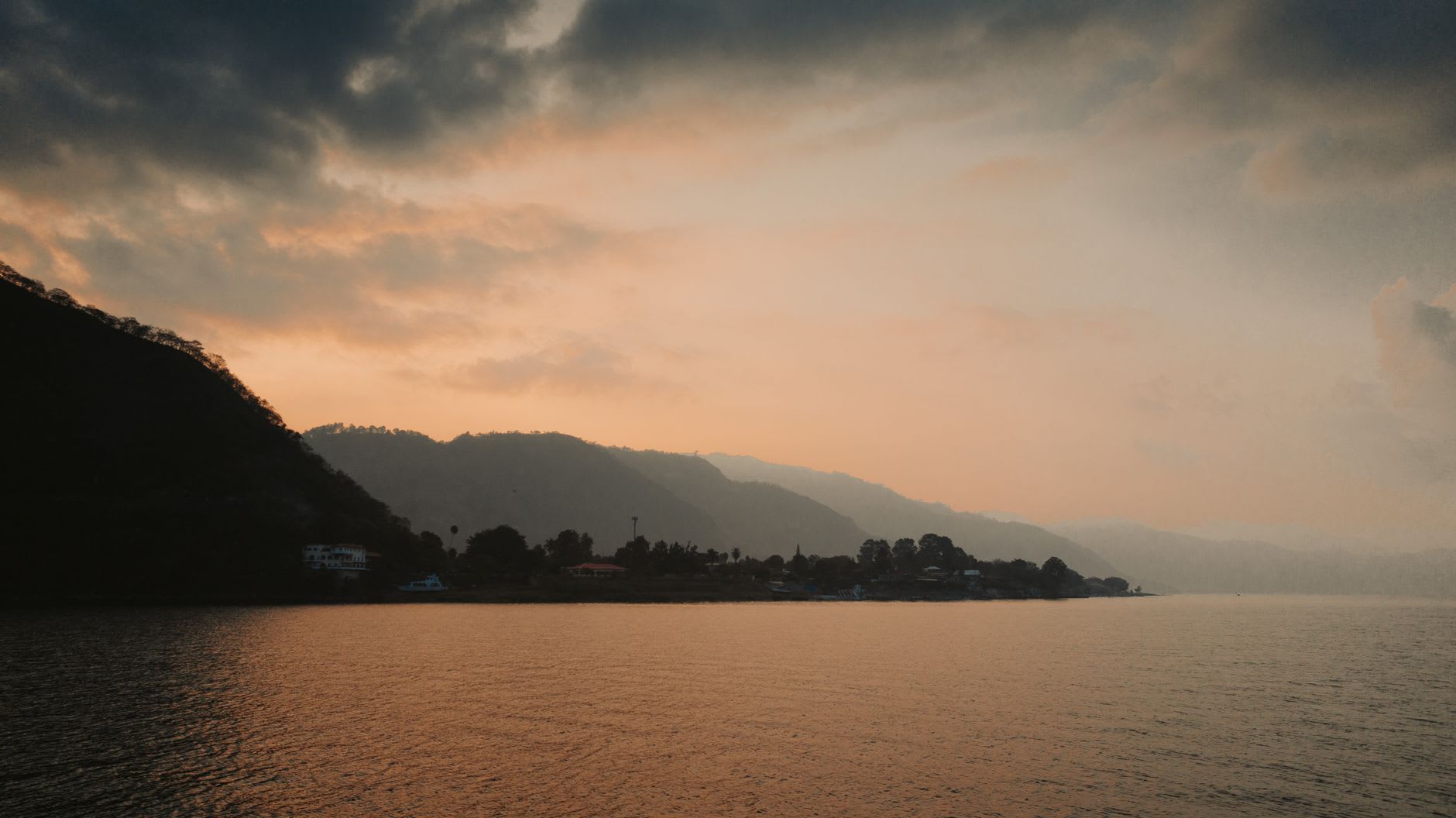
San Marcos La Laguna, a forty-minute lancha ride around the lake’s western shore, is where you go if what Atitlán’s communities feel like to you is not Santiago’s density but something quieter. A village of hippies, long-term travelers, yoga retreat operators, and the Kaqchikel Maya families who preceded all of them, San Marcos has paths between the lakeshore and the steep hillside gardens that are too narrow for vehicles. The lodges hang over the water and at night the only sound is the lake. In the morning a local fisherman takes his small boat out before sunrise, and from the lodge terrace I watched him for an hour while the light came up over Tolimán and the surface of the lake went from black to gray to silver to the impossible blue of full morning.
The xocomil — the wind that rises each afternoon around noon and builds until three, when it can generate whitecaps and make lancha crossings unpleasant — is not a weather inconvenience but a fact of Atitlán’s character. The Maya have a word for it because it is regular enough to plan around. Mornings are calm and clear; afternoons belong to the wind. Schedule your lancha crossings before eleven and spend afternoons in whichever village you’re in, in a hammock if possible, watching the lake change character.
When to go: November through April for clear mornings and stable lake crossings. December through February offers the finest weather, with cold nights at the altitude that justify the woven blankets available in every market. Holy Week (Semana Santa) is spectacular at Santiago Atitlán — processions, traditional dress, the cofradías in full ceremonial activity — but accommodation books out months in advance.